

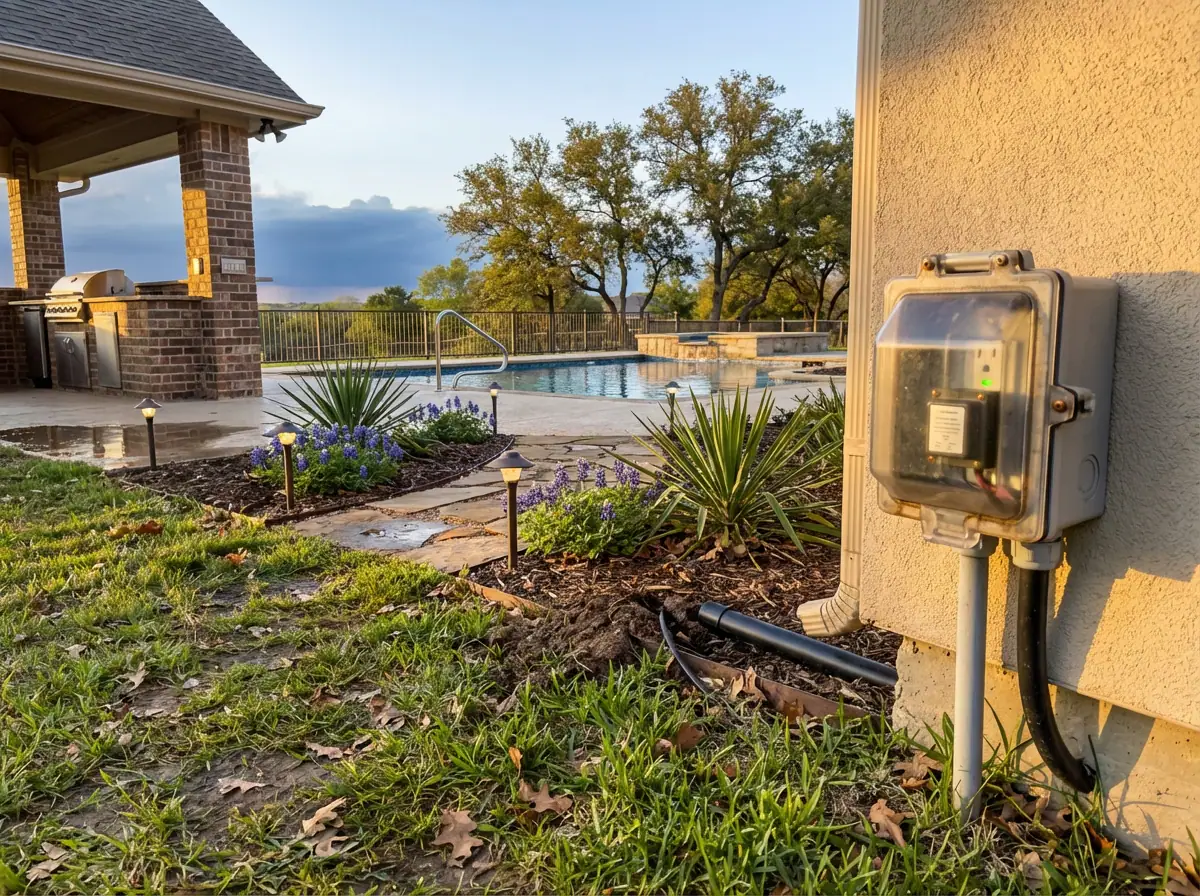
Outdoor electrical work in Granbury is safe when every outlet has GFCI protection and a wet-rated in-use cover, lighting and underground circuits use outdoor-rated parts buried at code depths, and pool and spa wiring follows NEC Article 680 bonding and clearance rules. Texas heat, storms, humidity and the occasional freeze wear outdoor components down far faster than indoor ones, so regular testing and inspection matter too. Anything touching your panel, new circuits, underground runs or pools belongs with a licensed electrician.
This guide covers weatherproof outlets, landscape and security lighting, outdoor kitchens, pools and spas, underground wiring, maintenance, and when to call a professional.
Why Outdoor Electrical Systems Need Special Care in Granbury
Outdoor electricity operates in a hostile environment: rain, heat, UV exposure, dirt, insects and physical impacts all attack components designed for indoor spaces. The National Electrical Code (NEC) sets outdoor requirements that go well beyond indoor wiring.
- Heat: summer temperatures regularly reach the 90s and beyond, which can overheat components not rated for outdoor use.
- Storms: intense thunderstorms, especially in spring and early summer, bring lightning and heavy rain.
- Moisture: heat plus humidity accelerates corrosion, loosens connections and degrades insulation. Winter freezes and occasional ice storms add more stress.
- Water intrusion: the most dangerous hazard. Moisture in a box, outlet or fixture gives electricity an unintended path, causing shocks, short circuits, fires or equipment damage.
- High loads: pool pumps, heaters and kitchen appliances need properly sized circuits. Undersized wiring or inadequate breakers can cause overheating, frequent trips or hidden fires.
Weatherproof Outlets and GFCI Protection
GFCI Protection
The NEC requires GFCI protection for all outdoor receptacles, for new installations and upgrades alike. A GFCI detects tiny current imbalances that show electricity escaping its path, through water or a person, and cuts power within milliseconds. You can protect outlets individually with GFCI receptacles or protect a whole circuit with a GFCI breaker in the panel. Individual GFCI outlets are usually easier to test and troubleshoot, and one tripping does not shut down the entire outdoor circuit. If your outdoor outlets are not GFCI-protected, have that fixed right away through professional outlet installation.
In-Use Covers and Wet-Rated Equipment
The NEC distinguishes weather-resistant receptacles (the outlet itself) from in-use covers. Old flip-up covers only protect an outlet when nothing is plugged in. Current code requires in-use covers for outlets exposed to weather: deep, gasketed covers that fully enclose the plug and cord while in use, with spring-loaded doors or hinged lids that close around cords. If you run holiday lights, a fountain, power tools or anything that stays plugged in, upgrade old flip covers. In Granbury, choose covers rated for wet locations, not just damp locations, since most exterior, patio and garden outlets take direct rain.
Weatherproof Boxes
Outdoor boxes are typically PVC or aluminium with gaskets that seal against the mounting surface. Every wire entry point needs a weatherproof connector, because even small gaps let water in during heavy storms.
Placement and Height
- Mount outlets at least 16 inches above ground; go higher where water stands.
- Avoid spots where rainwater collects or drains, and watch how water flows around your property.
- Overhangs and covered areas help, but they do not replace weatherproof equipment.
Landscape and Outdoor Lighting
Good outdoor lighting adds curb appeal, security and usable evening hours, but poor installation creates hazards and code violations. Professional lighting installation balances design and safety.
Low-Voltage Systems (12V or 24V)
Low-voltage systems use a transformer to step household 120V power down to 12V or 24V. They suit pathway, accent and decorative lighting and reduce shock risk where people walk and children play, and many fixtures can be installed by homeowners. Still, low voltage is not no voltage:
- Size the transformer to your total wattage, with room for expansion. An overloaded transformer overheats, wears out early and can become a fire hazard.
- Install the transformer in a protected location with a weatherproof housing.
- Use correct wire sizing to prevent voltage drop over long runs.
- Make every connection waterproof with outdoor-rated connectors filled with dielectric grease to prevent corrosion.
- Bury low-voltage cable about 6 inches deep and use conduit where damage is likely.
Line-Voltage Systems (120V)
Security lights, porch lights and high-output fixtures connect directly to 120V circuits. They require weatherproof junction boxes, GFCI protection, proper grounding, conduit for wiring and often dedicated circuits. This work should be done by a licensed professional.
LED Fixtures
LEDs use a fraction of the energy of incandescent bulbs, which lowers your bill and the load on your transformer. They run much cooler, which improves safety and reduces stress on weatherproof seals, and they last longer, which helps for hard-to-reach fixtures. Choose fixtures rated for outdoor use with an IP (Ingress Protection) rating suited to the location.
Controls and Motion Sensors
Timers, photocells, motion sensors and smart controls must be outdoor-rated if exposed to weather. A common mistake is using indoor-rated timers or switches in covered outdoor spots, which fail once moisture gets in. Aim motion sensors to catch people approaching without triggering on passing cars, swaying branches or small animals, and adjust sensitivity, range and duration.
Outdoor Kitchens and Entertainment Areas
- Outdoor kitchens need multiple dedicated circuits for refrigerators, griddles, pizza ovens, grills with electrical parts and heaters. Many outdoor cooking appliances draw significant current and need 240V circuits, like indoor ranges.
- Plan the electrical before construction. Retrofitting after hardscaping, cabinetry and countertops go in is far harder and more expensive.
- All outdoor kitchen outlets need GFCI protection, and circuits must be sized for the connected loads. Undersizing causes nuisance trips when the grill, refrigerator and blender run together.
- Every outlet, switch and appliance must be outdoor-rated. Marine-grade or stainless steel covers offer the best durability and corrosion resistance.
- Plan low-voltage wiring for speakers and screens alongside the power circuits.
- Check panel capacity. Several new outdoor circuits can exceed an older panel. If you already have frequent breaker trips or a full panel, a panel upgrade may be needed first.
Planning new outdoor power is a job for professional circuit installation.
Pool and Hot Tub Electrical Safety
Pool and spa wiring is among the most regulated residential electrical work. NEC Article 680 sets the rules, and local inspections scrutinise these installations closely.
- Bonding and grounding: all metal within a set distance of the pool must be bonded together and to the grounding system, including the pool structure, metal fencing, light fixtures, handrails, ladders and metal parts of nearby structures. This keeps everything at the same potential and prevents shocks.
- GFCI protection: required for pumps, heaters, lighting and outlets within prescribed distances of the water. Test these devices regularly; a GFCI that does not trip gives false security.
- Outlet distances: outlets must be at least 6 feet from the inside wall of the pool, and all outlets within 20 feet must be GFCI-protected.
- Overhead lines: power lines must keep specific clearances from the pool and diving areas.
- Pool lights: underwater lights must be listed for submersion, sealed and bonded. Most modern pool lights run on 12V from a transformer in an approved location away from the water, and the transformer must be GFCI-protected.
Never do DIY pool, spa or fountain electrical work, including repairing or replacing pool lights. Pools often have multiple circuits, so turning off one breaker may not make it safe, and improper pool wiring has caused fatal electrocutions. Bonding, disconnect switches and timing controls need a licensed electrician experienced with aquatic systems, and the work requires permits and inspections.
Underground Wiring and Conduit
Direct Burial Cable vs. Conduit
Direct burial (UF) cable has heavy insulation made for underground moisture and can be buried at code depth without extra protection. Conduit offers better protection: PVC conduit shields wiring from damage, lets you replace wire without re-trenching and gives a clear path for future circuits. In Granbury's rocky soil it also stops sharp rocks from damaging insulation. Most professional installations use Schedule 40 PVC.
Burial Depths and Marking
- Standard residential 120V circuits in PVC conduit typically need 18 inches of cover.
- Direct burial cable needs 24 inches.
- Call 811 before digging to have gas, water and telecommunications lines marked.
- Keep sketches or photos of where your underground runs are so you do not dig into them later.
Maintaining Your Outdoor Electrical System
- Test every outdoor GFCI monthly: press "test" (power should cut off), then "reset" (power should return). Replace any that will not trip or reset immediately.
- Inspect weatherproof covers and gaskets at least once a year for cracks, missing gaskets, loose mounting or gaps.
- Look inside boxes for moisture, rust or corrosion. Any corrosion means water is getting past the weatherproofing; fix the source and replace corroded parts.
- Clean dirt and debris from outlet boxes; buildup holds moisture and attracts insects.
- Check light fixtures for secure mounting, intact lenses and correct bulbs, since cracked lenses let water in.
- Inspect landscape lighting each season: position, secure connections and damage. Trim plants that cover fixtures and trap heat and moisture.
- After severe weather, inspect outdoor components before using those circuits again.
Warning Signs
Stop using and call an electrician if outdoor outlets do not work, feel warm, show scorch marks or have damaged covers, or if lights flicker or breakers trip repeatedly. These problems get worse and can lead to shocks or fires.
When to Call a Professional Electrician
- Any work inside your electrical panel or adding circuits for outdoor features.
- All underground wiring.
- Pool, spa and fountain electrical work.
- High-demand appliance circuits and line-voltage lighting.
- Large projects such as outdoor kitchens or extensive landscape lighting.
Even replacing an outdoor outlet can reveal missing grounding, deteriorated wiring or outdated boxes that do not meet current weatherproofing standards, often signs of faulty wiring. DIY savings often turn into higher costs when non-compliant work has to be corrected for a sale or insurance claim.
Frequently Asked Questions
Do all outdoor outlets need GFCI protection?
Yes. The NEC requires GFCI protection for all outdoor receptacles, either from GFCI outlets or a GFCI breaker protecting the circuit.
What kind of cover does an outdoor outlet need?
An in-use cover that encloses the plug while something is plugged in, rated for wet locations. Old flip-up covers only protect unused outlets.
How often should I test outdoor GFCI outlets?
Monthly. If one will not trip or reset, it needs replacing right away.
Can I install landscape lighting myself?
Many low-voltage fixtures can be installed by homeowners, provided the transformer is correctly sized and housed and connections are waterproof. Line-voltage lighting should be installed by a licensed electrician.
How deep does underground outdoor wiring need to be?
Typically 18 inches for 120V circuits in PVC conduit, 24 inches for direct burial cable and about 6 inches for low-voltage landscape cable. Call 811 before digging.
How close can an outlet be to a pool?
At least 6 feet from the inside wall of the pool, and every outlet within 20 feet must be GFCI-protected.
Revamped Electric is a veteran-owned electrician serving Granbury and nearby communities, and we know how Texas weather treats outdoor electrical systems. Call 817-677-0036 or request a quote for an outdoor inspection or your next backyard project.