

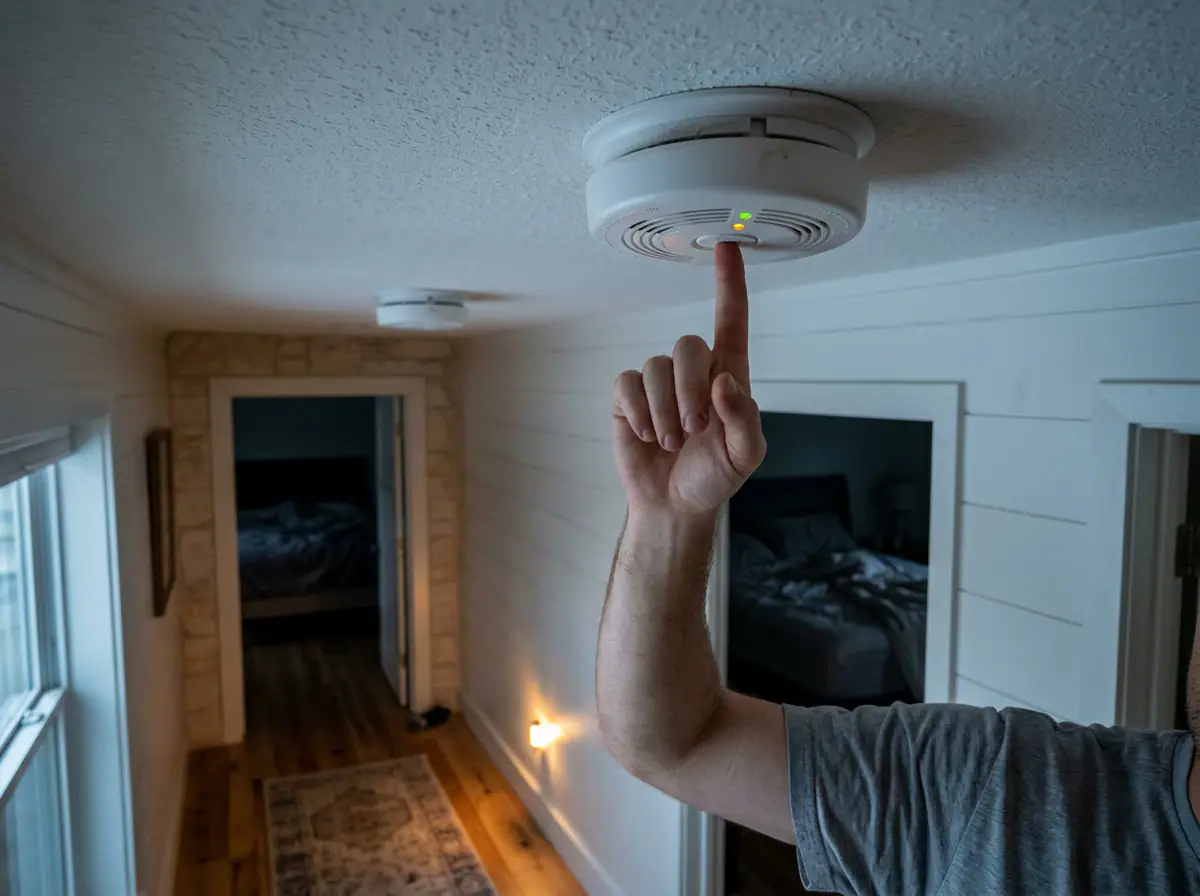
A smoke detector that chirps at 2 a.m. is annoying. A smoke detector that has quietly stopped working is dangerous. If you are searching for smoke detector repair Granbury homeowners can rely on, the first question is usually the same: is this a simple battery issue, a worn-out unit, or a problem with the wiring behind it? This guide helps you sort that out, and explains when it is time to call a licensed electrician.
At Revamped Electric, we test, repair and replace smoke alarms, hardwired smoke detectors and carbon monoxide detectors for homeowners across Hood County and the surrounding area.
Common Smoke Detector Problems We See in Hood County Homes
Most alarm calls fall into a handful of patterns. Knowing which one you have makes the fix a lot faster.
Smoke Detector Chirping
A short chirp every 30 to 60 seconds usually means a low battery, but not always. Chirping can also signal that the unit has reached the end of its life, that a backup battery is missing or installed wrong, or that the unit is not getting steady power. A chirp that returns right after you replace the battery is a sign the problem is something else.
False Alarms
Alarms that go off with no smoke can be caused by dust, cooking steam, humidity, insects, or an aging sensor. Units placed too close to a kitchen or bathroom are common offenders. If one alarm keeps tripping for no clear reason, replacing the unit is often the right answer.
Alarms That Will Not Silence
If an alarm keeps sounding after you press the hush button and clear the air, the sensor may be failing, or in a hardwired system another interconnected unit may be the one that is actually triggered. Finding the source takes some methodical testing.
Dead Hardwired Units
When a hardwired alarm shows no light and does nothing when you press the test button, the cause could be a dead backup battery, a failed unit, a loose connection, or a lost power feed. This is where smoke detector electrical wiring becomes part of the diagnosis.
Interconnected Alarms That Do Not All Sound Together
In an interconnected system, one alarm should trigger all of them. If you test one and only that one sounds, there may be a broken interconnect wire, a bad connection at a base, or a unit that is not compatible with the others.
What You Can Safely Check Before You Call
There are a few things any homeowner can do safely, no tools or panel access required.
- Press the test button. Hold it until the alarm sounds. No sound means something is wrong with the battery, the unit, or the power.
- Replace the battery. Even hardwired units usually have a backup battery. Use the type listed on the unit or in the manual.
- Check the date on the label. Look on the back of the alarm for a manufacture or replace-by date. Smoke alarms generally need replacing around the 10 year mark, and some carbon monoxide alarms have different lifespans, so read your label.
- Look for dust and obstructions. Gently vacuum around the vents. Do not spray cleaners into the unit.
- Check whether the breaker feeding the alarms has tripped. Only reset a breaker if you can do it safely, and only once.
Stop and call an electrician if the chirp returns after a fresh battery, if the unit is past its replace-by date, if several alarms are dead at once, if a breaker keeps tripping, or if you see discoloration, a burning smell, or loose wires. If an alarm sounds and you see or smell smoke, or a carbon monoxide alarm goes off, leave the home and call 911 first. Repairs can wait. Safety cannot.
Hardwired vs. Battery-Only Smoke Detectors
A battery-only alarm runs entirely on its own battery. A hardwired smoke detector is connected to your home's electrical system, usually with a battery as backup. Hardwired units are common in newer homes and remodels, while many older Hood County homes still have a mix of battery-only units and older hardwired ones.
What Wiring Problems Look Like
Because hardwired alarms depend on the circuit behind them, the problem is not always the alarm. Signs of a wiring issue include:
- One or more alarms with no power light at all
- Alarms that chirp or reset after a power flicker
- A tripped breaker that feeds the alarm circuit
- Loose connections at the wiring connector or mounting base
- Alarms that work individually but fail to communicate with each other
Alarms are often tied into a general lighting or bedroom circuit, so a tripped or failing breaker can take them offline without anyone noticing. If you are dealing with lost power in part of the house, our loss of power page explains how we track down the cause. When alarms need their own dedicated feed or a new run of wire, that falls under the type of work described on our circuit installation page.
Why Hardwired Work Calls for a Licensed Electrician
Swapping a battery is a homeowner task. Disconnecting, testing and reconnecting line voltage wiring is not. Mistakes can leave an alarm that looks fine but does not work, or create a real shock or fire hazard. Wiring installations are governed by the National Electrical Code (NEC) as adopted locally, and alarm placement and performance are covered by standards such as NFPA 72. A licensed electrician knows how to apply them to your home.
Interconnected Smoke Alarms and Carbon Monoxide Detector Installation
Interconnected smoke alarms are linked so that when one detects smoke, every alarm in the home sounds. In a two-story house or a long lake home, that matters. A fire in a garage or far bedroom may not be heard quickly from the other end of the house. Interconnection can be done with a wire between units or, with some products, wirelessly.
Carbon monoxide detector installation is a separate but related topic. Carbon monoxide is an odorless gas produced by fuel-burning appliances, fireplaces and attached garages. Homes with gas appliances, a garage, or a fireplace are the usual candidates for a CO alarm. Many manufacturers offer combination smoke and carbon monoxide units that can be wired into an interconnected system.
A note on code: what is required in your home depends on when it was built, whether you are remodeling, and the rules of the local authority having jurisdiction. We do not guess. We confirm what applies to your property and recommend a layout that meets it, and often goes a step further for safety.
Smoke Detectors in New Builds, Remodels and Home Inspections
New construction usually calls for hardwired, interconnected alarms placed during rough-in and finished at trim-out. Getting the wiring right before the drywall goes up is much easier than adding it later. If you are building in the area, see our electrical services page for how we handle new build electrical work.
Remodels are different. When you finish an attic, add a bedroom, or open up walls, alarm requirements may change, and existing alarms may need to be added to or upgraded. It is worth asking before the work starts, not after.
Alarms also matter when you buy or sell. Smoke detectors are a standard item to check as part of an electrical inspection. Sellers can avoid last-minute surprises by having alarms tested and replaced, and buyers can find out whether the home has working, properly placed, interconnected units or a patchwork of old ones.
What Affects the Cost of Smoke Alarm Repair or Replacement
We do not quote prices from a blog post, because every home is different. Here is what actually moves the number:
- Number of units. More alarms means more time and more equipment.
- Hardwired or battery-only. Hardwired replacement takes more labor than a battery swap.
- Interconnection. Linking units, or fixing a broken link, adds work.
- Ceiling height and access. Vaulted ceilings and hard-to-reach spots require more setup.
- Wiring condition. If there is a damaged wire, bad connection or failed circuit, repairing it is a separate task from replacing the alarm.
- Adding carbon monoxide protection. Extra or combination units change the scope.
After a quick look and some testing, we give you a clear scope of work before anything is done. Replacing every aging alarm in the same visit is often more efficient than coming back one at a time.
Smoke Detector Repair Granbury and Surrounding Areas We Serve
We serve homeowners in Granbury, Tolar, Stephenville, Cresson and Weatherford. Each has its own mix of housing, and that affects how we approach alarm work.
- Granbury and Lake Granbury: Lake homes and weekend properties can sit empty for stretches, which is a common reason alarm batteries die unnoticed. Larger and multi-level layouts also make interconnection especially valuable.
- Older homes: Homes that have been around a while may have older alarms, fewer alarms than current practice recommends, or wiring that was never set up for interconnection. We evaluate what is there before recommending a fix.
- Newer subdivisions: These homes typically have hardwired alarms from the start, so problems are often a single failed unit, a loose connection, or a breaker issue.
- Tolar, Cresson, Stephenville and Weatherford: Whether it is a rural property, a growing neighborhood, or a house in town, the process is the same: test, diagnose, then repair or replace.
Who Does the Work: Austin Barrett and Nick Torres
Revamped Electric is a veteran-owned, locally based company at 5630 Barkridge Dr in Granbury. Austin Barrett, our veteran owner, and co-owner Nick Torres lead the work. When you see the wrapped Revamped Electric truck pull up, that is the team you are dealing with, not a call center or a franchise dispatcher. You can read more about us on our about page and see what neighbors say on our reviews page.
Smoke Detector FAQ
Why is my smoke detector chirping?
The most common reason is a low battery. If the chirp continues after a fresh battery, the unit may be expired, the battery may not be seated properly, or a hardwired unit may have a power or connection problem. A licensed electrician can tell which it is.
Can I replace a hardwired smoke detector myself?
Some homeowners do, but it involves line voltage wiring and, in many homes, an interconnect connection that has to be matched correctly. If you are not experienced, it is safer to have a licensed electrician do it. If you ever work on a hardwired unit, the power must be off at the breaker first.
How often should smoke detectors be replaced?
Smoke alarms are generally replaced about every 10 years, and the date is printed on the back of the unit. Carbon monoxide alarms can have different lifespans, so check the label. Test your alarms regularly and replace batteries as the manufacturer directs.
Do I need interconnected alarms?
It depends on the age of your home, whether you are building or remodeling, and local requirements. Even where not required, interconnected smoke alarms are a smart safety upgrade because every alarm sounds when one detects a problem. We confirm what applies to your home.
Get Your Alarms Tested Before Something Goes Wrong
You should not have to wonder whether the alarms in your home will work when it counts. Call 817-677-0036 or request service through our contact page, and a Revamped Electric electrician will test, repair or replace your smoke detectors anywhere in Hood County. If any alarm is not working at all, tell us when you reach out so we can prioritize it.