
Your home’s electrical wiring is one of those things that is easy to ignore until something goes wrong. Hidden behind walls, tucked inside ceilings, and running beneath floors, the wiring in your house works quietly in the background every single day. But when that wiring starts to fail, the consequences can range from minor inconveniences to serious safety hazards. Faulty wiring is one of the leading causes of house fires in the United States, and many homeowners in Granbury, Weatherford, and the surrounding areas don’t realize they have a problem until it becomes a crisis.
The good news is that faulty wiring rarely fails without warning. There are almost always signs your electrical system is trying to tell you something. Knowing what to look for and acting quickly can protect your family, your property, and your peace of mind. Here is what every homeowner should know about identifying, understanding, and addressing faulty wiring before it becomes a serious problem.
What Causes Faulty Wiring in a Home?
Understanding why wiring fails helps you recognize when your home might be at risk. There are several common culprits that electricians in Granbury and across North Texas see on a regular basis.
Age of the Home
Homes built before the 1980s were often wired with materials and methods that no longer meet modern electrical code. Aluminum wiring, knob-and-tube wiring, and outdated insulation can all degrade over time. If your home is older and has never had a full electrical inspection, there is a reasonable chance the wiring is not up to current standards.
DIY or Unpermitted Electrical Work
Not all electrical work done in a home was completed by a licensed electrician. Previous owners may have added outlets, circuits, or fixtures on their own without pulling the proper permits or following code. This kind of work can leave behind loose connections, undersized wiring, or improperly grounded circuits that create real hazards down the line.
Rodent Damage
In rural and semi-rural areas like Hood County and Parker County, rodents are a real concern. Mice and rats will chew through wire insulation, leaving exposed copper that can arc, spark, and ignite nearby materials inside your walls. This type of damage is nearly impossible to detect without a professional inspection.
General Wear and Overloading
Even newer wiring can develop problems if circuits are consistently overloaded. Running too many high-draw appliances on a single circuit, daisy-chaining power strips, or using extension cords as permanent solutions can all stress the wiring and connections over time.
Warning Signs of Faulty Wiring You Should Never Ignore
Your home will often give you signals that something is off with its electrical system. Some signs are obvious while others are subtle. Either way, these are red flags that warrant a call to a licensed electrician.
Flickering or Dimming Lights
Occasional flickering when a large appliance kicks on is somewhat normal. But if lights throughout your home flicker frequently, dim without explanation, or fluctuate in brightness, it is a sign of a loose connection, a failing wire, or a circuit that is struggling to keep up with demand. This issue is easy to overlook but should be evaluated by a professional electrician sooner rather than later.
Burning Smell or Discoloration Around Outlets
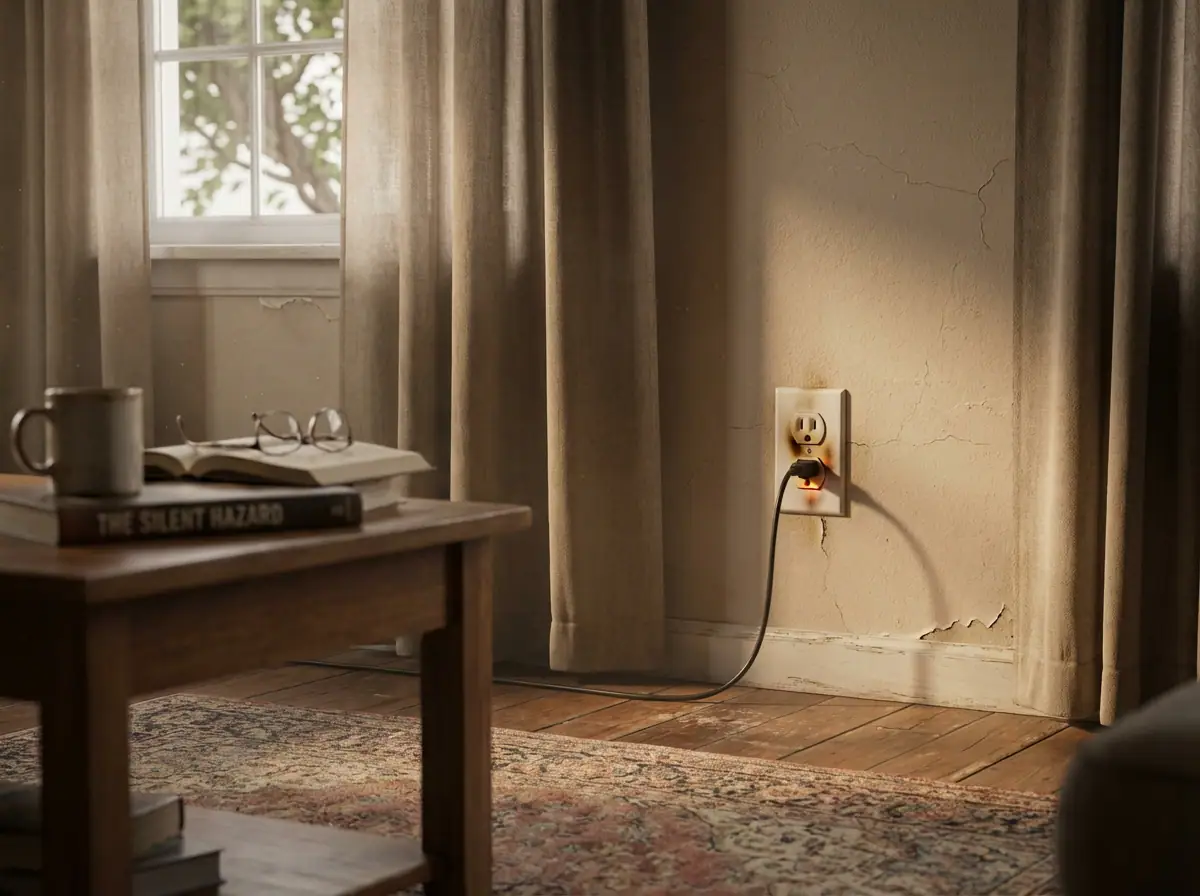
A burning or plastic-like smell near an outlet, switch, or electrical panel is never something to dismiss. Discoloration or scorch marks around an outlet faceplate is a sign that arcing has already occurred inside the wall. This is a fire hazard, full stop. If you notice this in your home, stop using that outlet and contact a local electrician right away.
Breakers That Keep Tripping
A circuit breaker that trips once in a while is doing its job. A breaker that trips repeatedly is telling you there is a problem. It could be an overloaded circuit, a short circuit, or a ground fault. Breaker issues can also point to a deeper problem with the wiring connected to that circuit. Repeatedly resetting a breaker without investigating the cause is a common mistake homeowners make that can lead to bigger problems.
Outlets That Are Warm to the Touch or Sparking
Outlets should never feel warm when you touch them, and a small spark when you plug something in occasionally can be normal. But if an outlet consistently sparks or produces a visible flash, there is likely a wiring problem that needs immediate attention. Warm outlets can indicate overloaded wiring or a loose connection that is generating heat inside the wall.
Buzzing or Crackling Sounds
Electricity should be essentially silent. If you hear buzzing, crackling, or sizzling sounds coming from your walls, outlets, or your electrical panel, that sound is electrical arcing. Arcing inside a wall can reach temperatures high enough to ignite insulation, wood framing, and other building materials. This is not a wait-and-see situation.
The Real Risks of Ignoring Faulty Wiring
It is tempting to put off electrical repairs, especially when the symptom seems minor. But faulty wiring carries risks that go far beyond a tripped breaker or a flickering light.
Electrical fires are the primary concern. According to the U.S. Fire Administration, electrical fires account for tens of thousands of home fires each year. Many of them start inside walls where the fire can burn and spread for minutes or even longer before it becomes visible. By the time smoke appears, significant damage may already be done.
Beyond fire, faulty wiring poses a serious shock and electrocution risk. Exposed wires, improperly grounded circuits, and damaged outlets can all deliver dangerous levels of electricity to anyone who comes into contact with them, including children who may not know to be cautious.
There are also financial and insurance considerations. Homeowners insurance policies often have exclusions or complications related to fire damage caused by known electrical hazards. If an inspection or prior repair revealed a problem that was not addressed, a claim could be disputed. Keeping up with electrical repairs is not just about safety, it is about protecting your financial investment in your home.
What to Do If You Suspect Faulty Wiring
If you have noticed any of the warning signs above, or if you simply are not sure when your home’s wiring was last inspected, here are the steps to take.
Stop Using the Affected Area
If a specific outlet, switch, or area of your home is showing signs of trouble, stop using it until it has been inspected. Do not keep resetting breakers or ignoring sparks. Limit the risk while you arrange for a professional to take a look.
Do Not Attempt DIY Electrical Repairs
Unlike replacing a light fixture or installing a ceiling fan, diagnosing and repairing faulty wiring is not a DIY job. It requires knowledge of electrical code, the right tools, and experience identifying hazards that are not always visible to the untrained eye. Improper repairs can make the situation worse and may not pass future inspections, which can complicate home sales or insurance claims down the road.
Schedule a Professional Electrical Inspection
A licensed electrician can perform a thorough inspection of your home’s wiring, outlets, panel, and connections. This gives you a clear picture of what is in good shape and what needs to be addressed. For older homes or homes that have never been professionally inspected, this is one of the most valuable investments you can make as a homeowner.
Ask About Circuit Installation or Panel Upgrades If Needed
In some cases, faulty wiring issues point to a broader problem with the home’s electrical capacity. Older panels and undersized circuits struggle to meet the demands of modern appliances and electronics. If your electrician identifies capacity issues during your inspection, it may be worth discussing a panel upgrade or new circuit installation at the same time to address both the immediate problem and the root cause.
Why Local Homeowners in Granbury Trust Revamped Electric
When it comes to faulty wiring repair in Granbury, Weatherford, Stephenville, and across Hood and Parker counties, homeowners deserve an electrician they can actually trust. At Revamped Electric, we are a veteran-owned electrical company built on the values of honesty, integrity, and doing the job right the first time. Austin Barrett and the Revamped Electric team bring the same discipline and attention to detail to every service call that was expected during active military service.
We do not do vague estimates or surprise charges. We show up on time, communicate clearly about what we find, and we treat your home the way we would want someone to treat ours. Whether you need a single outlet repaired or a comprehensive inspection of your entire electrical system, you will get the same level of care and professionalism on every job.
Faulty wiring is not something to put on the back burner. If something in your home feels off or you have been brushing off a warning sign, now is the time to get it checked out. Reach out to Revamped Electric today to schedule an inspection or repair, and let us help make sure your home is as safe as it should be.