

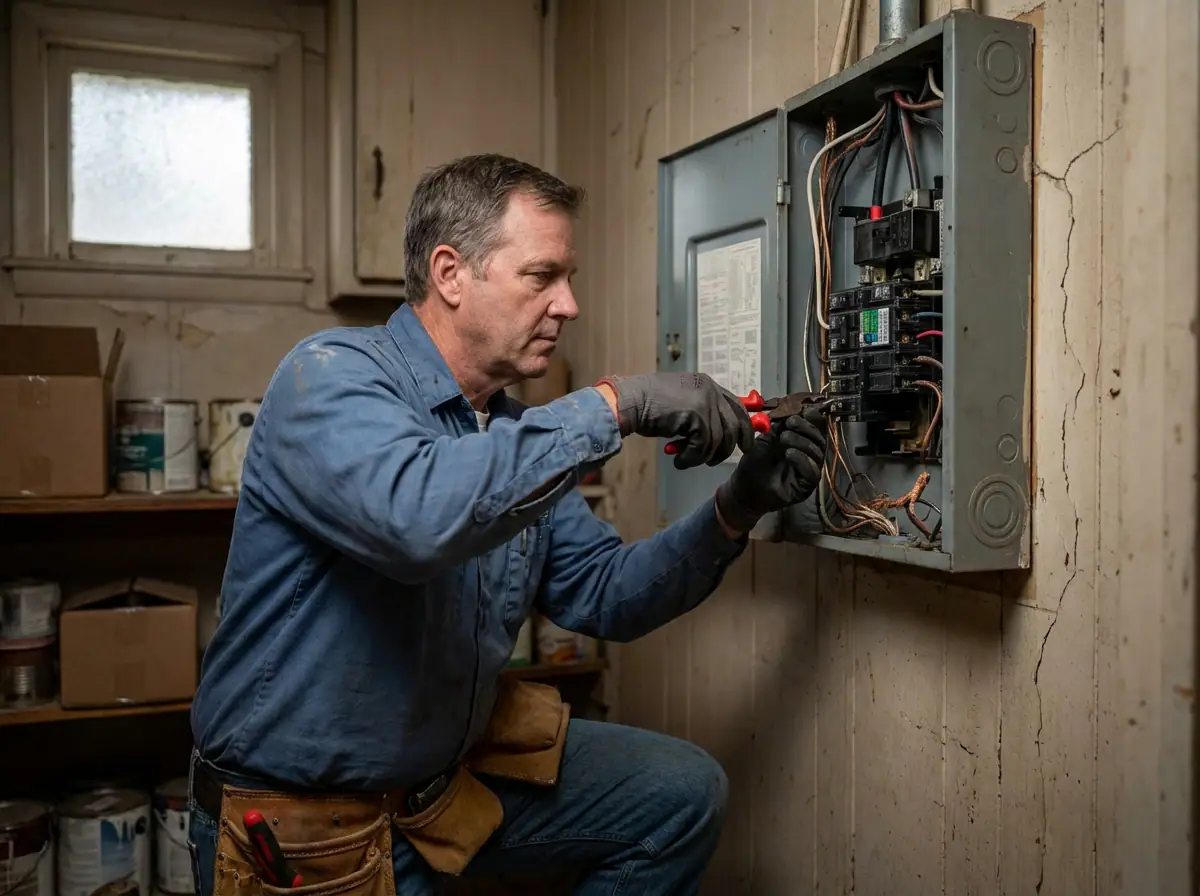
When it comes to protecting your home from electrical hazards, most Granbury homeowners are familiar with standard circuit breakers and perhaps even GFCI outlets in bathrooms and kitchens. However, there’s another critical safety device that’s become a code requirement in modern homes but remains mysterious to many: the Arc Fault Circuit Interrupter, or AFCI.
Arc fault breakers represent one of the most significant advances in residential electrical safety in recent decades, yet many homeowners don’t fully understand what they do, why they’re important, or whether their home has adequate protection. If you live in an older Granbury home or are planning any electrical work, understanding AFCIs could literally save your home and family from devastating electrical fires.
In this comprehensive guide, we’ll explore everything you need to know about arc fault protection, from how these devices work to whether your home needs them, and what to expect if you’re considering an upgrade.
What Are Arc Faults and Why Are They Dangerous?
Before diving into arc fault circuit interrupters themselves, it’s important to understand the problem they solve. An arc fault occurs when electrical current jumps across a gap in damaged, deteriorating, or improperly installed wiring. This creates an intensely hot electrical arc, similar to a tiny lightning bolt inside your walls.
Unlike a typical short circuit or overload that trips a standard breaker, arc faults can persist without drawing enough current to trigger conventional protection devices. The arcing produces extreme heat (temperatures can exceed 10,000 degrees Fahrenheit) that can easily ignite surrounding materials like insulation, wood framing, or dust.
According to the U.S. Consumer Product Safety Commission, arc faults are responsible for starting more than 28,000 home fires annually, resulting in hundreds of deaths and over $700 million in property damage. Common causes include:
- Damaged wire insulation from age, pests, or physical impact
- Loose electrical connections that create gaps
- Overheating from overloaded circuits
- Improperly installed outlets or switches
- Punctured wires from nails or screws during renovations
- Deteriorated extension cords or appliance cords
In Granbury’s older neighborhoods, where many homes were built before modern safety standards, the risk of arc faults increases as wiring systems age and deteriorate. This makes arc fault protection even more critical for local homeowners.
How Arc Fault Circuit Interrupters Work
Arc fault circuit interrupters are sophisticated electronic devices that continuously monitor the electrical current flowing through a circuit. Unlike standard breakers that simply measure current levels, AFCI breakers use advanced circuitry to analyze the unique electrical signatures that indicate dangerous arcing.
When an AFCI detects the characteristic pattern of an arc fault, it immediately disconnects power to that circuit, typically within a fraction of a second. This quick response prevents the arc from persisting long enough to start a fire.
The technology is smart enough to distinguish between dangerous arcs and normal arcing that occurs when you plug in appliances or flip light switches. This means you won’t experience nuisance tripping under normal operating conditions, though some older AFCI models were more sensitive than today’s improved designs.
Types of Arc Fault Protection
There are several types of AFCI devices available, each offering different levels of protection:
Branch/Feeder AFCIs: These were the first-generation devices that protect the wiring from the electrical panel to outlets and switches. They install directly in your breaker panel, replacing standard breakers.
Combination AFCIs: The current standard for new installations, these provide more comprehensive protection by detecting both parallel arcs (line to neutral or line to ground) and series arcs (gaps in a single conductor). This is the type required by modern electrical codes.
Outlet AFCIs: These look similar to GFCI outlets and can be installed at individual outlet locations, providing protection for everything downstream on that circuit. They’re useful when panel-based protection isn’t feasible.
Portable AFCIs: Plug-in devices that provide protection for specific appliances or extension cords, though these aren’t suitable for whole-circuit protection.
AFCI Requirements in Granbury: What Does Code Say?
The National Electrical Code (NEC) has progressively expanded AFCI requirements over the past two decades, and Texas municipalities including Granbury have adopted these standards. Understanding current requirements is essential if you’re planning any electrical work for remodels or additions.
Current code requires AFCI protection for virtually all 15- and 20-amp branch circuits supplying outlets and devices in living areas, including:
- Family rooms, living rooms, and dens
- Bedrooms (this was one of the earliest requirements)
- Hallways and closets
- Dining rooms
- Sunrooms and similar spaces
- Recreation rooms
- Libraries and offices
There are some exceptions where AFCI protection isn’t required, including bathrooms, unfinished basements, garages (in most cases), and outdoor outlets. However, kitchen small appliance circuits now require AFCI protection in addition to GFCI protection, creating a need for dual-function breakers.
It’s important to note that if your Granbury home was built before these code requirements went into effect, you’re not automatically required to upgrade unless you’re doing significant electrical work. However, that doesn’t mean you shouldn’t consider adding this protection voluntarily, especially in older homes where wiring degradation poses greater risks.
Does Your Granbury Home Have Arc Fault Protection?
Many homeowners have no idea whether their home has AFCI protection. Here’s how to check:
Check Your Electrical Panel: Open your breaker panel (be careful not to touch any electrical components) and look at the breakers. AFCI breakers will clearly be labeled “AFCI” or “Arc Fault” on the breaker handle. They’ll also have a test button, similar to GFCI breakers.
Look at Construction Date: Homes built or significantly renovated after 2002 likely have at least some AFCI protection, with more comprehensive coverage in homes built after 2008. However, the only way to be certain is to check your panel or have a professional inspection.
Review Electrical Permits: If you have records of electrical work done on your home, review them to see if AFCI upgrades were included.
Schedule a Professional Assessment: The most reliable way to understand your home’s arc fault protection is to have a licensed electrician evaluate your system. At Revamped Electric, we provide thorough assessments of electrical systems throughout Granbury and can recommend appropriate upgrades for your specific situation.
Signs Your Granbury Home Would Benefit from AFCI Upgrades
While arc fault protection is valuable for any home, certain situations make upgrades particularly important:
Your Home Was Built Before 2002
Older homes almost certainly lack AFCI protection entirely. Combined with aging wiring that’s more prone to developing arc fault conditions, this creates a higher fire risk that AFCIs can significantly reduce.
You’ve Experienced Unexplained Electrical Issues
If you’ve noticed flickering lights, warm outlets, discolored switch plates, or burning smells near electrical devices, these could indicate arcing problems. While these issues require immediate professional attention regardless, installing AFCI protection adds an important safety layer.
You’re Planning a Renovation
When conducting any significant electrical work as part of a remodel, code typically requires bringing affected circuits up to current standards, which includes AFCI protection. Rather than viewing this as an inconvenient expense, consider it an opportunity to enhance your home’s safety. If you’re planning a project that involves panel changes, it’s an ideal time to add comprehensive AFCI protection.
You Have Older Wiring Systems
Homes with aging wiring, especially those over 40 years old, face increased risks of insulation breakdown and connection deterioration. AFCI protection provides crucial monitoring for these vulnerable systems.
You Have Young Children
Children sometimes insert objects into outlets or damage cords during play. AFCI protection adds a safety net against these situations that could otherwise lead to dangerous arc faults.
The AFCI Installation Process: What to Expect
If you decide to upgrade your Granbury home with arc fault protection, understanding the process helps you know what to expect.
Professional Assessment
A qualified electrician will first evaluate your existing electrical system to determine the best approach. This includes examining your panel capacity, identifying which circuits would benefit most from AFCI protection, and checking for any underlying issues that should be addressed.
Panel Compatibility Check
Not all electrical panels accept AFCI breakers, particularly very old panels. If your panel is incompatible, this might be an opportunity to consider a full panel upgrade, which provides numerous benefits beyond just adding arc fault protection.
Breaker Installation
For most homes, AFCI protection is added by replacing standard breakers with AFCI breakers. This is relatively straightforward work for a licensed electrician, though it requires working with live electrical components in the panel, which is why it should never be attempted as a DIY project.
Testing and Verification
After installation, each AFCI breaker must be tested to ensure proper operation. The electrician will use the test button on each breaker and may also perform additional testing to verify the devices are functioning correctly.
Circuit Troubleshooting
Occasionally, installing an AFCI breaker reveals existing problems in a circuit, such as shared neutrals or deteriorated wiring that’s already experiencing intermittent arcing. While this might seem like an inconvenience, it’s actually a benefit, as it identifies dangerous conditions that were previously undetected.
AFCI vs. GFCI: Understanding the Difference
Many homeowners confuse arc fault circuit interrupters with ground fault circuit interrupters (GFCIs), so it’s worth clarifying the distinction. While both are critical safety devices, they protect against different hazards.
GFCIs protect people from electrical shock by detecting current imbalances that indicate electricity is flowing through an unintended path (like through a person’s body). They’re required in wet locations like bathrooms, kitchens, and outdoor areas.
AFCIs protect against fires by detecting the unique electrical signatures of dangerous arcing. They’re required in living spaces where fire protection is the primary concern.
Some locations, like kitchens, now require both types of protection. This is accomplished using dual-function AFCI/GFCI breakers or by combining AFCI breakers with GFCI outlets.
Common AFCI Questions and Concerns
Will AFCIs Cause Nuisance Tripping?
Early-generation AFCI breakers had a reputation for nuisance tripping, but modern combination AFCIs are significantly more reliable. If you experience frequent tripping after installation, it typically indicates an actual problem in the circuit that should be investigated rather than a defect in the AFCI itself.
Can I Install AFCIs Myself?
Working inside an electrical panel involves serious risks and requires specialized knowledge and tools. Even with the power shut off, certain components remain energized. Additionally, proper installation requires understanding circuit configurations, testing procedures, and local codes. This is definitely work for licensed professionals.
How Much Does AFCI Protection Cost?
AFCI breakers cost more than standard breakers, typically ranging from $35 to $75 per breaker depending on type and brand. Installation costs vary based on the number of circuits being protected and any complications discovered during the process. While this represents an investment, it’s modest compared to the potential cost of fire damage or loss of life.
Do AFCIs Require Maintenance?
AFCI breakers should be tested monthly using the test button on the device. Simply press the button; the breaker should trip, indicating it’s functioning properly. Then reset the breaker to restore power. This simple test ensures your protection remains active.
Protecting Your Granbury Home’s Future
Arc fault circuit interrupters represent a significant advancement in home electrical safety, providing protection against a fire hazard that standard breakers simply can’t detect. For Granbury homeowners, especially those with older homes or aging electrical systems, AFCI protection offers invaluable peace of mind.
Whether you’re planning a renovation that requires code compliance, concerned about your aging electrical system, or simply want to provide the best protection for your family and home, adding arc fault protection is an investment in safety that pays dividends every day.
The technology continues to evolve and improve, making today’s AFCI breakers more reliable and effective than ever. As a veteran-owned company committed to protecting our neighbors throughout Granbury and surrounding communities, we believe every home deserves the highest level of electrical safety available.
Don’t wait until electrical problems develop to think about arc fault protection. A proactive approach to electrical safety not only protects your most valuable assets but also ensures your home’s electrical system meets modern safety standards that future buyers will expect.
Ready to enhance your home’s electrical safety with arc fault protection? The team at Revamped Electric brings military-grade discipline and attention to detail to every installation. We’ll assess your current system, explain your options clearly, and provide transparent pricing for any recommended upgrades. Contact us today through our contact page or give us a call to schedule your electrical safety assessment. Let’s work together to ensure your Granbury home has the comprehensive protection it deserves.