
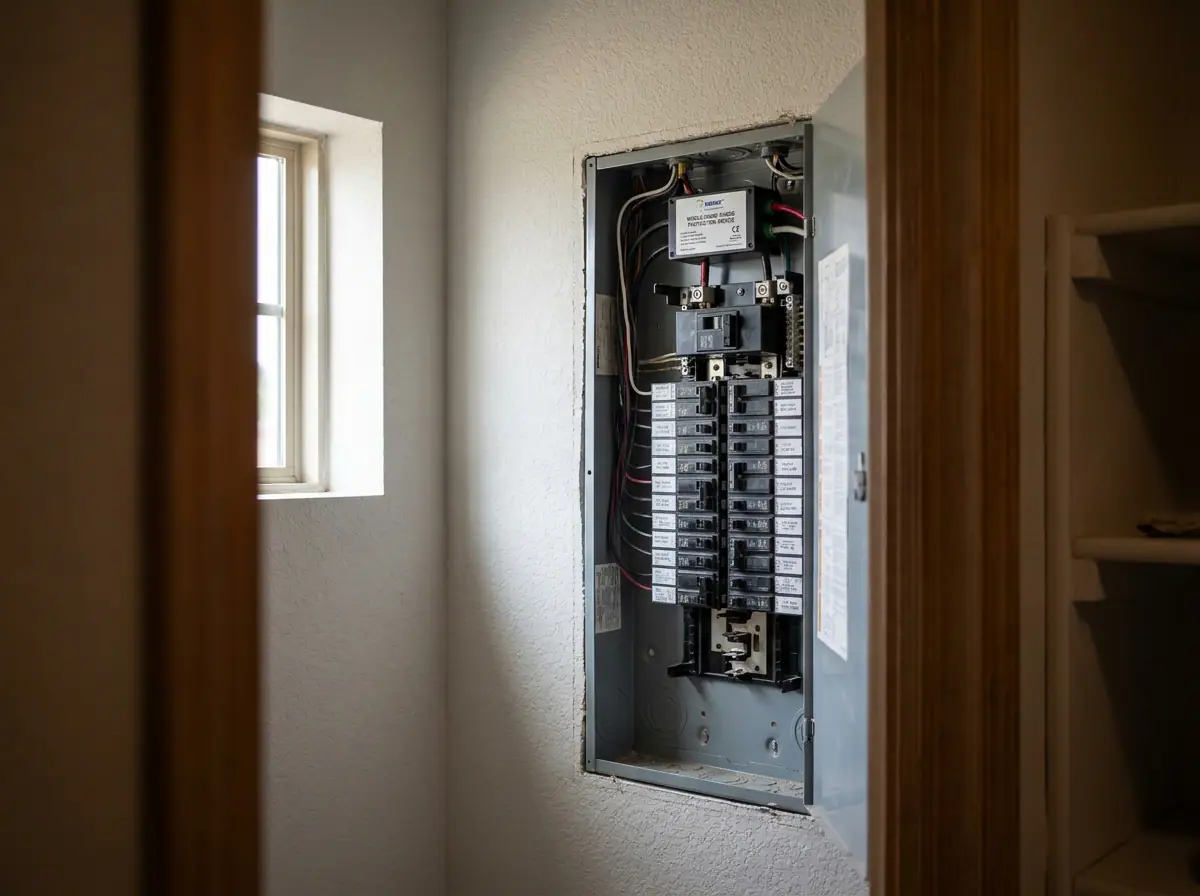
Whole-home surge protection is a surge protective device (SPD) installed at your electrical panel that stops voltage spikes before they reach any circuit in your house, protecting hardwired systems like your HVAC, water heater and appliances that power strips never touch. For Granbury homeowners facing North Texas storms, grid switching and constant small surges from their own appliances, the best defense is a layered one: a panel-mounted SPD plus quality point-of-use protectors for sensitive electronics. It must be installed by a licensed electrician, and it only works as well as your home's grounding.
What Is a Power Surge and Why Does It Happen?
A power surge is any sudden spike in voltage above the standard 120 or 240 volts your home's circuits are designed to handle. It may last only a fraction of a second, but that brief burst is enough to damage the microprocessors and circuit boards inside modern electronics and appliances.
Most people picture lightning, but lightning is responsible for less than 10% of surge-related damage. The majority of surges come from more ordinary sources.
External surge sources
- Lightning: direct strikes on a home are rare, but a strike on or near power lines can send powerful transients through the utility lines and into your electrical system.
- Utility grid switching: when the power company shifts loads, performs maintenance, repairs lines or restores power after an outage, the switching (including grid reclosers) can create rapid voltage changes. If your lights flicker for no apparent reason, you have seen a minor surge. These fluctuations are common in growing areas like Hood County as infrastructure keeps pace with development.
- Downed lines and transformer problems: storms, ice events and accidents can send irregular voltage into homes still connected to the grid. If your home has ever had a sudden loss of power during a storm, it has already been exposed to these events.
- Neighborhood loads: EV charging stations, large motors and construction equipment nearby can cause voltage spikes or sags that affect surrounding homes.
Internal surge sources
- Large appliances cycling: every time an air conditioner, refrigerator compressor, washing machine, dryer or pool pump kicks on or off, it creates a small voltage spike. In a Granbury summer, your AC may cycle dozens of times a day.
- Faulty or aging wiring: deteriorated or improperly installed wiring, aluminum wiring, loose connections and overloaded or outdated panels create unstable voltage and raise surge risk. See our faulty wiring service if this sounds like your home.
Small surges add up
Internal surges are much smaller than a lightning strike, but they are constant. The cumulative effect, sometimes called electrical erosion, degrades components a little more each time voltage leaves the safe range. That is why electronics in surge-prone homes often die early without any single dramatic failure: an HVAC system that fails years ahead of schedule, a smart refrigerator control board that malfunctions, office equipment that becomes unreliable. These failures look like normal wear and tear, but cumulative surge damage is frequently the cause.
Why Power Strips Alone Are Not Enough
Point-of-use surge protectors (power strips) have their place, but relying on them alone leaves big gaps.
- They only protect what is plugged into them. Your HVAC system, refrigerator, dishwasher, range, water heater, garage door opener, smart thermostat, security system, ceiling fans, light fixtures and LED recessed lighting all run on circuits a power strip never touches. When a surge travels through your wiring, those systems take the full hit.
- They wear out without warning. Most strips use a metal oxide varistor (MOV) that absorbs surge energy and degrades slightly each time. Eventually it is used up and the strip is nothing more than an extension cord, and most strips have no indicator to tell you.
- They cannot handle major surges. Power strips are typically rated around 1,000 to 3,000 joules. A significant lightning strike or grid event can overwhelm them instantly, sending the surge on to your equipment and often leaving you needing outlet repair as well as new electronics.
How Whole-Home Surge Protection Works
A whole-home surge protector (also called a whole-house SPD, surge arrestor, surge suppressor or transient voltage surge suppressor, TVSS) is installed at or near your main electrical panel or meter base. It constantly monitors incoming voltage and, when it detects a spike above safe levels, diverts the excess energy to your home's grounding system in a fraction of a second, before it reaches your branch circuits, outlets and appliances. Because it sits upstream of everything, it handles both external surges from the utility line and internal surges generated by your own appliances.
Quality whole-home devices have far higher capacity than power strips, often 40,000 to 80,000 joules or more, are designed to handle multiple surge events, and many include indicator lights, audible alarms or diagnostics that show when the device has absorbed a major surge and may need service or replacement.
SPD types
- Type 1: meter or line-side protection.
- Type 2: panel-mounted protection.
- Type 3: point-of-use protection at the outlet.
The layered approach
Electricians and the National Electrical Manufacturers Association recommend layered surge protection: a whole-home device at the panel that stops the bulk of surge energy, plus point-of-use protectors (Type 2 plus Type 3) that catch residual spikes on your most sensitive and valuable electronics such as computers, TVs, home theater systems, network gear and smart home hubs. Together they cover both external and internal threats with redundancy that neither provides alone.
What Whole-Home Surge Protection Covers
Because it protects every circuit at once, a panel-level SPD covers:
- HVAC systems, heat pumps and their control boards
- Refrigerators and freezers
- Washers, dryers, dishwashers and built-in ovens
- Water heaters with electronic controls
- Well pumps, sump pumps and pool equipment on dedicated circuits
- Smart home hubs, security panels, doorbell cameras, smart locks and lighting controls
- Home theater, entertainment systems, TVs, gaming consoles and internet routers
- EV chargers and garage door openers
- Hardwired lighting and ceiling fans
- Hidden electrical components such as dimmer switches, GFCI outlets and arc fault breakers, which can fail early or malfunction after surge damage
- Circuit breakers and even the main service panel itself
Unprotected surges can also create a fire hazard, not just equipment damage.
Protecting Specialty Equipment
HVAC systems
HVAC equipment is especially vulnerable because of its control boards, variable-speed motors and electronic thermostats. Some manufacturers now require documented surge protection to keep warranty coverage on high-efficiency systems. Dedicated surge protection can be added at the outdoor compressor and indoor air handler as an extra layer beyond the whole-home device.
EV chargers and solar inverters
Large hardwired equipment often benefits from additional protection where it connects to the home. EV chargers and solar inverters can both introduce transients and be damaged by them, so ask about dedicated SPDs for those circuits. If you plan to add either, mention it during your assessment so protection can be coordinated with the new circuit installation.
Smart homes and home offices
Connected thermostats, cameras, smart locks, lighting controls and automation hubs are very sensitive to voltage fluctuations, and replacing a whole ecosystem is costly and time-consuming. For home offices, surge damage can also mean lost work and files. Pair whole-home protection with a UPS (uninterruptible power supply) for computers, internet equipment and smart home hubs: it adds surge protection and battery backup so you can shut equipment down safely during outages and avoid data loss.
Is Your Panel and Grounding Ready?
Your panel needs to be in good working order with space for the device. Older panels, panels at capacity or panels showing wear may need attention first, and many older panels lack the space or compatibility for modern SPDs. Frequent breaker trips, lights that flicker when large appliances start, and buzzing outlets are common signs your panel or wiring needs a look. Combining surge protection with a panel change adds capacity for your home's growing demands and gets everything done in one visit.
Grounding is just as important. Surge protectors work by sending excess voltage to ground, so a poorly grounded system cannot divert a surge properly. Older homes in Hood, Parker, Johnson and Somervell counties built before modern grounding requirements may have inadequate or deteriorated grounding. An electrician should test grounding resistance and, if needed, add grounding rods or upgrade bonding. Good grounding also improves overall electrical safety and can reduce nuisance breaker trips.
Choosing the Right Surge Protector
Not all SPDs are equal. When comparing options, look at:
- UL rating: residential SPDs should comply with UL 1449.
- Joule rating: higher is better.
- Nominal discharge current (In): a higher In means the device can handle larger surges.
- Voltage Protection Rating (VPR) and clamping voltage: lower means better protection for connected equipment.
- Response time and coordination: how quickly it limits spikes (nanoseconds matter) and whether it coordinates with your other protectors.
- Monitoring and warranty: status indicators, and whether the manufacturer offers a warranty or equipment protection policy covering connected gear.
An undersized SPD, improper installation or poor grounding leaves you thinking you are protected when you are not. Homes with subpanels, older services or multiple units need a tailored plan.
What to Expect During Professional Installation
Working inside an electrical panel is dangerous, and DIY installation violates the electrical codes designed to keep you safe. This is a job for a licensed electrician, who will:
- Inspect your service panel, breaker configuration, available slots and any existing wiring issues.
- Test and confirm your grounding system, upgrading it if needed.
- Recommend and size an appropriate SPD (Type 1 or Type 2 depending on placement) for your home's size and electrical load.
- Coordinate the work with any necessary panel or grounding upgrades.
- Mount the device at the main panel or meter base on a dedicated breaker, connect it to the grounding system and make sure every connection meets current code.
- Test the installation and explain the status indicators, maintenance and warranty.
Installation typically takes only a few hours and is minimally invasive, and every circuit is protected as soon as it is complete. It is also a good chance to have your whole electrical system checked, so problems like aging components can be caught at the same time.
Maintenance after major events
SPDs degrade over time and after absorbing large surges. Many models have a status light, but a professional inspection is the most reliable check. After a nearby lightning strike or serious grid event, have the device inspected and consider replacing it if it has been heavily stressed.
Cost vs. Benefit
Cost depends on the device, your panel, service size and whether grounding or panel upgrades are needed. Professional installation of a quality whole-home surge protector typically costs about $300 to $800. Compare that with what a single major surge can cost:
- HVAC control board: $500 to $1,500
- Complete HVAC system: commonly $5,000 to $15,000 or more, depending on the system
- Smart refrigerator: $1,500 to $3,000
- Washing machine: $1,000 or more
- Computers and electronics: $3,000 or more
Total losses from one event can easily exceed $10,000, and the total value of at-risk equipment in many Granbury homes is $20,000 to $50,000 or more. Even without a catastrophic event, extending the life of your major systems by a few years means the device pays for itself many times over.
Insurance may cover some surge damage, but deductibles and exclusions often leave you short. Some insurers now recommend whole-home surge protection and some offer premium discounts or other benefits for documented SPD installation, so check with your provider afterwards.
When to Install Surge Protection
Good times to install
- During new construction or remodels, or when adding circuits or upgrading wiring, when the added labor is minimal and everything is integrated from the start.
- Before storm season: late winter or early spring, ahead of the spring and summer thunderstorms that stress the grid across Hood County.
- When you buy a new HVAC system, high-end kitchen appliances, a home theater, solar panels, an EV charger or a smart home system, or after new lighting installation.
Warning signs you need it now
- You have already had surge damage, even minor. One surge event means more are likely, especially if the cause is unresolved.
- Frequent outages or flickering lights in your neighborhood point to grid instability.
- You live in an older home with original wiring, or notice flickering lights, buzzing outlets or frequently tripping breakers.
- You have had unexplained device failures.
Simple steps you can take today
- Unplug sensitive electronics during major storms.
- Use quality surge-protecting power strips for TVs and computers.
- Keep backups of important data off-site or in the cloud.
- Schedule an electrical inspection if your home is older or you have had unexplained failures.
Frequently Asked Questions
Is a whole-home surge protector better than power strips?
It does a different, bigger job. A whole-home SPD protects every circuit, including hardwired appliances, and handles far larger surges. Power strips protect only what is plugged into them. The recommended approach uses both.
Do most power surges come from lightning?
No. Lightning causes less than 10% of surge-related damage. Most surges come from appliances cycling inside the home, utility switching and grid fluctuations.
Can I install a whole-home surge protector myself?
No. It means working inside your electrical panel, which is dangerous and must meet code. A licensed electrician should also verify your grounding, since the device depends on it.
How much does whole-home surge protection cost?
Professional installation typically costs about $300 to $800, depending on the device and your panel. Panel or grounding upgrades, if needed, add to that.
Does a surge protector last forever?
No. SPDs degrade over time and after large surges. Watch the status indicator and have the device inspected after a nearby lightning strike or major grid event.
Will my panel need an upgrade first?
Not always. Older, full or worn panels may need an upgrade to make room for a modern SPD, and an electrician will tell you during the assessment.
Revamped Electric is a veteran-owned electrical company serving Granbury, Tolar, Stephenville, Aledo, Mineral Wells, Benbrook, Weatherford, Hudson Oaks, West Fort Worth and the wider Hood, Parker, Johnson and Somervell county area. We will check your panel and grounding, recommend the right protection for your home and install it to code, with no pressure and no upselling. Call us at 817-677-0036 or request a quote to protect your home before the next storm.