

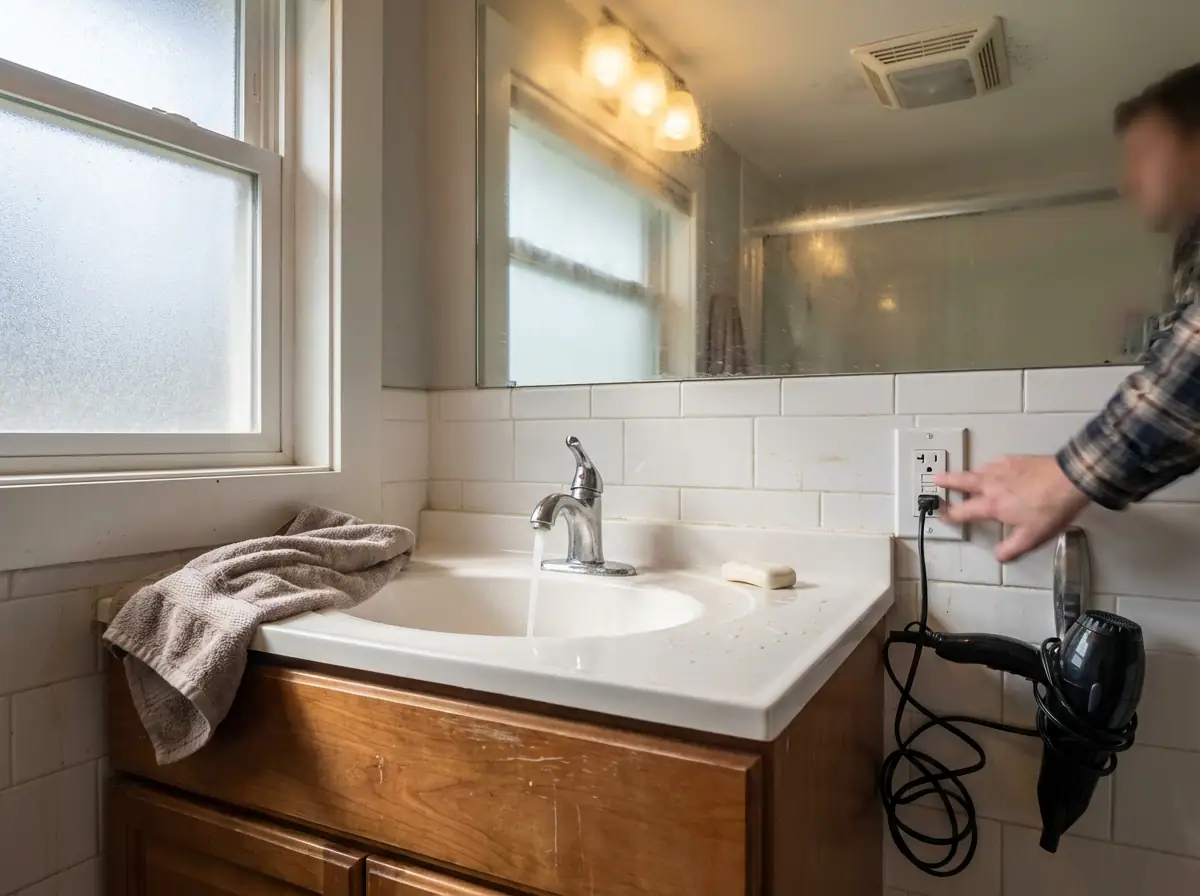
Under the current National Electrical Code (NEC), every 15 and 20-amp outlet in a bathroom must have GFCI protection, bathroom receptacles must be supplied by at least one 20-amp circuit dedicated to bathroom outlets, and light fixtures must be rated for the wet or damp location they sit in. Exhaust fans, fan-heater combinations and high-draw extras like heated floors need correctly sized circuits of their own. If your Granbury home's bathroom has unprotected outlets, shares a circuit with other rooms or trips the breaker when the hair dryer runs, it is time for an upgrade.
Water, steam and high-draw appliances share a tight space in a bathroom, which makes wiring, grounding and code compliance more critical there than almost anywhere else in the home. This guide covers what the code requires, the warning signs to watch for and how to plan bathroom electrical upgrades safely.
Why Bathroom Electrical Safety Is Different
Most rooms have predictable moisture levels. A bathroom does not. Steam from hot showers, splashing water at the sink and wet hands reaching for outlets and switches create a consistently high-risk environment, and a single compromised outlet or wrongly installed fixture near water can cause a ground fault that delivers a dangerous or even fatal shock.
Many older homes in Hood County and Parker County were built before modern bathroom codes were established or updated, and requirements have kept evolving, so a bathroom wired in the 1980s or 1990s may be well out of step with today's code. These codes are enforced during inspections, and falling short can create liability issues when you sell your home or file an insurance claim. Moisture also speeds up the deterioration of wiring insulation and outlet parts, so electrical problems in bathrooms tend to get worse faster than in dry rooms.
GFCI Protection: What the Code Requires
The Ground Fault Circuit Interrupter (GFCI) is the single most important electrical safety feature in any bathroom. It detects even tiny imbalances in current, the kind that occur when electricity finds a path through water or a person, and cuts power in as little as one-thirtieth of a second. That response is fast enough to prevent serious injury or death in most cases.
Current NEC code requires GFCI protection on all 15 and 20-amp receptacles in bathrooms. It applies to every outlet in the room, regardless of how far it is from the sink or shower, including one that seems to be across the room from any water.
Common GFCI Problems Homeowners Miss
Having a GFCI in the bathroom does not always mean you are protected:
- Never tested: GFCIs should be tested monthly with the test and reset buttons. One that has not been tested in years may have a failed internal mechanism and provide no protection at all.
- Downstream outlets not protected: a correctly wired GFCI can protect other outlets further along the same circuit, but if the wiring is wrong those outlets may be unprotected even though they look normal.
- Partial coverage: many older Granbury homes have only one or two GFCI outlets, usually at the vanity, and the rest of the bathroom's receptacles have none.
- Outdated units: GFCI technology has improved significantly, and units installed before the mid-2000s may not trip as reliably as modern ones.
- No GFCI at all: common in homes built before the mid-1970s or never updated.
Upgrading to full GFCI coverage is one of the most affordable and impactful electrical improvements you can make, and a licensed electrician can usually do it quickly. Our outlet installation and outlet repair services include GFCI upgrades for bathrooms of any size.
Dedicated Bathroom Circuits
The NEC requires bathroom receptacles to be supplied by at least one 20-amp circuit. With a few exceptions, that circuit must be dedicated to bathroom outlets and cannot serve other areas. Hair dryers, curling irons, electric shavers and similar appliances draw significant power, and running them alongside other household loads raises the risk of tripped breakers and overheating.
Many older Granbury homes have bathroom outlets on circuits that also serve hallway lighting, bedroom receptacles or other parts of the house. That arrangement is no longer compliant for new construction or full bathroom remodels, and it invites overloaded circuits.
Exhaust Fans and Ventilation Circuits
Exhaust fans do more than clear odors. They pull moisture out of the air and protect walls, ceilings and framing from long-term mold and rot. They are often treated as an afterthought, and many older fans in Granbury homes are wired improperly, lack a ground wire or sit on circuits that should not carry that load.
Installing or upgrading a fan typically involves:
- Running new wiring from the panel or an existing circuit
- Routing ductwork to the exterior
- Often adding a dedicated switch or timer
- A dedicated circuit for combination fan, light and heater units, because of their higher load
Putting a fan-heater combination on an existing shared circuit is a common cause of tripped breakers and, in worse cases, overheated wiring. A fan that hums, runs inconsistently, does not move air or trips a breaker needs attention to the wiring or the unit itself.
Bathroom Lighting: Ratings, Zones and Vanity Light
Wet, Damp and Dry Locations
The NEC and local building codes set rules about which fixtures can go where relative to water. Fixtures are rated for three kinds of location:
- Wet locations: directly exposed to water, such as inside a shower or directly above a tub where water splashes or condenses. Only wet-rated fixtures can go here.
- Damp locations: subject to moisture or condensation without direct exposure, such as near a shower. Damp-rated or wet-rated fixtures are required.
- Dry locations: areas of the bathroom away from any direct water exposure, where standard fixtures are acceptable.
The wrong fixture in the wrong zone is one of the most common bathroom electrical mistakes. It is a code violation, and as moisture seeps into the housing the fixture can corrode, short circuit or become a shock hazard.
Vanity and Task Lighting
Poor vanity lighting causes eyestrain and uneven grooming, and better lighting is one of the most common requests in Granbury bathroom remodels. Options include LED bar fixtures, vertical side-mounted sconces, backlit mirrors and recessed lights designed for wet or damp locations. Each has different wiring requirements, and anything close to a shower or tub must carry the right rating. See our lighting installation service for help choosing and wiring fixtures.
Heated Floors and Other High-Draw Additions
Electric radiant floor heating has become popular in Texas bathroom remodels, including in Granbury. It is relatively straightforward to install during a tile project, but it needs dedicated circuit capacity many older homes lack. Other modern additions that draw power include:
- Towel warming drawers
- Steam showers
- Smart mirrors with built-in lighting and displays
- Toilet seats with heating and bidet functions
Adding several of these to a bathroom wired on a single shared circuit leads to overloaded wiring and unreliable performance. Planning circuit installation into the upgrade gives each high-draw appliance the dedicated supply it needs, and it is much easier while the walls are open.
Warning Signs Your Bathroom Electrical Needs Attention
- Outlets that do not work or GFCIs that trip often or will not reset: possibly a tripped GFCI elsewhere on the circuit, a wiring fault or a panel issue.
- Flickering or dimming lights with no obvious cause: a loose connection, an overloaded circuit or a wiring problem beyond the bathroom.
- A burning smell near outlets or switches: often arcing or overheating in the wiring or device. Never ignore it.
- Outlets that feel warm, or discolored cover plates, switch plates or fixture bases: signs of resistance from faulty wiring, a loose connection or a failing device, and a real fire risk.
- Breakers that trip when you use a hair dryer or other appliance, or when several run at once on a shared circuit: the circuit is likely undersized or overloaded.
- Sparks when plugging in: small sparks can sometimes be normal, but persistent or large sparks need immediate professional assessment.
- No GFCI protection at all on bathroom outlets.
- An exhaust fan that hums but does not move air well, which can mean a wiring or motor problem.
Any of these deserves prompt attention from a licensed electrician rather than repeatedly resetting the breaker. For deeper wiring problems, see our faulty wiring and breaker trips services.
Planning a Bathroom Remodel or Addition
A common mistake is treating electrical work as an afterthought: the tile is chosen and fixtures ordered, then someone realizes the outlets will not suit the new vanity or the lighting plan needs a junction box where none exists. Plan the electrical before walls are opened or framing begins. With walls open, running new wiring is straightforward; once tile and drywall are in, the same work is far more labor-intensive and expensive.
A licensed electrician can help you:
- Map out the right number of circuits
- Install GFCI protection at every required location
- Select and install fixtures rated for each zone
- Wire the exhaust fan correctly
- Add dedicated circuits for heaters, heated floors and other high-draw items
- Bring the whole space into NEC compliance
If your home is older or its bathroom wiring has never been reviewed, an electrical inspection is a smart first step. Significant electrical changes require permits and inspections; a licensed electrician makes sure the work passes and is documented, which matters when you sell or make an insurance claim. We work with homeowners and contractors on remodels, from simple outlet upgrades to full circuit installations for new bathroom additions.
Frequently Asked Questions
Do all bathroom outlets need GFCI protection?
Yes. Current NEC code requires GFCI protection on all 15 and 20-amp receptacles in a bathroom, wherever they are in the room.
Does a bathroom need its own circuit?
Bathroom receptacles must be supplied by at least one 20-amp circuit that, with a few exceptions, serves only bathroom outlets. Heater fans, heated floors and similar high-draw items often need dedicated circuits of their own.
How often should I test a GFCI outlet?
Monthly, using the test and reset buttons. If it does not trip or will not reset, have it checked and replaced.
What light fixtures can go over a shower or tub?
Only fixtures rated for wet locations. Areas with moisture but no direct water exposure need damp-rated or wet-rated fixtures.
Why does my breaker trip when I use a hair dryer?
The bathroom is likely on an undersized or shared circuit, or a fan-heater unit is overloading it. An electrician should diagnose and correct the circuit rather than you resetting the breaker over and over.
Revamped Electric is a veteran-owned electrician based in Granbury, serving Tolar, Stephenville, Aledo, Weatherford, Benbrook, Mineral Wells, Hudson Oaks, West Fort Worth and communities across Hood, Parker, Johnson and Somervell counties. To bring your bathroom up to code or plan a remodel, call us at 817-677-0036 or request a quote.