

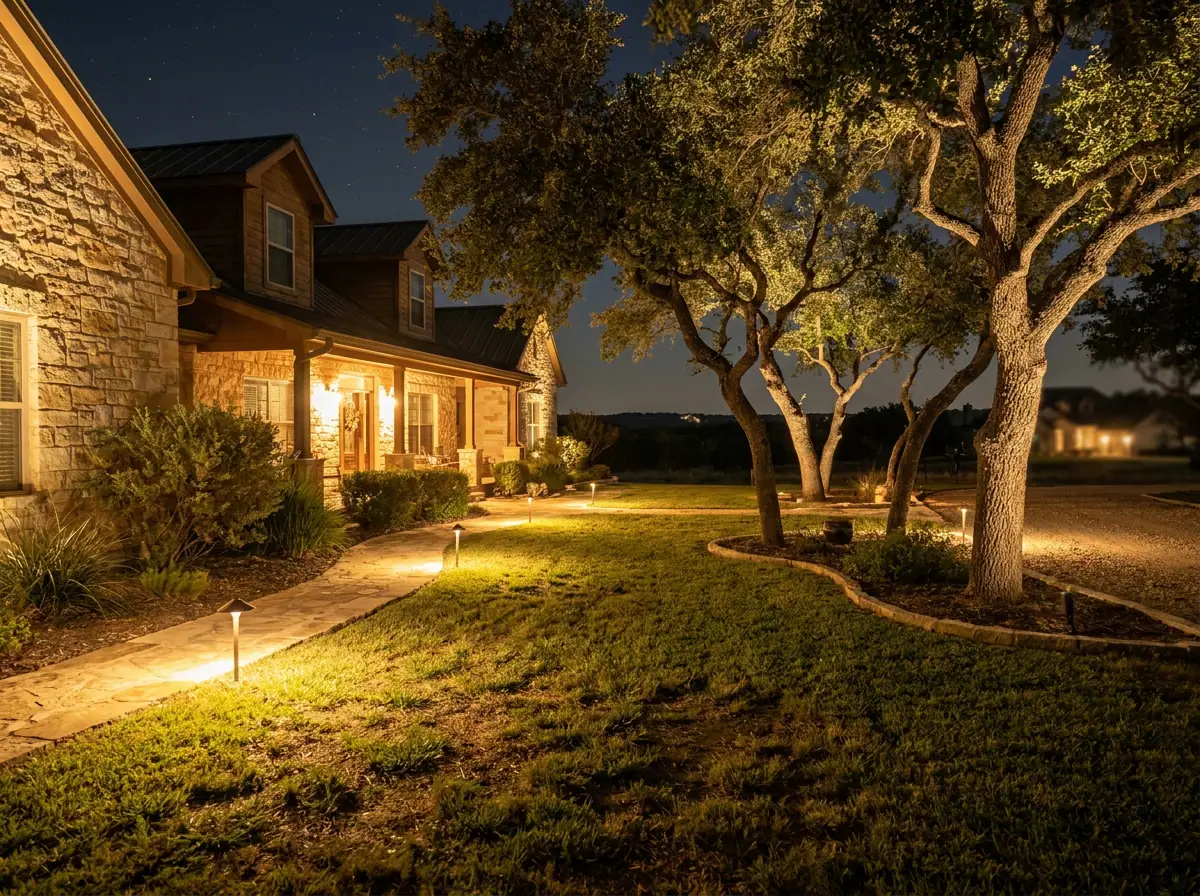
There is something special about pulling into a well-lit driveway after dark or relaxing on a back patio surrounded by soft, warm landscape lighting. Outdoor lighting transforms the way your property looks and feels, and for homeowners in Granbury and the surrounding Hood County area, it also plays a significant role in home security, curb appeal, and overall property value. But before you start planning string lights across the pergola or spotlights along the tree line, there is one thing that matters more than the fixtures you choose: the electrical system behind them.
Outdoor electrical work is not the same as indoor electrical work. It requires weatherproof materials, properly rated wiring, ground fault protection, and installations that meet Texas electrical code. Getting it wrong is not just a cosmetic problem. It can result in tripped breakers, damaged fixtures, fire hazards, or serious safety risks to your family. This guide breaks down everything Granbury homeowners need to know about outdoor lighting and landscape electrical before the project begins.
Why Outdoor Electrical Is a Different Animal Than Indoor Wiring
Many homeowners assume that running power outdoors is a straightforward extension of what is already inside the walls. In reality, exterior electrical installations face a completely different set of conditions that demand specific materials, methods, and code compliance.
Outdoor wiring must withstand North Texas weather, which means heat in the summer, occasional freezes, rain, and humidity. Any wiring or conduit run along the exterior of your home or underground must be rated for those conditions. Standard indoor wire run outdoors will degrade over time, creating shorts, shock hazards, and fire risks. Underground runs typically require conduit or direct-burial cable rated for ground installation, and the depth of burial matters depending on whether the circuit is protected by a GFCI breaker or run through rigid conduit.
Outdoor outlets must also be weatherproof or in-use cover rated, meaning the cover stays closed around the plug while it is in use. These small details add up quickly, and skipping them in the name of saving money or time is how minor outdoor projects turn into major electrical problems down the road.
Common Types of Outdoor Lighting Granbury Homeowners Want Installed
Before calling an electrician, it helps to understand what you are working with and what each type of outdoor lighting actually requires from an electrical standpoint.
Pathway and Landscape Accent Lighting
Low-voltage landscape lighting systems are popular because they feel approachable for DIY installation. These systems typically run off a transformer plugged into a standard outdoor outlet and use 12-volt wiring to power fixtures along walkways, in garden beds, or around trees. While the fixtures themselves are low risk, the outdoor outlet they depend on still needs to be properly installed, GFCI protected, and positioned correctly. If your yard does not have a conveniently located outdoor outlet, you will need one added before this type of system works the way you want it to.
Security and Flood Lighting
Security lighting is one of the most practical investments a Granbury homeowner can make. Motion-activated floodlights on the garage, carport, or back fence line deter unwanted visitors and make it easier to navigate the property at night. These fixtures typically run on standard 120-volt circuits and need to be hardwired by a licensed electrician. Placement matters too. Lights positioned too high lose effectiveness, and lights wired without proper weatherproof boxes can become safety hazards over time.
Soffit, Fascia, and Architectural Lighting
Soffit lighting and under-eave fixtures add a polished, finished look to a home’s exterior. These are common in newer construction and remodel projects and require careful installation because they involve running wire through exterior walls, attic spaces, or along the roofline. This is not a project for an inexperienced hand. Done correctly, it dramatically improves curb appeal. Done poorly, it creates moisture intrusion points and potential wiring hazards in areas that are difficult to inspect or repair later.
Patio, Pergola, and Outdoor Entertainment Lighting
String lights, ceiling fans on covered patios, pendant fixtures in outdoor kitchens, and recessed lighting under pergola beams are all in high demand among Granbury homeowners who love to entertain outside. These setups often require dedicated circuits, weatherproof boxes, and sometimes a subpanel in an outdoor structure depending on how much power the space needs. If you are adding a ceiling fan to a covered patio, the circuit and switch need to be wired correctly, and the fan itself needs to be rated for damp or wet locations depending on how exposed it is to the elements.
You can learn more about what goes into professional lighting installation for both interior and exterior applications on our services page.
GFCI Protection: The Non-Negotiable for Outdoor Circuits
Ground fault circuit interrupter protection is required by the National Electrical Code for all outdoor outlets and many outdoor circuits. A GFCI device detects tiny imbalances in electrical current, which can indicate that electricity is traveling through a person or an unintended path, and it shuts off power in a fraction of a second to prevent electrocution.
In outdoor environments where water, wet grass, and puddles are part of life, GFCI protection is not optional. It is a code requirement and a genuine life-safety measure. Every outdoor outlet on your property should be GFCI protected, either at the outlet itself or at the breaker serving that circuit. If you are not sure whether your existing outdoor outlets are properly protected, that is worth having an electrician check during any outdoor electrical project.
Homeowners in Granbury who have older homes may find that outdoor outlets were installed before modern GFCI requirements were adopted. If that describes your property, upgrading those outlets is a simple but important improvement. You can also visit our page on outlet installation to understand what proper exterior outlet placement involves.
Dedicated Circuits for High-Demand Outdoor Electrical Loads
Not all outdoor lighting and landscape electrical setups can run safely off an existing circuit. When you start adding multiple floodlights, a patio ceiling fan, an outdoor refrigerator, a sound system, and string lighting all on the same circuit, you are likely to run into tripped breakers, flickering lights, or worse, an overloaded circuit that generates heat inside your walls.
High-demand outdoor setups often need their own dedicated circuit run directly from your electrical panel. This is especially true for outdoor kitchens, large covered patios, detached garages used as workshops, and any structure that draws consistent power loads. A licensed electrician will evaluate your current panel capacity, determine whether a new circuit can be added safely, and run the appropriate wiring to support the outdoor space you have in mind.
If your panel is older or already running near capacity, an outdoor electrical project might also be the right time to talk about a panel upgrade. Granbury homeowners dealing with panels that are decades old may find that adding new outdoor circuits is the trigger that makes upgrading the right call. Our team handles panel changes as part of a broader electrical improvement plan when the situation calls for it.
Underground Wiring and Trenching: What the Process Actually Looks Like
One of the most common questions homeowners have about landscape electrical is what happens underground. Running power from the house to a detached garage, a gate entry, a shed, landscape lighting zones, or an outdoor structure almost always requires trenching and underground wiring.
The depth required depends on the wiring method. Direct-burial cable typically needs to be buried at least 24 inches deep on circuits not protected by GFCI or AFCI breakers, while conduit-encased wiring can often be buried at shallower depths. The specific requirements depend on the application and local code, which is another reason this work needs to be done by a licensed professional who knows Texas code and Hood County requirements.
Trenching can disrupt landscaping, but a good electrician will plan the route thoughtfully to minimize disruption and work with you to restore the area after the job is done. Underground wiring also needs to avoid existing utility lines, which is why calling 811 to mark utilities before any digging begins is a required step that no responsible contractor skips.
Outdoor Lighting and Home Resale Value in the Granbury Area
Beyond safety and functionality, outdoor lighting has a measurable impact on property value and buyer appeal. In the Granbury, Weatherford, and Aledo markets, where outdoor living spaces are a significant selling point, a professionally wired and well-designed lighting system can set a home apart when it goes on the market.
Buyers notice outdoor lighting. They notice whether the driveway is well lit, whether the back patio feels like an extension of the living space, and whether the landscaping has been highlighted with accent fixtures. These are relatively affordable improvements compared to major renovations, but they deliver strong visual impact and signal to buyers that the home has been well maintained and thoughtfully updated.
When that outdoor lighting is backed by professional electrical work, proper permits where required, and code-compliant installation, it also removes a potential red flag during home inspections. Unpermitted or improperly wired outdoor electrical is one of the more common issues that surfaces during real estate transactions in older homes throughout Hood County.
Choosing the Right Electrician for Your Outdoor Lighting Project in Granbury
Not every electrical contractor approaches outdoor work the same way. When you are choosing who to hire for your landscape lighting or exterior electrical project, there are a few things that matter more than the lowest bid.
First, make sure the electrician is licensed and familiar with Texas electrical code as it applies to outdoor installations. Second, ask about weatherproof materials and whether they use in-use rated covers on all exterior outlets. Third, find out whether permits will be pulled for the work when required. A contractor who skips permits may be saving time in the short term, but it creates problems for you as the homeowner if the work ever needs to be inspected or if you sell the property.
At Revamped Electric, we bring the same standards to outdoor electrical projects that we apply to everything else: honest communication, quality materials, code-compliant work, and a commitment to getting it right the first time. As a veteran-owned company rooted in Granbury, we treat every customer the way we would want to be treated, with straight answers and no unnecessary upsells.
If you are planning an outdoor lighting project, a landscape electrical installation, or any exterior electrical upgrade around your Granbury home, the team at Revamped Electric is ready to help you plan it right from the start. Reach out through our contact page to schedule a visit or ask questions about your specific project. We serve homeowners throughout Granbury, Tolar, Weatherford, Aledo, Stephenville, Mineral Wells, Benbrook, Hudson Oaks, and West Fort Worth, and we are proud to be the local electrical team that shows up, communicates clearly, and does the job the right way.