

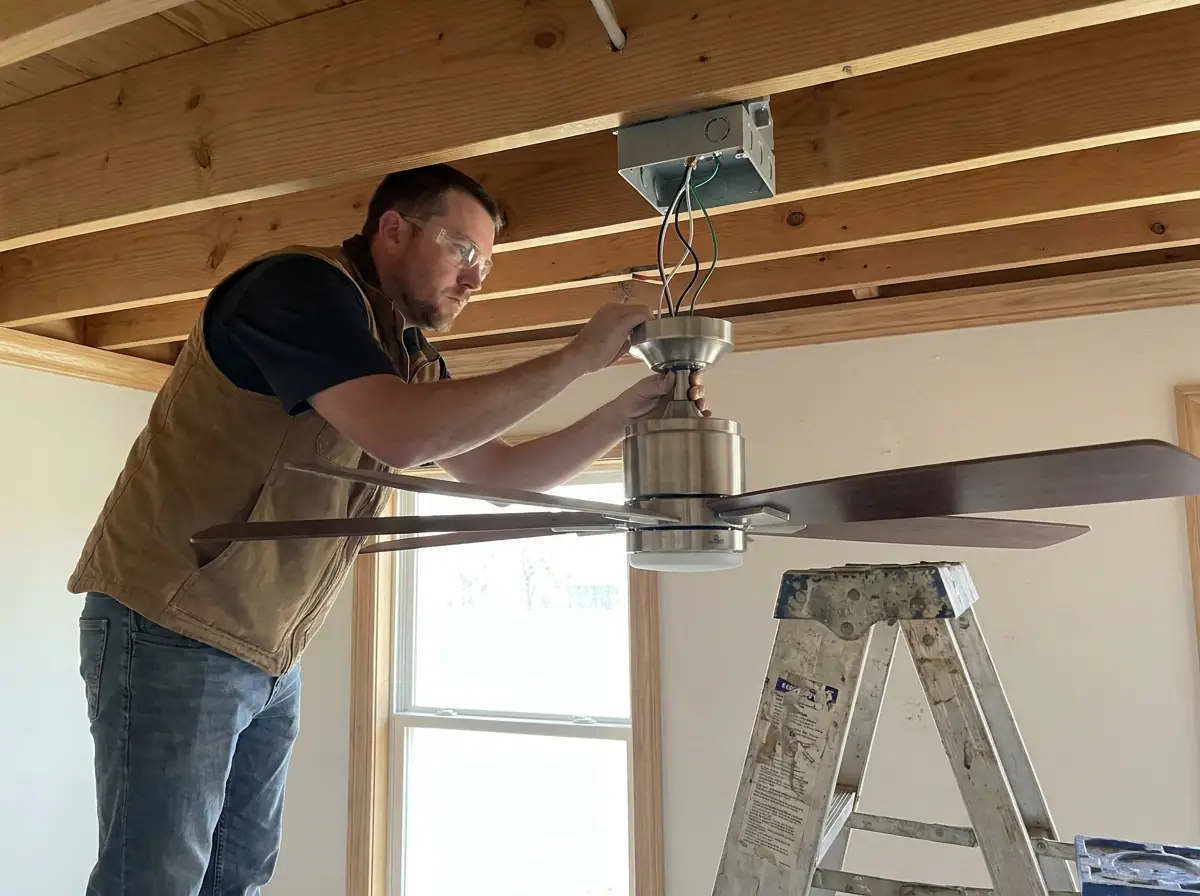
Swapping out a builder-grade light fixture for something that actually matches your home’s style, or finally adding a ceiling fan to that stuffy back bedroom, sounds like a simple weekend project. And sometimes it is. But more often than homeowners expect, ceiling fan and light fixture installation in Granbury, TX uncovers issues that go well beyond swapping out a few wire nuts. Old wiring, undersized boxes, missing ground wires, and circuits that weren’t designed to handle the load can all turn a quick upgrade into a job that needs a licensed electrician.
At Revamped Electric, we handle ceiling fan and light fixture installations throughout Granbury and the surrounding Hood County area every week. This guide walks you through what’s actually involved, what can go wrong, and how to make sure your upgrade is done safely, correctly, and up to code the first time.
Why Ceiling Fan and Light Fixture Upgrades Are More Common Than Ever
Granbury has seen steady residential growth over the past several years, and with that comes a wave of homeowners who are updating older properties, finishing out newly purchased homes, or simply refreshing spaces that still have the original fixtures from decades past. Ceiling fans and light fixtures are one of the first things people want to change because they have such a direct impact on how a room looks and feels.
Energy efficiency is another big driver. Older fixtures often use outdated bulb types or lack dimmer compatibility. Modern LED-compatible fixtures and Energy Star-rated ceiling fans can meaningfully reduce your electricity usage, especially in a Texas summer when fans are running almost constantly. Adding the right ceiling fan in the right room is one of the most cost-effective comfort upgrades you can make.
Beyond comfort and aesthetics, there’s also a practical safety angle. Fixtures that were installed years ago may not meet current electrical code, and some were never installed correctly to begin with. If you’re buying or selling a home in the Granbury area, outdated or improperly installed fixtures can show up during an inspection and create headaches down the road.
What’s Actually Involved in a Ceiling Fan or Light Fixture Installation
Checking the Existing Electrical Box
This is where most DIY ceiling fan installations go sideways. Not all electrical boxes in your ceiling are rated to support a ceiling fan. Standard octagonal light fixture boxes are often secured with just a few small screws or are designed to bear the static weight of a light, not the dynamic load and torque of a spinning fan. A ceiling fan requires a fan-rated box, and it needs to be properly anchored to a ceiling joist or a fan brace that spans between joists.
If the wrong box is used, a ceiling fan can wobble, work loose over time, or in the worst case, pull free from the ceiling entirely. This isn’t a hypothetical risk. It happens, and it’s a serious safety hazard. Before any ceiling fan goes up, the box situation needs to be verified and corrected if necessary.
Wiring Configuration and Compatibility
Older homes in Granbury, particularly those built before the 1980s, may have wiring that doesn’t include a dedicated neutral or ground wire at the fixture location. Some ceiling fan installations also require two separate switches, one for the fan motor and one for the light kit, which means running a second wire through the wall or planning around a wireless remote or smart control instead.
Speaking of smart controls, a lot of homeowners want to tie their new ceiling fans into a smart home system or at least use a remote. Compatibility between the fan, the existing switch wiring, and any smart switch you want to install is something that needs to be thought through before the fixture goes up. Installing a smart dimmer on a fan motor circuit, for example, can damage the fan and create a fire risk. Getting the wiring right from the start avoids those problems entirely. If your home has wiring concerns that go beyond just the fixture swap, our team handles faulty wiring repairs and can address any underlying issues while we’re there.
Ceiling Height and Fan Blade Clearance
There are code requirements around how high ceiling fan blades must be from the floor, typically at least seven feet, and how far they need to be from walls and sloped ceilings. In rooms with standard eight-foot ceilings, a flush-mount or hugger fan is usually the right call. In rooms with higher or vaulted ceilings, a downrod of the correct length needs to be selected to bring the fan into the right operating zone for effective airflow.
Getting this wrong doesn’t just look bad. A fan mounted too close to a sloped ceiling can create vibration and noise issues, and a fan mounted too high in a room with a low ceiling will barely move any air at all. These details matter for both safety and performance.
Common Scenarios That Need a Licensed Electrician
There’s a big difference between swapping a like-for-like light fixture on a circuit that already has a properly installed box and ground wire, and installing a ceiling fan where there was never one before. The more any installation differs from what’s already there, the more likely it is that you’ll need a professional involved. Here are the situations we see most often that require licensed electrical work:
- Adding a ceiling fan where only a light existed before: The existing box almost certainly isn’t fan-rated, and the wiring may not support a separate fan and light control.
- Installing a fixture in a room that has no overhead lighting at all: This requires running a new circuit or extending an existing one, installing a switch, and cutting into walls and ceilings. This is full electrical work, not a fixture swap.
- Replacing a fixture in a home with aluminum wiring or two-prong ungrounded outlets: These are flags for broader wiring issues that should be addressed properly.
- Installing outdoor ceiling fans on covered patios or porches: Outdoor-rated fans need to be on appropriate circuits, and the wiring and box installation must account for moisture exposure.
- Upgrading to a smart fan or dimmable fixture system: Load compatibility with smart switches and dimmers needs to be verified and correctly installed.
If you’re also thinking about adding new lighting in areas that currently have none, that work typically involves circuit installation to ensure your home’s electrical system can safely support the additional load.
Ceiling Fan Placement and Sizing: Getting the Most Out of Your Upgrade
One thing that doesn’t get talked about enough is fan sizing. A lot of homeowners pick a fan they like visually and then wonder why it doesn’t seem to do much. Fan blade span matters a great deal for how effectively a fan moves air through a given space. As a general guide:
- Rooms up to 75 square feet: 29 to 36-inch fan
- Rooms between 76 and 144 square feet: 36 to 42-inch fan
- Rooms between 145 and 225 square feet: 44 to 50-inch fan
- Rooms larger than 225 square feet: 52-inch fan or larger, or consider two fans
In Texas, where we rely on ceiling fans heavily during spring and fall to avoid running the AC constantly, having the right size fan in the right location makes a real difference in comfort and energy costs. And don’t forget to reverse the fan direction seasonally. Counterclockwise in summer pushes cool air down, while clockwise in winter at low speed pulls warm air off the ceiling back into the living space.
What to Expect When You Hire Revamped Electric for a Fixture Installation
When you call us for a ceiling fan or light fixture installation in Granbury or anywhere in Hood County, here’s what the process looks like. We’ll start with an honest assessment of what’s at the existing location before we quote or commit to a timeline. If the box needs to be upgraded, the wiring needs to be extended, or there’s anything that affects the scope of the job, we’ll tell you upfront before we start work.
We don’t upsell or manufacture problems that aren’t there. If a simple swap is all that’s needed, that’s what you’ll get. If there are legitimate issues that need to be addressed for safety or code compliance, we’ll explain exactly what they are and why they matter in plain language, not technical jargon designed to confuse.
Our team takes pride in clean, professional work. That means fixture installations that are level, secure, and wired correctly, switch configurations that make sense for the way you use the space, and a finished result that looks like it was always meant to be there. You can read what our customers have said about working with us on our reviews page.
We serve Granbury, Tolar, Stephenville, Aledo, Mineral Wells, Benbrook, Weatherford, Hudson Oaks, and the broader Hood, Parker, Johnson, and Somervell county areas. Whether you have one fan to install or want to update the lighting throughout your entire home, we’re ready to help.
Ready to Upgrade Your Lighting or Add a Ceiling Fan?
If you’ve been putting off a ceiling fan or light fixture upgrade because you weren’t sure what was involved or who to call, now you know. The job might be straightforward, or it might require a bit more work depending on your home’s existing setup. Either way, having a licensed electrician take a look before you start saves time, money, and the frustration of discovering problems halfway through a project.
Reach out to Revamped Electric today to get a quote for your ceiling fan or light fixture installation in Granbury, TX. Contact us here and we’ll get back to you quickly with honest answers and transparent pricing. No runaround, no pressure. Just quality electrical work from a team that genuinely cares about doing the job right.