

When most homeowners think about their electrical system, they focus on the visible components like outlets, switches, and light fixtures. But beneath the surface, there’s a critical safety feature that quietly protects your family and home 24/7: electrical grounding and bonding. While these terms might sound technical, understanding how they work can help you recognize potential hazards and make informed decisions about your home’s electrical safety.
If you’ve ever wondered why some outlets have three prongs instead of two, or why electricians care so much about connecting wires to your electrical panel in specific ways, you’re about to discover the answer. Proper grounding and bonding are not just code requirements; they’re essential safeguards that can prevent electric shock, reduce fire risk, and protect your expensive appliances from power surges.
For Granbury homeowners, especially those living in older properties or considering renovations, understanding your home’s grounding system is more important than ever. Let’s explore what grounding and bonding actually mean, why they matter, and how to ensure your home is properly protected.
What Is Electrical Grounding and Why Does It Matter?
Electrical grounding is essentially a safety pathway that gives electricity a direct route to the earth in case of a fault or malfunction. Think of it as an emergency exit for electrical current. Under normal circumstances, electricity flows through your home’s wiring in a controlled loop from the panel to your appliances and back. But when something goes wrong, such as damaged insulation exposing a live wire or a lightning strike, grounding provides a safe path for that excess electricity to dissipate into the ground rather than through your body or starting a fire.
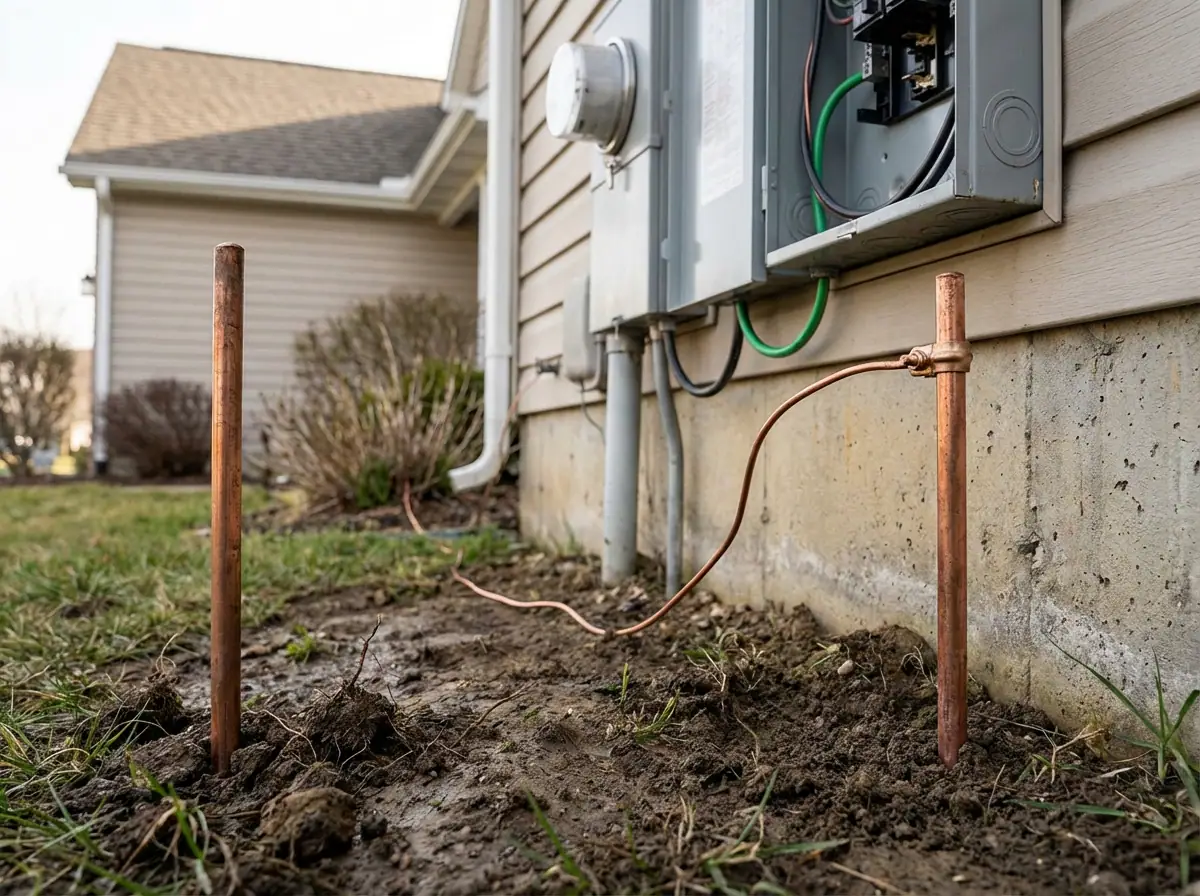
In practical terms, grounding connects your electrical system to the earth through a grounding electrode, typically a metal rod driven deep into the soil near your home’s foundation or a connection to metal water pipes. This connection is linked to your electrical panel and extends throughout your home via the ground wire in your circuits (usually the bare copper or green wire you see in electrical boxes).
The benefits of proper grounding extend far beyond basic safety. A well-grounded system stabilizes voltage levels during normal operation, reducing wear on your appliances and electronics. It also provides a reference point for your electrical system, helping to prevent voltage fluctuations that can damage sensitive equipment like computers, televisions, and smart home devices. In areas like Granbury where summer storms can be intense, grounding plays a crucial role in dissipating lightning-induced surges, working hand-in-hand with whole-house surge protection to keep your home safe.
Understanding Electrical Bonding: The Partner to Grounding
While grounding connects your electrical system to the earth, bonding connects all the metal components within your home’s electrical system to ensure they’re at the same electrical potential. This might sound complicated, but the concept is straightforward: bonding prevents dangerous voltage differences between metal objects that you might touch.
Imagine you have a metal electrical panel box, metal water pipes, a metal gas line, and metal appliance frames throughout your home. Without bonding, these metal components could be at different voltage levels. If you touched two metal objects at different potentials simultaneously, you could become a conductor for electricity flowing between them, resulting in a severe shock. Bonding eliminates this risk by connecting all these metal components together, ensuring they remain at the same voltage level.
In your electrical panel, you’ll see bonding in action through the main bonding jumper, a connection between the grounded (neutral) conductor and the grounding system. This critical link ensures that if a fault occurs, the circuit breaker will trip quickly, cutting off power before injury or damage occurs. Bonding also extends to metal water pipes, gas pipes, structural steel, and other conductive pathways throughout your home.
For homeowners planning kitchen or bathroom renovations, proper bonding becomes especially important. These rooms typically have numerous metal components, from sinks and faucets to towel racks and appliances, all in close proximity to water. Professional electricians ensure these elements are properly bonded during electrical remodeling projects to maintain safety standards and code compliance.
Signs Your Granbury Home May Have Grounding Problems
Many older homes in the Granbury area were built before modern grounding standards became mandatory, and some may have grounding systems that have degraded over time. Recognizing the warning signs of inadequate grounding can help you address issues before they become dangerous.
Two-Prong Outlets Throughout Your Home
If your home still has predominantly two-prong outlets, it likely lacks a proper grounding system. While some homeowners attempt to upgrade to three-prong outlets for convenience, simply replacing the outlet without actually installing ground wiring creates a false sense of security and violates electrical code. The third prong on modern outlets isn’t just for show; it’s the connection to the ground wire that provides crucial protection.
Frequent Electrical Shocks or Tingling Sensations
If you experience mild shocks when touching appliances, light switches, or metal plumbing fixtures, this is a serious red flag indicating improper grounding. Even small shocks suggest that electricity is finding unintended pathways, and the next occurrence could be much more severe. This symptom should never be ignored and warrants immediate professional inspection.
Lights Flickering or Dimming Unexpectedly
While flickering lights can have several causes, including faulty wiring or overloaded circuits, they can also indicate grounding issues. When your electrical system lacks a proper ground reference point, voltage levels can fluctuate, causing lights to dim or brighten randomly, especially when large appliances cycle on and off.
Circuit Breakers Trip Frequently
A properly grounded system helps circuit breakers function correctly by providing a clear path for fault currents. If your breakers trip often without obvious cause, or if they fail to trip when they should, grounding problems might be interfering with their operation. This situation not only causes inconvenience but also removes a critical safety feature from your electrical system.
Electronic Equipment Malfunction or Failure
Computers, televisions, and other sensitive electronics rely on proper grounding for stable operation. If you notice unusual behavior like random reboots, screen flickering, or premature equipment failure, inadequate grounding could be allowing voltage fluctuations to damage these devices over time.
Grounding Methods and Systems Used in Residential Homes
Modern electrical codes require specific grounding methods to ensure safety and reliability. Understanding these systems can help you have informed conversations with electricians and recognize what’s installed in your home.
Grounding Electrode Systems
The foundation of any grounding system is the grounding electrode, which provides the physical connection to the earth. Most Granbury homes use one or more of these electrode types:
Ground rods are the most common method, consisting of 8-foot copper-clad steel rods driven vertically into the soil near the electrical service entrance. Code typically requires at least two ground rods spaced at least six feet apart, though a single rod may be acceptable if it achieves sufficiently low resistance to earth.
Concrete-encased electrodes, also called Ufer grounds, consist of copper wire encased in the concrete foundation of your home. This method is highly effective and often installed during new construction. If your Granbury home was built in recent decades, you may have this type of grounding system.
Metal water pipe electrodes were common in older homes with metal municipal water supply pipes. While these can still serve as supplemental grounding electrodes, modern codes require additional grounding methods because plastic pipes and fittings have become more common, potentially interrupting the conductive path.
Equipment Grounding Throughout Your Home
Beyond the grounding electrode system, every circuit in your home should include an equipment grounding conductor. This is the bare copper or green-insulated wire that runs alongside the hot and neutral conductors. It connects the metal housing of outlets, switches, and appliances back to your electrical panel, and ultimately to the grounding electrode system.
Modern wiring methods like Romex cable include this ground wire automatically, but older homes may have wiring systems that lack equipment grounds entirely. Upgrading these systems during renovations or panel upgrades ensures your home meets current safety standards.
When to Upgrade Your Home’s Grounding System
Several situations call for evaluating and potentially upgrading your home’s grounding and bonding systems. Being proactive about these upgrades can prevent serious safety hazards and protect your investment in home electronics and appliances.
If you’re planning any major renovation, especially one involving the electrical system, it’s the perfect time to assess grounding. Projects that require an electrical panel upgrade create an opportunity to install a modern grounding electrode system if one doesn’t exist. Similarly, when adding circuits for new appliances or converting from two-prong to three-prong outlets, ensuring proper grounding is essential rather than optional.
Homes built before the 1960s almost certainly need grounding system improvements. Electrical codes have evolved significantly, and what was acceptable decades ago no longer meets safety standards. If you’ve purchased an older Granbury home, having a comprehensive electrical safety inspection can identify grounding deficiencies and provide a roadmap for improvements.
Installing high-value electronics, home office equipment, or smart home systems also justifies a grounding system evaluation. These sensitive devices benefit immensely from proper grounding and surge protection. If you’re investing thousands of dollars in home automation or entertainment systems, ensuring your electrical foundation is solid makes good financial sense.
Finally, if you’re considering an electric vehicle, installing an EV charger requires robust grounding and often exposes deficiencies in older electrical systems. The high power demands and safety requirements of EV charging make proper grounding non-negotiable.
The Role of Professional Electricians in Grounding and Bonding
While some electrical projects lend themselves to DIY work, grounding and bonding are areas where professional expertise is invaluable. The consequences of improper grounding range from code violations and failed inspections to serious safety hazards and potential liability if someone is injured.
Licensed electricians bring specialized knowledge of local code requirements, testing equipment to verify ground resistance and continuity, and the experience to identify hidden problems that homeowners might miss. They understand the subtle but important differences between grounding requirements for different circuits, know how to properly bond metal components throughout your home, and can integrate grounding systems with other protective devices like GFCI outlets and surge suppressors.
During an electrical panel upgrade or new circuit installation, electricians verify that all grounding connections are secure, that bonding jumpers are properly sized and installed, and that the grounding electrode system meets code requirements. They also test the system to ensure it will function as intended during a fault condition, something that’s impossible to verify through visual inspection alone.
For Granbury homeowners concerned about their grounding system, a professional electrical safety inspection provides peace of mind. Qualified electricians can assess your current system, identify deficiencies, prioritize improvements based on safety and budget, and ensure all work meets current National Electrical Code requirements and local amendments.
Protecting What Matters Most
Your home’s electrical grounding and bonding system is truly the unsung hero of electrical safety. While it operates silently in the background, it stands ready to protect your family from shock hazards, prevent electrical fires, and safeguard your valuable electronics from damaging voltage fluctuations. For Granbury homeowners, especially those with older properties or plans for renovation, understanding and maintaining this critical system is one of the most important aspects of responsible home ownership.
The good news is that grounding and bonding problems are entirely solvable. Whether your home needs a complete grounding system installation, upgrades to meet modern code requirements, or simply verification that existing systems are functioning properly, professional electricians have the expertise to ensure your home is protected.
Don’t wait until a problem occurs to address grounding concerns. If you’ve noticed any warning signs, live in an older home, or are planning electrical work, now is the time to have your system evaluated. The investment in proper grounding and bonding pays dividends in safety, reliability, and protection of your home and family.
Ready to ensure your Granbury home’s electrical system is properly grounded and bonded? Contact Revamped Electric today for a comprehensive electrical safety assessment. Our experienced team specializes in bringing older homes up to modern safety standards while providing the honest, reliable service that Granbury homeowners have come to trust. Your family’s safety is too important to leave to chance, so let us verify that your home’s electrical foundation is solid and secure.