

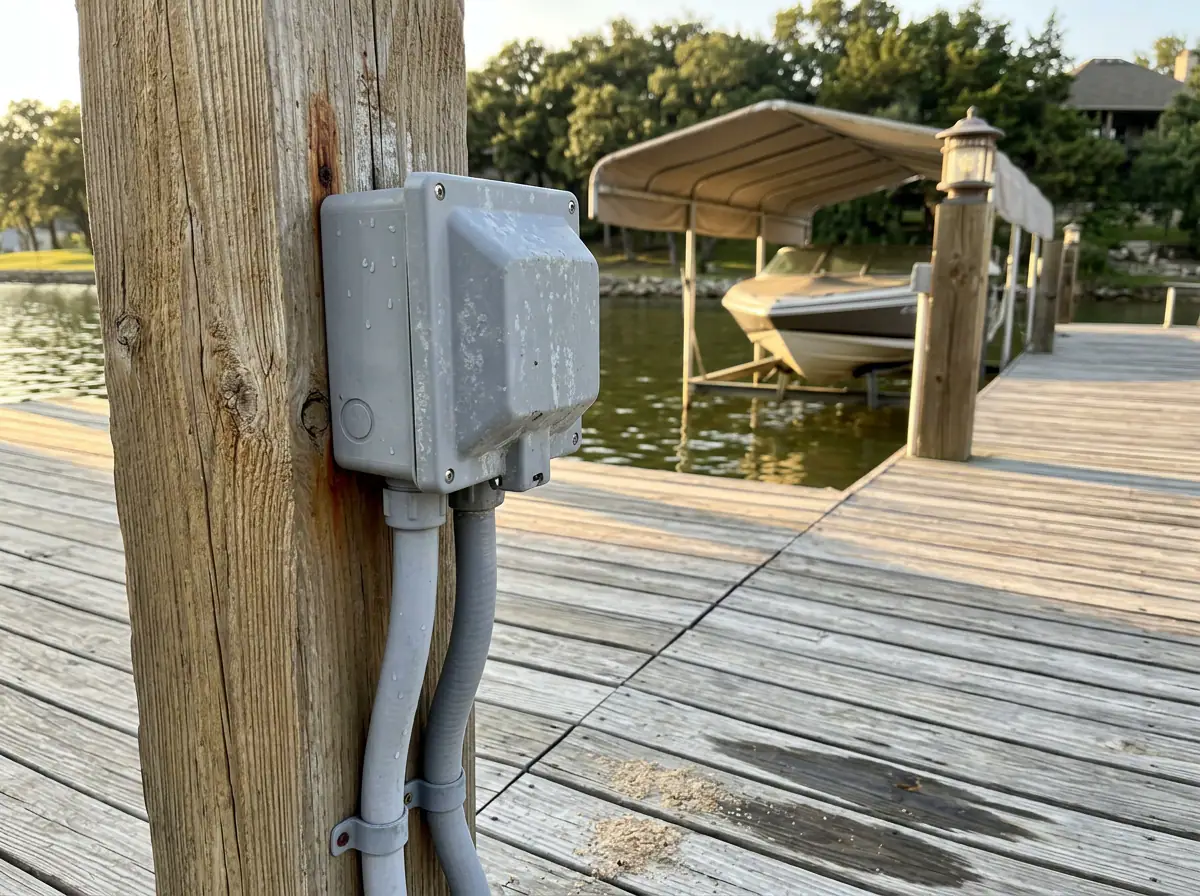
A dock on Lake Granbury is where summer happens: boats, lifts, string lights, a cooler by the cleaning table, kids jumping off the end. It is also the one place at your property where electricity, water and people all meet. Good boat dock electrical in Granbury is not a luxury upgrade. It is the difference between a dock that is a joy to use and one that quietly puts your family and guests at risk.
At Revamped Electric, we are a veteran-owned electrical contractor based right here in Granbury. This guide explains how dock power should work, what makes the lake hard on wiring, and how to tell whether your existing dock is safe. It is written for homeowners, not electricians, so we will keep it plain.
Boat Dock Electrical in Granbury: Who This Guide Is For
This is for anyone with power running to a dock or planning to add it. That includes Lake Granbury waterfront homes, weekend lake houses, and neighborhoods such as Pecan Plantation and De Cordova Bend, where docks, boat lifts and dock lighting are a normal part of the property. It is also for buyers who just closed on a lake house and have no idea who wired the dock or when.
If you are searching for an electrician for a lake house in Granbury, the short version is this: dock work is different from ordinary yard or patio wiring. It has its own rules, its own failure modes and its own safety stakes. If you are already thinking about general outdoor power, our guides on outdoor electrical safety and outdoor electrical upgrades are a good starting point. The dock just raises the stakes.
Electric Shock Drowning Explained Plainly
Electric shock drowning is the reason dock wiring gets so much attention. If electrical current leaks into the water around a dock or a boat, a swimmer can be affected without any spark, sound or warning. Muscles can stop responding, and a person who is a strong swimmer can no longer stay afloat or get to the ladder. Often there is nothing visible to tell anyone the water is energized.
The current can come from a faulty fixture, damaged cord, a boat's own wiring, or a bad connection on the dock itself. That is why electric shock drowning prevention on a dock starts with proper wiring and protection, not with luck or common sense.
One rule is worth repeating to everyone who uses your dock: never swim near a powered dock if you do not know how it is wired. That goes for guests, neighbors' kids and you. If the wiring has not been checked by a licensed electrician, treat the water around it as unproven.
Ground-Fault Protection and Equipotential Bonding at the Dock
Two ideas do most of the safety work on a dock: ground-fault protection and bonding.
Ground-fault protection
Ground-fault protection, commonly provided by GFCI devices, watches for current that is leaking somewhere it should not be. When it detects a problem, it shuts the circuit off quickly. On a dock, that protection matters for receptacles, lighting and the feed that serves boats and lifts. If you want a refresher on how these devices work, see our article on GFCI outlets in Granbury. A dock is a much harsher environment than a kitchen or bathroom, so the protection needs to be correctly selected, installed and tested.
Bonding and grounding
Equipotential bonding ties together the metal parts that could become energized so they stay at the same electrical potential. The goal is to avoid dangerous voltage differences between metal on the dock, the lift and the surrounding hardware. Proper grounding gives fault current a safe path back to the source. If those concepts are new to you, our overview of grounding and bonding explains the basics at home before you apply them at the water.
The National Electrical Code addresses docks, marinas and similar waterfront structures in NEC Article 555. We design and install dock work with that article in mind, along with the code edition and local rules that apply in Granbury and Hood County. Requirements and device ratings can change between code editions, so we confirm the current local requirements on each job rather than quoting them from memory.
What We Wire: Boat Lifts, Dock Lighting, Receptacles and Feeds
Most dock projects fall into a handful of categories.
Boat lift electrical
Boat lift electrical on Lake Granbury usually means a dedicated motor circuit sized to the lift, with a proper disconnect, correct wire sizing, and protection suited to a wet location. Lift size matters, since a bigger motor needs a properly rated circuit. We do not guess here. We check the lift's nameplate and plan the circuit around it.
Dock and path lighting
Dock lighting installation in Granbury covers the dock itself, the walkway down from the house, and the stairs where people are most likely to trip at night. Good lighting is a safety feature as much as an appearance upgrade. Fixtures need to be rated for wet locations and mounted so they will not collect water or loosen as the dock moves. Our broader work on lighting installation carries over, with materials chosen for the lake.
Weather-resistant receptacles
Receptacles on a dock should be weather-resistant, protected by ground-fault protection, and housed in enclosures built for the job. A standard outdoor outlet from a hardware store is not the same thing.
Feeding power from the house
Power usually reaches the dock from the house through a dedicated circuit or a subpanel near the shoreline. A subpanel can make sense when the dock has several loads, such as a lift, lighting and receptacles, because it gives you a clear place to shut things off and isolate problems. It also depends on the distance from the main panel and the available capacity. Before adding a lift, it is smart to confirm your panel can carry the load. Our guide on load capacity and upgrades walks through that thinking.
Why Lake Granbury Is Hard on Dock Wiring
Lake Granbury sits on the Brazos River, and the conditions that make it a great place to live also wear on electrical systems.
- Changing water levels: Docks move, and wiring, conduit and fittings move with them. Strain at connection points is a common source of failures.
- Sun and heat: Texas summers break down plastics, cable jackets and seals over time. Brittle or cracked insulation is easy to miss.
- Storms and lightning: North Texas storms can damage wiring, push water into boxes and stress connections. After a big storm, a dock deserves a second look.
- Moisture and corrosion: Humidity, splash and condensation attack terminals, screws and enclosures. Corrosion raises resistance, creates heat and can create unsafe leakage paths.
You can spot a lot of this by eye. Green or white crust on metal, rust streaks below a box, cracked covers, missing gaskets and sagging cable are all signs the system is aging out.
Warning Signs Your Existing Dock Is Not Safe
If you are wondering whether the wiring on your dock is safe, these are the red flags we see and hear about most:
- A tingling sensation when touching metal on the dock or lift, or when in the water nearby. Treat this as an emergency.
- Breakers or GFCI devices that trip repeatedly, especially after rain. A tripping device is doing its job, so find the cause instead of resetting it over and over.
- Corroded, cracked or open boxes and missing covers.
- Extension cords used as permanent power. Cords are not a substitute for proper wiring on a dock.
- DIY or unknown wiring, such as mismatched cable, taped splices, or work from a previous owner that nobody can explain.
- Lights that flicker, dim or fail intermittently, which can point to connection problems.
If you feel any tingling near the dock, get everyone out of the water, stay off the dock and shut off power if you can do so safely from dry ground. Then call a licensed electrician. For urgent situations, see our emergency electrician service in Granbury.
Permits and Approvals Before You Build or Rewire
Dock electrical work can involve more than one authority, and who handles what depends on the project and the property. As a homeowner, plan to check with the City of Granbury or Hood County about electrical permits and inspections, and with the Brazos River Authority about requirements tied to shoreline structures and the lake itself. Do not assume that approval from one office covers the others.
We recommend making those calls early, before materials are ordered. We can help you work out what your project will need, and we build the electrical scope to match the approvals. For more on how permits fit into larger projects, see our article on electrical permits and code compliance.
What Drives the Cost of Dock Electrical Work
We do not quote numbers in a blog post, because every dock is different. These are the factors that move the price most:
- Distance from the panel to the dock, which affects wire size and length.
- Trenching and conduit, depending on the terrain and obstacles between the house and the shoreline.
- Panel capacity and whether a subpanel or panel upgrade is needed.
- Lift size and motor requirements.
- Number of fixtures and receptacles you want on the dock and walkway.
- Repair versus new install. Fixing a failing connection is a different job than replacing an entire feed.
We offer free quote requests and clear communication, so you know what the scope includes before work begins.
Dock Electrical FAQ for Lake Granbury Homeowners
Is my dock wiring safe to swim near?
You cannot tell by looking. If the dock has not been inspected by a licensed electrician, or if you have ever felt tingling, seen tripping breakers or noticed damaged boxes, stay out of the water around it until it has been checked.
Do I need a permit?
Often, yes, but it depends on the work and the property. Check with the City of Granbury or Hood County for electrical permits and with the Brazos River Authority for lake-related requirements. We can help you understand what to ask.
Can my panel handle a boat lift?
It depends on your existing load, the lift's motor and the distance involved. We review your panel's capacity and recommend a dedicated circuit or subpanel when needed.
How often should dock wiring be inspected?
There is no single schedule that fits every dock. A practical approach is to have it looked at when you buy a property, before the boating season, after major storms, and any time you notice a warning sign.
Get Your Dock Checked Before the Next Boating Weekend
Our owner, Austin Barrett, is a U.S. Navy veteran who served aboard the USS Jason Dunham, and he brings that discipline to every job. Nick Torres, a Granbury native, knows these neighborhoods and the way homes around the lake are built. As a veteran-owned local team, we treat a dock the way we would treat our own: safety first, work done right.
Ready for a dock electrical safety check or an estimate on a new install? Call us at 817-677-0036 or use our contact page, and we will help you plan the safest way to power your dock.
Safety reminder: if anyone ever feels tingling near the dock, keep everyone out of the water and call immediately.