

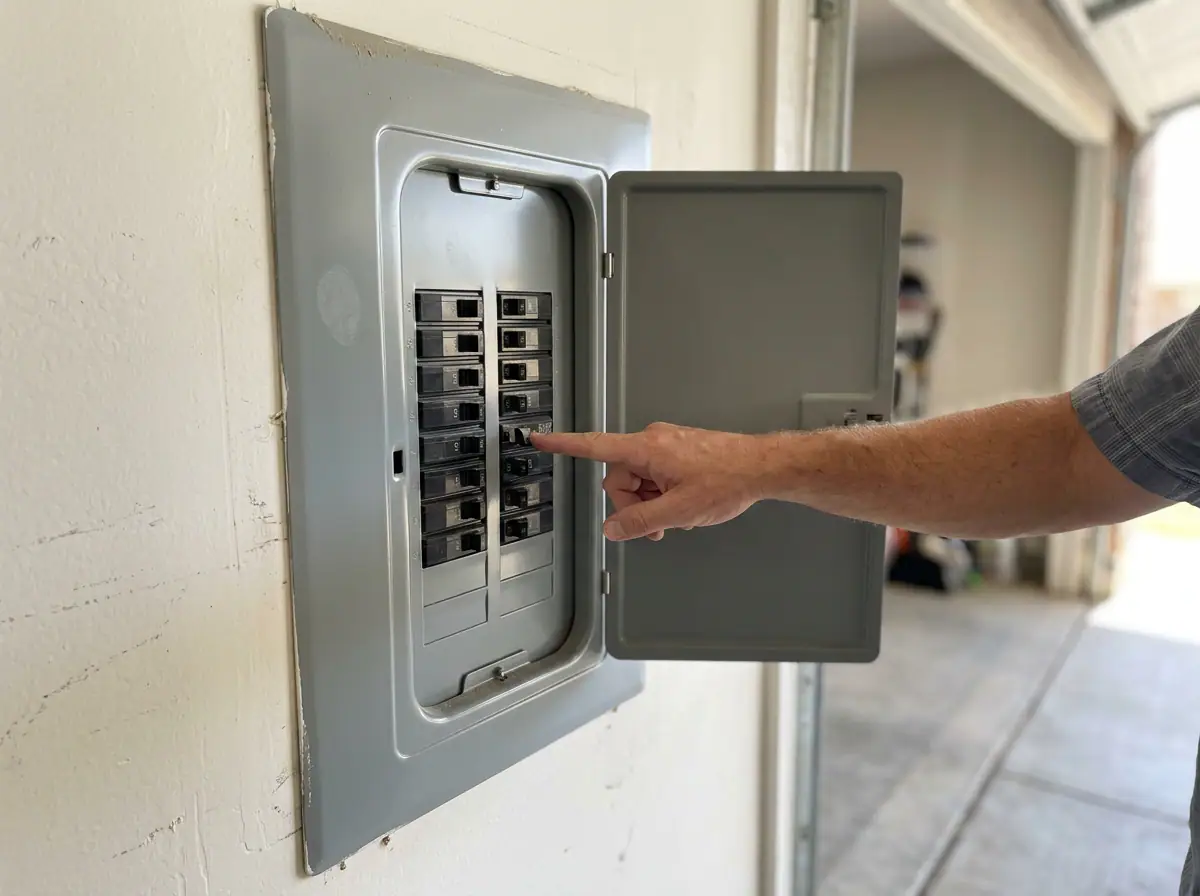
If your electric circuit breaker keeps tripping, your home is trying to tell you something. A breaker is a safety device, and every time it shuts off, it is reacting to a specific kind of problem. The good news is that the way it trips usually points to the cause. We are Austin Barrett and Nick Torres at Revamped Electric, a veteran-owned electrical team in Granbury, TX, and we get this call all the time across Hood County. This guide is organized by symptom, so you can match what your breaker is doing to the likely cause, run a safe check, and know when to stop and call a licensed electrician.
Why an Electric Circuit Breaker Keeps Tripping: What Your Panel Is Telling You
A breaker trips because it senses something it was built to stop. In plain language, there are four main triggers.
Overload
Too many devices are pulling power on one circuit. The wires heat up, and the breaker shuts off before they get dangerous. This is the most common reason a breaker keeps tripping, and it often shows up after the breaker has been running a while.
Short circuit
A hot wire touches a neutral wire, or something else it should not. Current surges instantly, so the breaker usually trips right away, sometimes with a pop or a flash. This is more serious than an overload.
Ground fault
Electricity takes an unintended path to ground, often through water or a damaged appliance. This is what a GFCI (ground fault circuit interrupter) is designed to catch.
Arc fault
A loose connection or damaged wire sparks as current jumps a gap. Arcing creates heat inside walls, which is why an AFCI (arc fault circuit interrupter) exists. The National Electrical Code (NEC) requires this protection in many areas of newer homes.
Match the Symptom to the Likely Cause
Instead of guessing, start with what you actually see. This table is a guide, not a diagnosis, but it narrows things down fast.
| What the breaker does | Most likely cause | Safe next step |
|---|---|---|
| Trips immediately when you reset it | Short circuit, ground fault, or a failed device on the circuit | Unplug everything on that circuit and try once. If it still trips, stop and call. |
| Trips after running for a while | Overload, or a breaker weakened by heat or age | Reduce what is running on the circuit. Call if it keeps happening. |
| Trips only when one appliance runs | Failing appliance, or an appliance that needs its own circuit | Test that appliance on a different circuit. Do not keep forcing it. |
| Trips in rain or storms | Moisture in an outdoor box, fixture, or GFCI outlet | Leave it off and call. Do not open weather covers on a live circuit. |
| Trips at random, no pattern | Loose connection, arc fault, or a worn breaker | Note the times and what was running, then call for a proper inspection. |
If your pattern sounds like a standard breaker tripping from heat load, our post on beating summer breaker trips covers that side in more detail.
GFCI Keeps Tripping or AFCI Breaker Keeps Tripping: Why These Are More Sensitive
GFCI and AFCI devices trip on problems a standard breaker would never notice. A standard breaker watches for too much current. A GFCI watches for tiny leaks of current to ground, and an AFCI watches for the electrical signature of arcing. That sensitivity is the point. It is what protects you from shock and fire.
That also means these devices can trip for reasons that feel minor. When your GFCI keeps tripping, common causes include moisture in an outlet, a worn appliance with a small ground leak, or a cord with damaged insulation. When an AFCI breaker keeps tripping, it can be a loose connection at an outlet or switch, a pinched cable, or certain older motors and dimmers that confuse the device.
Here is what nuisance tripping can and cannot mean. It can mean one flaky appliance or a damp outlet. It cannot be safely dismissed as "just a sensitive breaker" if it keeps coming back. Repeated trips on a GFCI or AFCI circuit are a real signal, and we do not recommend swapping in a different device just to make it stop. For a deeper look, see our guide to GFCI and AFCI protection in Granbury.
A Safe 5-Minute Check, Step by Step
Many homeowners ask "why does my breaker keep tripping" and want a quick way to find out. These steps stay on the safe side. You never need to open the panel to do them.
- Identify the circuit. Open the panel door (not the inner metal cover) and find the breaker that is in the middle or OFF position.
- Unplug everything on that circuit. Walk the room or rooms it serves and unplug lamps, chargers, space heaters, and appliances. Turn off any switched lights.
- Reset it correctly. Push the breaker firmly all the way to OFF first, then back to ON. Many breakers will not reset unless you do this.
- Watch what happens. If it trips again with nothing plugged in, stop here. That points to a wiring or breaker problem, not an appliance.
- Test one device at a time. If the circuit holds, plug in devices one by one. The one that trips it is your suspect.
- Check for load. If it only trips with several things on, you likely have an overload, not a fault.
What You Must Never Do
- Never tape or hold a breaker on. That defeats the safety device and invites a fire.
- Never swap in a larger breaker. The breaker is sized to protect the wire. A bigger one lets the wire overheat.
- Never remove the panel cover. Live parts inside can seriously injure you, even with the main off.
- Never keep resetting it over and over. One or two tries is plenty.
Stop-and-Call Signs
Some symptoms mean you should stop troubleshooting and get a licensed electrician involved right away:
- A burning or hot plastic smell near the panel, outlets, or a switch
- Scorch marks, discoloration, or melted plastic on an outlet or breaker
- A panel that feels warm to the touch
- Buzzing, crackling, or sizzling sounds
- A breaker that will not reset at all
- Repeated trips on the same circuit, even after you reduce the load
If you notice heat, smell, or buzzing, turn off what you safely can and leave the circuit alone. Our guide to what to do before the electrician arrives walks through the safe steps.
Why Breakers Trip in Hood County Homes
Where you live changes what we see. Around Granbury, Tolar, and Cresson, a few patterns come up again and again.
Summer AC load. Texas heat means air conditioners run for long stretches, and window units, fans, and extra freezers add to the load. Circuits that were fine in spring can start tripping in July. If you are adding appliances, our guide on whether your home can handle new appliances helps you think through capacity.
Older homes and original panels. Many homes around Lake Granbury and the surrounding towns still have original wiring or panels from decades ago. Some older panels, including Federal Pacific Stab-Lok panels, have a poor reputation because their breakers may fail to trip when they should. If you have one, do not treat a "quiet" panel as a safe one. Have it looked at by a licensed electrician.
Outdoor, dock, and patio circuits. Lake-area living means outlets, lights, and boat or dock power exposed to rain, humidity, and splashing. Moisture gets into boxes and fixtures, and a GFCI doing its job will trip. If it trips in storms and holds on dry days, water is the likely cause, and the fix is usually repairing the weatherproofing or the device, not ignoring it.
When the Real Fix Is a Dedicated Circuit, a New Breaker, or a Panel Upgrade
Once we know the cause, the solution generally falls into one of three buckets.
A dedicated circuit
If one big appliance trips a shared circuit, it probably needs its own line. Microwaves, window AC units, freezers, and workshop tools are common examples. Read more about why high-demand appliances need a dedicated circuit.
A breaker replacement
Breakers wear out, especially after repeated trips or heat. If the wiring and load are fine but the breaker is weak or damaged, swapping it correctly solves the problem. This is work for a licensed electrician, since the right breaker has to match the panel and wire.
A panel upgrade
If the panel is outdated, recalled, overcrowded, or showing damage, replacing a single breaker is not enough. Our article on signs your breaker box is overdue for a change explains what to look for.
What a Service Visit Involves and What Affects the Cost
When you call about a tripping breaker, we start by listening. We ask which breaker, what it was doing, and what was running. Then we test the circuit, inspect the breaker and connections, and look for the specific overload, short, ground fault, or arc fault behind the trips. You get an explanation in plain language and options before any work starts.
Cost depends on several things: what is actually causing the trips, how easy it is to access the wiring or panel, what parts are needed, and whether the fix involves a new circuit or panel work. A simple device fault is a different job from a failing panel. We offer upfront estimates, so you know what to expect before we begin, and we would rather find the real cause once than patch it repeatedly.
Frequently Asked Questions
Why does my breaker keep tripping when nothing is plugged in?
That usually points to a wiring fault, a failing breaker, or moisture in a box rather than an overloaded appliance. Stop resetting it and have a licensed electrician inspect the circuit.
Is it safe to keep resetting a breaker that keeps tripping?
No. Try once or twice after unplugging devices. If it keeps tripping, the breaker is doing its job by warning you about a problem, and repeated resets can make a hidden fault worse.
Why does my GFCI keep tripping?
Common causes are moisture, a worn appliance, or a damaged cord leaking small amounts of current to ground. Outdoor and lake-area outlets are frequent culprits. If it will not stay reset, call for help.
Why does my AFCI breaker keep tripping?
An AFCI watches for arcing, so loose connections, damaged cables, or some older devices can set it off. Because arcing generates heat in walls, repeated AFCI trips deserve a professional look.
Can I install a bigger breaker to stop the tripping?
No. A breaker protects the wire behind it. A larger one can let wiring overheat without tripping, which creates a fire risk.
When should I call an electrician instead of troubleshooting?
Call if you smell burning, see scorch marks, feel a warm panel, hear buzzing, cannot reset the breaker, or keep seeing trips on the same circuit.
A breaker that trips once is a nuisance. A breaker that keeps tripping is a message, and the safest move is to listen to it. Run the safe check above, and if the trips return, or you notice heat, smell, or buzzing, stop resetting it. Call Revamped Electric at 817-677-0036 or book through our Breaker Trips page. Austin Barrett and Nick Torres serve Granbury, Tolar, Cresson, Weatherford, Stephenville, and the surrounding area, and you can also reach us here to get started.