

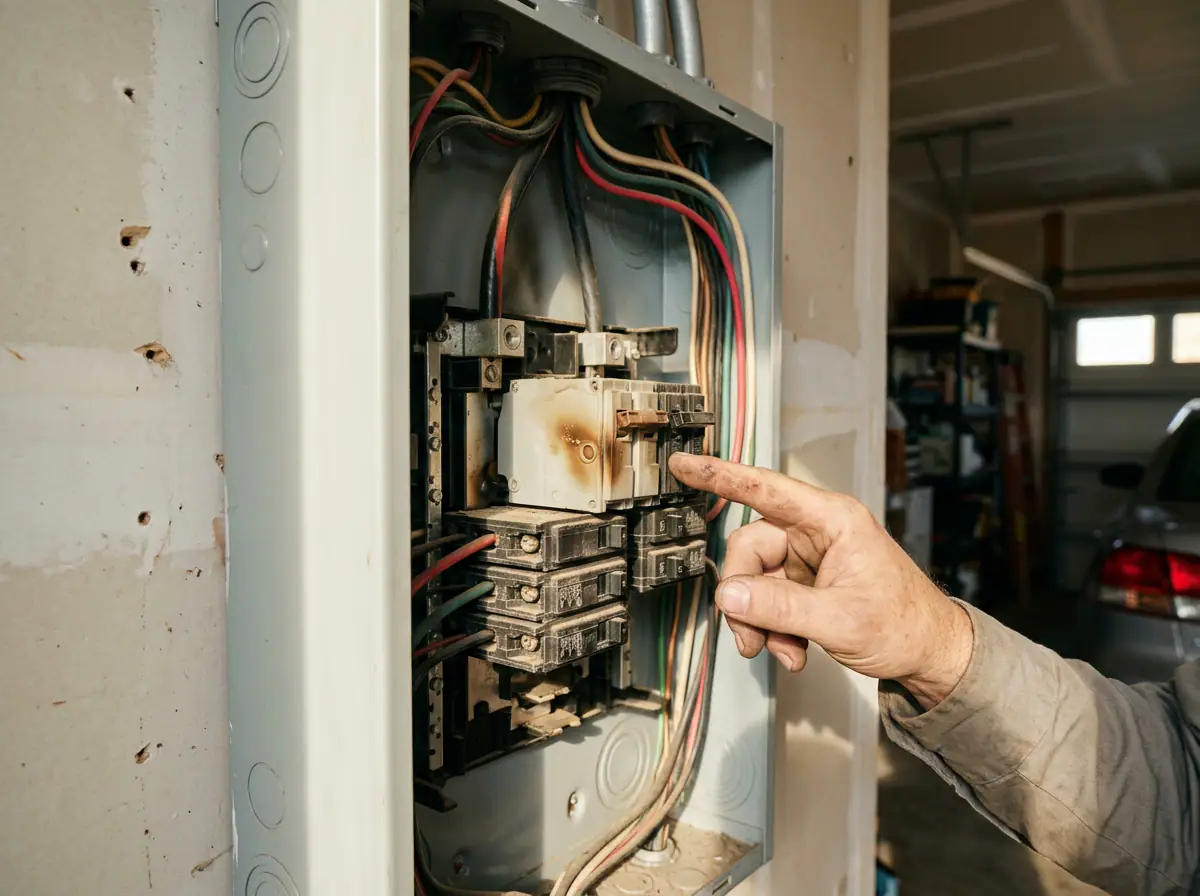
If you are searching for circuit breaker replacement Granbury homeowners can count on, you probably have a breaker that will not behave. Maybe it trips every time the AC kicks on, maybe it will not reset, or maybe it just feels wrong. Here is the catch: a bad breaker is only one of three possible problems. Sometimes the breaker is worn out. Sometimes the circuit behind it is overloaded or damaged. And sometimes the whole electrical panel (also called a load center) is the real issue. Booking the wrong fix costs you time and money, so this guide helps you sort out which one you are dealing with.
Circuit Breaker Replacement in Granbury: Signs the Breaker Itself Has Failed
A breaker is a safety switch with moving parts and a heat-sensitive trip mechanism. Like any mechanical device, it can wear out. These are the most common signs of a bad circuit breaker:
- The breaker won't reset or won't stay on. If it snaps back to the tripped position right away with nothing plugged in, or feels loose and mushy instead of firm, the breaker may be damaged. A breaker that trips instantly can also point to a short on the circuit, which is why diagnosis matters.
- It is warm or hot to the touch. A breaker carrying a heavy load can run slightly warm. A breaker that is noticeably hot is a warning sign of a loose connection or a failing breaker.
- A burning smell near the panel. Do not ignore this one. It can mean overheated insulation, a damaged breaker or a bad connection at the bus.
- Buzzing, crackling or sizzling. A quiet hum is not unusual in some equipment, but sizzling or crackling from the panel is not normal.
- Visible scorching or discoloration. Dark marks, melted plastic or brown streaks around a breaker mean something has been overheating.
- Tripping under normal load. If a breaker trips when you run only what the circuit was designed for, it may have weakened and become oversensitive.
If you notice heat, burning smells or scorching, treat it as urgent. We cover the first steps in our guide to emergency electrician service in Granbury.
Replace the Breaker, Fix the Circuit, or Replace the Panel?
This is the question that saves homeowners the most money when answered correctly. An electrician usually sorts it out with testing, not guessing.
When the breaker is the problem
If the circuit tests fine, the wiring is sound and the breaker is worn, loose or damaged, a single replacement is usually the answer. This is a fairly quick repair when the panel is in good shape and the correct part is available.
When the circuit is the problem
A breaker that trips is often doing its job. If you have too many devices on one circuit, a damaged wire, a failing appliance or a short, a new breaker will just trip again, or worse, mask the problem. Our page on breaker trips walks through how we diagnose these cases. The fix might be moving loads, repairing a wire or adding a new circuit.
When the panel is the problem
If the bus bars are burned, several breakers are failing, parts are hard to find or the panel is too small for your home's demand, a replace circuit breaker vs panel upgrade decision comes up. Replacing breaker after breaker in a worn panel is a poor use of money. Read more about panel changes and the signs your breaker box is overdue for a change.
Breaker Types You Will Hear About
When you ask for circuit breaker replacement, the electrician will need to know which type the circuit requires. Here is the short version:
- Single-pole breakers protect standard 120-volt circuits, such as most lights and outlets.
- Double-pole breakers take up two slots and serve 240-volt loads like electric dryers, ranges, water heaters and many AC units.
- GFCI breakers protect against ground faults and shock, and are common in wet or outdoor locations.
- AFCI breakers detect dangerous arcing in wiring. Dual-function breakers are AFCI breakers that detect both series and parallel arcs, and they are what the National Electrical Code (NEC) expects in many living areas of newer homes.
Requirements vary by circuit and by when the home was built, and the NEC changes over time. If you are curious about where protection is needed, see our guide to GFCI and AFCI protection. For AFCI and GFCI breaker replacement, the key point is that the new breaker must match the protection the circuit requires, not just fit in the slot.
Why the breaker must be listed for your panel
Breakers are not universal. Each panel is tested and listed to work with specific breakers from specific manufacturers. A breaker that physically snaps in but is not listed for that panel can fit poorly, overheat and fail to protect the circuit. That is why we identify the panel brand and model before ordering a part, and why a generic parts-store breaker is not a safe shortcut.
Older Hood County Homes: Federal Pacific and Zinsco Panels
Many older homes around Granbury, Tolar and the rest of Hood County were built with panels that have since drawn serious safety concerns. Two names come up often: Federal Pacific Stab-Lok and Zinsco.
The concern with Federal Pacific Stab-Lok panels is that some breakers may not trip when they should. With Zinsco panels, connections can degrade and breakers can overheat or bind to the bus. In both cases, replacing a single breaker is a stopgap at best, and parts can be hard to source. If your home has one of these panels, an inspection is the safer call before you invest in individual breaker swaps.
Homes with older wiring may have other surprises too. If your house has aluminum branch wiring, read about the risks and replacement options for aluminum wiring, since connections at the breaker are a common weak spot.
Texas Summer Load Wears Breakers Out
Granbury summers are hard on electrical equipment. AC units run for long stretches, pool pumps add continuous load, and shop equipment can push a circuit to its limit on a hot afternoon. Sustained heat and heavy current are exactly what weaken breakers over time.
If a breaker trips mainly during peak heat, the question is not just whether it is worn. The question is whether the circuit is asked to do too much. We break down the pattern in our article on beating summer breaker trips. In many cases, the right answer is a dedicated circuit for the high-demand equipment, which you can learn about in our guide to dedicated electrical circuits. Replacing the breaker without addressing the load usually brings the problem back.
Why Breaker Replacement Is Not a DIY Job
Online videos make this look simple. It is not. Even with the main breaker off, the service conductors feeding the panel and the main lugs stay energized, and the bus bars sit just behind the breakers you are working around. One slip can mean a serious shock, an arc flash or a damaged panel.
There is also the risk of installing the wrong breaker, tightening a connection incorrectly or missing the real cause of the trip. In Texas, electrical work is regulated through the Texas Department of Licensing and Regulation (TDLR), and electrical work should be done by a licensed electrician. A licensed pro also knows how to test the circuit afterward so you are not relying on hope.
Circuit Breaker Replacement Cost Factors
We do not believe in throwing out a number before we see the panel, because the price depends on what we find. Here are the circuit breaker replacement cost factors that matter most:
- Breaker type. A standard single-pole breaker is a different part than an AFCI, GFCI or dual-function breaker, and those specialty breakers typically cost more.
- Panel brand and part availability. Common modern panels are easy to supply. Older or discontinued panels can be harder, and sometimes the practical answer is a panel upgrade rather than hunting for parts.
- Wire or bus damage. If heat has damaged the wire, the connection or the bus bar, the repair goes beyond swapping a breaker.
- Timing. After-hours or emergency calls are priced differently than scheduled visits.
At Revamped Electric, we give upfront estimates so you know what you are agreeing to before work starts. Costs vary by home and situation, so we would rather look at your panel than guess over the phone.
What a Visit from Revamped Electric Looks Like
Revamped Electric is a veteran-owned electrical contractor based in Granbury. Owner Austin Barrett is a U.S. Navy veteran, and co-owner Nick Torres is a Granbury native with plenty of new construction and service call experience. Here is how a typical breaker visit goes:
- Diagnosis. We ask what you have noticed and when, then inspect the panel for heat damage, loose connections and mismatched parts.
- Testing. We test the circuit and the breaker to find out whether the breaker, the wiring or the load is at fault.
- Replacement. If the breaker is the culprit, we install the correct type, listed for your specific panel.
- Load check. We confirm the circuit performs properly under real load, so you know the fix held.
If testing shows the problem is bigger, we tell you plainly and explain your options, whether that is a circuit repair, a new circuit or a panel upgrade.
Circuit Breaker Replacement FAQ
Can a circuit breaker go bad?
Yes. Heat, repeated tripping, heavy loads, loose connections and age can all wear a breaker out. A bad breaker may trip too easily, fail to reset or, in worse cases, fail to trip when it should.
How long do circuit breakers last?
Many last for decades, but there is no single number. Lifespan depends on the brand, the load, the heat in your home and the condition of the panel. An electrician can tell you whether yours is still in good shape.
Is a hot breaker an emergency?
A breaker that is noticeably hot, smells like burning or will not stay off should be treated as an emergency. Do not touch scorched or melted parts. Call right away, and if you can do so safely, reduce the load on that circuit.
Will a new breaker stop my trips?
Only if the old breaker was the problem. If the trips come from an overloaded circuit, a short or a failing appliance, a new breaker will likely trip too. Testing finds the real cause.
Do you serve Tolar, Cresson, Weatherford and Stephenville?
Yes. We serve Granbury and the surrounding area, including Tolar, Cresson, Weatherford and Stephenville.
A breaker that will not reset, runs hot or trips under normal use deserves a closer look, not another trip to the panel to flip it back on. If you need circuit breaker replacement Granbury homeowners can trust, call Revamped Electric at 817-677-0036 or book through our contact page and we will test the breaker, the circuit and the panel, then fix what is actually wrong. If the breaker is hot, smells like burning or will not stay off, call right away and treat it as an emergency.