

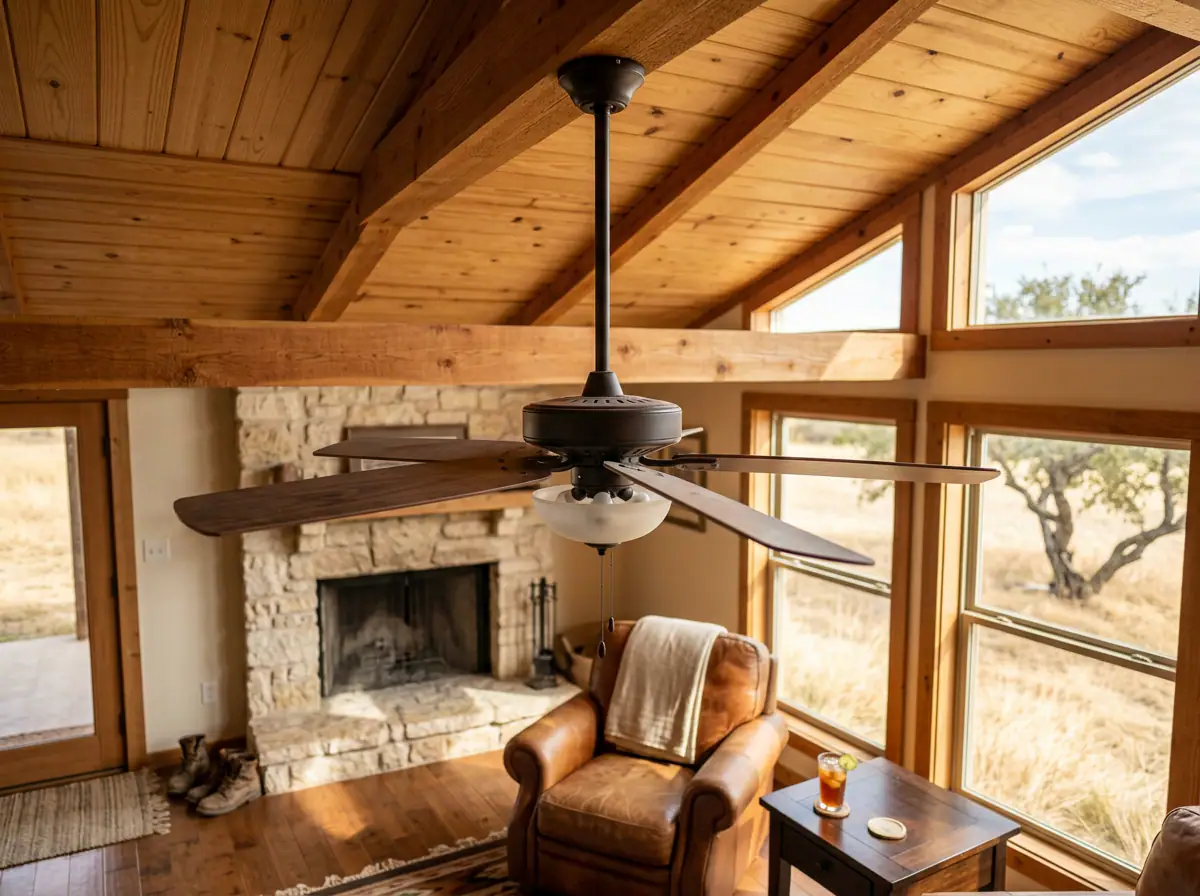
When the Texas heat settles in, a ceiling fan stops being a nice extra and becomes the thing that makes a room usable. If you are searching for ceiling fan installation Weatherford homeowners can trust, the real question is not just who can hang a fan. It is who will make sure the fan is mounted to something that can actually hold it, wired so every speed and light works, and installed to National Electrical Code (NEC) standards.
Revamped Electric is a licensed, veteran-owned electrical contractor based in Granbury, and we regularly serve Weatherford and the rest of Parker County. Here is what we install, what we check that a quick handyman swap often skips, what drives the price, and the questions we hear most.
Ceiling Fan Installation in Weatherford and Parker County: The Jobs We Handle
Most fan calls fall into a few categories. Knowing which one yours is helps us quote it accurately.
Swapping a light fixture for a ceiling fan
This is the most common request. A bedroom or living room has a light in the middle of the ceiling, and you want a fan there instead. It can be a simple job, but only if the box and wiring are right. A box that was fine for a light may not be rated to support a spinning fan, and the switch wiring may only allow one control.
Replacing an old, wobbly or failing fan
Ceiling fan replacement in Weatherford is often a good time to check what is above the ceiling. Older fans that wobble, hum or drop speeds are sometimes blamed on the fan itself when the real issue is a loose box or a worn mount. We replace the fan and fix the root cause.
Adding a fan where there is no box or wiring
Maybe you want a fan in a bedroom with only an outlet-switched lamp, or over a dining area with no ceiling light at all. That is a new-work job, covered in its own section below.
Fans on high, sloped or vaulted ceilings
Great rooms and vaulted ceilings are popular, and they need extra planning for downrod length, angled mounting and safe access.
Outdoor and covered patio fans
A fan on a covered porch or patio can make a Texas summer evening very comfortable. It also needs the right moisture rating and careful weatherproof wiring.
If you are comparing options in the area, our lighting installation page covers fixtures, recessed lights and dimmers, and we also have a general guide on electrical services for Weatherford homes.
Why the Ceiling Box Matters: Fan-Rated Boxes and Bracing
This is the single biggest difference between a proper install and a risky one. A ceiling fan is not a light. It is a heavy, moving load that pulls, twists and vibrates every time it runs. A standard light-only box is not built for that.
Here is what we look for on every job:
- A fan-rated ceiling box. The NEC requires boxes used to support ceiling fans to be listed for that purpose. A fan-rated box is clearly marked, and heavier fans have additional support requirements.
- Solid support between joists. When there is no existing support, we install a fan brace that spans between joists, or attach to framing so the load is carried by the structure and not by drywall or a thin box.
- The right mounting hardware. Screws, bracket and canopy all need to match the box and the fan.
- Secure, correctly sized connections. Loose or crowded wiring inside a box is a common source of flickering lights and intermittent operation.
The danger of hanging a fan on a light-only box is simple. It may hold for weeks or months, then loosen from constant vibration. A fan that works loose overhead is a real injury risk and can damage the ceiling and everything below it. That is why a licensed electrician checks the box before anything else.
Adding a Ceiling Fan Where There Is No Existing Wiring
If a room has no ceiling box, we have to bring power to the spot. Depending on the layout, that may mean extending an existing circuit or, in some cases, adding a new one. If the existing circuit is already heavily loaded, a separate run may be the safer answer, and our circuit installation work covers that.
We also think through control. Many homeowners want the fan and the light to work independently. That usually takes extra conductors between the switch and the ceiling, which an older two-wire setup may not have. Your options typically include:
- Separate wall switches for fan and light, when the wiring allows it.
- A wall control designed for fans, which should never be a standard dimmer.
- A remote receiver installed in the fan canopy, which gives remote control without opening up walls.
The right choice depends on what is already in your walls and ceiling, and we will tell you plainly which route is cleanest for your home.
High, Sloped and Vaulted Ceilings
A fan that works beautifully in an eight-foot room can be a poor fit in a tall one. On a vaulted ceiling, the details matter:
- Downrod length. A longer downrod drops the fan to a more effective height so it actually moves air where people are. Blades also need adequate clearance from the floor, generally at least seven feet.
- Angled mounts. On a sloped ceiling, the fan must hang plumb. Fans and boxes have limits on the angle they can handle, so we confirm the fan you picked is compatible with your ceiling pitch.
- Safe access. Working ten or more feet up with a heavy fan takes proper ladders, scaffolding and a second set of hands. This is one of the best reasons not to do it yourself.
Because Weatherford and the surrounding area has a mix of older homes, newer builds and rural properties with open living spaces, we see all sorts of ceiling heights. We would rather spec the right downrod up front than have you live with a fan that does not move air.
Outdoor and Covered Patio Fans for Texas Summers
Patio fans live in a tougher environment: heat, humidity, dust, and sometimes wind-driven rain. Choosing the right rating is important:
- Damp-rated fans are suited to covered areas that are protected from direct rain, like a roofed porch.
- Wet-rated fans are built for locations where rain can reach the fan directly, such as an open pergola or a patio with a partial cover.
Using an indoor fan outside, or a damp-rated fan where it will get soaked, shortens its life and can create an electrical hazard. We also look at the wiring path, weatherproof connections and the GFCI considerations for any outdoor receptacles near the fan. If you want to understand why those matter, read our guide to GFCI outlets. If your patio project includes lighting or other outdoor power, our article on outdoor electrical upgrades is a helpful next read.
Signs Your Existing Fan Needs Repair or Replacement
Not every fan problem means a new fan. Here are the common warning signs and what they often point to:
- Wobble. Can be unbalanced blades, but also a loose mount or inadequate box support. Do not ignore it.
- Humming or buzzing. Often a speed control or wall control mismatch, or a failing motor.
- A dead light kit. Could be a bad bulb socket, a loose connection, or a failed control component.
- A failing remote receiver. The fan stops responding, changes speeds on its own, or works only some of the time.
- A fan that will not change speed. May be a bad capacitor, a worn switch, or incorrect wiring.
We diagnose first. If a repair makes sense, we will say so. If the fan has reached the end of its life, we will explain why and help you replace it correctly.
What Affects the Cost of a Ceiling Fan Installation
We would rather tell you what drives the price than throw out a number that does not fit your house. Every home is different, but these are the main factors:
- Existing box or new box. A fan-rated box already in place keeps things simple. A box that needs replacing or bracing adds work.
- Ceiling height. Taller or vaulted ceilings take more time, equipment and labor.
- New wiring. Adding a fan where there is no power requires running cable and possibly more.
- Number of fans. Doing several fans in one visit is usually more efficient than separate trips.
- Controls. Remotes, wall controls and separate fan and light switching all affect the scope.
- Indoor or outdoor. Patio installs involve weather-rated materials and extra care.
Our approach is upfront quotes and no surprises. Tell us what you have, and we will explain what the job takes.
Why Choose a Licensed, Veteran-Owned Electrician in Weatherford
You have plenty of choices when you search for an electrician Weatherford TX homeowners can call, so it helps to know who is showing up. Revamped Electric is owned and operated by Austin Barrett, a U.S. Navy veteran who served aboard the USS Jason Dunham, alongside co-owner Nick Torres, a Granbury native who focuses on new construction and service calls. We are a licensed electrical contractor (Texas Electrical Contractor License 40771), and we bring a discipline-first approach to the job: show up, do it right, and treat customers like family and neighbors.
Our home base is Granbury in Hood County, and we travel to Weatherford and across Parker County regularly. You can read more about our team, and if you are curious how we handle fan installs closer to home, see our guide to ceiling fan and light fixture installation.
Ceiling Fan Installation in Weatherford: Your Questions Answered
Can I replace a light with a ceiling fan?
Often, yes. The key is what is behind the ceiling. The box must be fan-rated and properly supported, and the wiring must allow the controls you want. If the existing box is only rated for a light, it needs to be upgraded first.
Do I need a new box?
If the current box is not marked as suitable for fan support, or is not securely mounted to framing, then yes. Replacing it or adding a brace is a standard part of doing the job safely.
How long does a ceiling fan installation take?
It depends on the scope. Replacing a fan where a fan-rated box and wiring already exist is typically a shorter visit. Adding a new box, running new wiring, or working on a vaulted ceiling takes longer. We will give you a realistic expectation when we quote.
Do you install fans I already bought?
Yes. We are happy to install a fan you picked out. Keep the manual and all included hardware, and make sure the fan is rated for where it is going, especially for patios. If you are not sure, ask us before you buy.
Book Your Ceiling Fan Installation in Weatherford
A fan should keep you cool, not keep you wondering what is holding it up. If you are ready to add, replace or repair a ceiling fan, call Revamped Electric at 817-677-0036 or use our contact page to book. To help us quote accurately, tell us how many fans you want, your ceiling height, and whether there is an existing light or fan in that spot. We will take it from there.