
Most homeowners do not call an electrician because they love wiring. They call because they want something new to work: an outlet where the couch actually sits, a ceiling fan over the patio, a 240V line for a new range or a workshop. If you are searching for electrical installation in Granbury, TX, this page is your starting point. It explains what we install in Hood County homes, what we check before touching a wire, and when a job needs a permit and inspection.
Electrical Installation in Granbury, TX: What We Install in Hood County Homes
Home electrical installation covers a wide range of work, and each job type has its own wrinkles. Here is a quick tour, with a link to the detailed page for each one.
Outlets, USB Outlets and GFCI Receptacles
New outlets are the most common request we get. That includes standard receptacles, tamper-resistant outlets, USB outlets, GFCI outlets for wet areas and extra outlets for kitchens, garages and patios. Where an outlet goes matters as much as the outlet itself, because it has to tie into a circuit that can carry the load. See our outlet installation page for details.
New and Dedicated Circuits
When a new appliance, shop tool or home office would overload what you already have, the right answer is a new circuit. Our circuit installation page explains how we run new lines from your electrical panel, and our guide on why high-demand appliances need their own circuit goes deeper.
Lighting and Recessed Lights
Recessed cans, new fixtures, dimmers and outdoor lighting all start with the same question: where does the power come from, and what is above or behind that wall or ceiling? Browse our lighting installation page for the full picture.
Ceiling Fans
A fan is not just a lighter fixture. It needs a box rated to support the weight and movement, and it often needs a new switch setup. Read our guide to ceiling fan and light fixture installation before you upgrade.
240V Appliance Circuits
Electric ranges, dryers, water heaters, welders and some workshop tools need a 240V circuit sized for the appliance. These are not DIY-friendly jobs, because the wire gauge, breaker size and receptacle all have to match.
EV Chargers, Generators and Surge Protection
Level 2 EV chargers are essentially 240V circuits that run for hours at a time, so planning matters. Start with our guide on preparing your home for an EV charger. If you want backup power, read about generator installation and transfer switches. For protecting the electronics and HVAC equipment you already own, see whole house surge protector installation.
Before Any Install: Can Your Panel and Circuits Handle It?
Before we add anything, we look at what your system is already doing. A load calculation compares the demand on your electrical panel against what the panel, the service and the existing wiring can safely supply. It is the step most often skipped when someone just plugs in one more thing.
When a panel is already near its limit, adding a new appliance can lead to breakers that trip, lights that dim when the AC kicks on, or breakers that run hot. Tripping is the system protecting itself. The fix is not a bigger breaker. It is figuring out whether you need a new circuit, a load shift or a panel upgrade. Our guide on whether your electrical system can handle new appliances walks through the warning signs.
Things we look at during that check:
- Panel capacity and open breaker spaces
- The age and condition of the panel and breakers
- What is already sharing the circuit you want to tap
- Wire size and condition between the panel and the new location
- Grounding and bonding
If the panel is the limit, we will say so plainly and explain your options, including panel changes. If it is not, we install and move on.
Dedicated vs Shared Circuits for New Appliances, Shops and Home Offices
A dedicated circuit serves one appliance or one purpose, with nothing else on it. A shared circuit feeds several outlets or lights at once. Most of the lamps and phone chargers in your house are fine on shared circuits. Heavy or continuous loads are not.
Good candidates for a dedicated circuit include microwaves, dishwashers, refrigerators, window or mini-split AC units, freezers in the garage, and EV chargers. Workshops and home offices are also worth thinking through. A table saw, compressor and shop vacuum running together can overwhelm a single garage circuit, and a home office with a computer, monitors, a printer and a space heater can do the same. Our articles on dedicated circuits in Granbury and new circuit installation cover how to decide.
Code Basics: GFCI, AFCI and Older Homes
Electrical work in Texas follows the National Electrical Code (NEC) as adopted locally. The NEC is updated on a regular cycle, and each city or county decides which edition applies, so the exact requirements can differ from one town to the next.
GFCI Protection
GFCI protection shuts power off quickly when current leaks to ground, which helps prevent shock. It is commonly required in places where water and electricity meet: bathrooms, kitchens, garages, laundry areas, basements and outdoor outlets. Lake Granbury homes with docks, boat houses or lakeside patios are a good example of where it matters.
AFCI Protection
AFCI protection detects the kind of arcing that can start a fire inside walls or cords. Newer code editions require it in many living spaces, including bedrooms. If you are adding or changing circuits in those areas, expect AFCI protection to be part of the conversation. Our full guide on GFCI and AFCI protection in Granbury covers where each one is used.
Why Older Homes May Trigger Upgrades
When you add new work to an older house, current code usually applies to the new work. That can mean GFCI or AFCI protection on the new circuit, a grounded receptacle where the old wiring had no ground, or a panel with room for the new breaker. It does not mean your whole house must be rewired. It means we plan for what the install touches.
Permits and Inspections for Electrical Installation
Whether an installation needs a permit and inspection depends on the job and on where you live. New circuits, panel work, EV charger circuits, generator connections and larger additions commonly involve a permit. Swapping a like-for-like outlet or fixture often does not. Rules differ among Granbury, Tolar, Stephenville, Cresson, Weatherford and unincorporated parts of Hood County and neighboring counties.
Because requirements change, always confirm with your city or county building office before work starts. We will tell you what we expect for your project and handle the process for work we perform. Permits and inspections exist to give you a second set of trained eyes on work that will be hidden behind drywall. If you are planning a bigger project, read our guide on electrical permits and code compliance for home additions.
Older Hood County Homes vs New Builds
Electrical installation looks different depending on the age of the house.
Newer homes usually have a modern panel, copper wiring, grounding and AFCI/GFCI protection already in place. Installs tend to be more about routing and capacity: how far is the panel, and is there room for another breaker?
Older homes bring more variables:
- Aluminum wiring. Found in some homes from certain eras, it needs special connectors and careful handling. Read about aluminum wiring in older homes.
- Missing or poor grounding. Two-prong outlets and ungrounded circuits are common, and they affect which protection devices make sense.
- Panel age and brand. Some older panels are no longer a good place to add circuits.
- Aging or altered wiring. Previous DIY work can be hiding behind a wall. See our guide to older home electrical wiring.
What Drives the Cost of an Electrical Installation
We do not quote prices in a blog post, because two jobs that sound the same can be very different once someone looks at the house. The main factors are:
- Distance from the panel. A longer run means more wire and more labor.
- Wall and attic access. Finished walls, slab foundations and tight attics take more time than open framing.
- New circuit or panel space. If the panel is full, the job may include a subpanel or panel upgrade.
- Permit requirements. Some jobs involve permit and inspection steps, which is part of doing it right.
- Materials and equipment. A basic outlet, a 240V receptacle and a generator inlet are not the same scope.
We offer free quote requests and transparent pricing, so you know what you are getting before work begins.
Looking for an Electrical Installer Near Me? Meet the Granbury Team
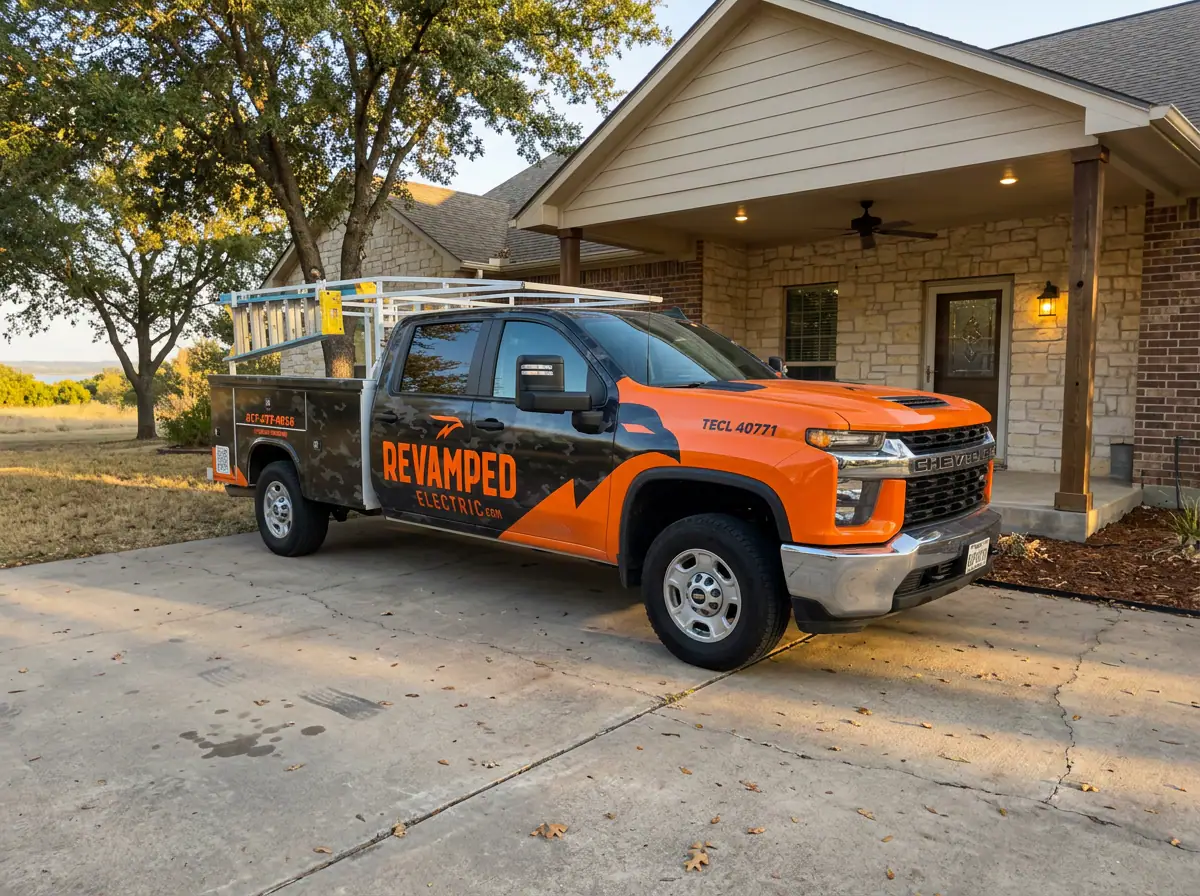
Revamped Electric is a veteran-owned electrical contractor based at 5630 Barkridge Dr in Granbury. Austin Barrett, our owner, is a U.S. Navy veteran who brings that same discipline to residential electrical work. Co-owner Nick Torres is a Granbury native who focuses on new construction and residential service calls. Our work falls under Texas Electrical Contractor License 40771, and electricians in Texas are licensed through the Texas Department of Licensing and Regulation (TDLR). You can also check out our about page to see who is behind the wrapped Revamped truck you might spot around town.
We serve homeowners in Granbury, Tolar, Stephenville, Cresson and Weatherford, along with surrounding Hood County communities. Whether you need electrician installation in Granbury for a single outlet or a full set of new circuits, you get a local team that lives and works here.
Electrical Installation FAQs
Can I add an outlet myself?
Some homeowners do simple like-for-like swaps, but adding a new outlet means extending or tapping a circuit. That involves load, wire size, box fill, grounding and often GFCI or AFCI protection. Mistakes can stay hidden behind a wall for years. Local rules also vary on what a homeowner may do, so check with your city or county first, or let a licensed electrician handle it.
Will a new appliance need its own circuit?
Many will. Large or continuous loads like ranges, dryers, EV chargers, water heaters, and some kitchen and shop equipment usually need a dedicated circuit, and the manufacturer instructions will tell you what is required. We check the specs and your panel before recommending anything.
Do you install in Tolar and Cresson?
Yes. We serve Granbury, Tolar, Stephenville, Cresson and Weatherford, along with nearby Hood County communities.
How soon can you come out?
It depends on our schedule and the type of job. Call 817-677-0036, tell us what you are adding, and we will give you a realistic window.
If you are planning a new outlet, circuit, light, fan or 240V appliance, call us at 817-677-0036 or use our contact page to book an installation visit. Tell us what you are adding and we will check your panel and circuits first, so it is done once and done right.