

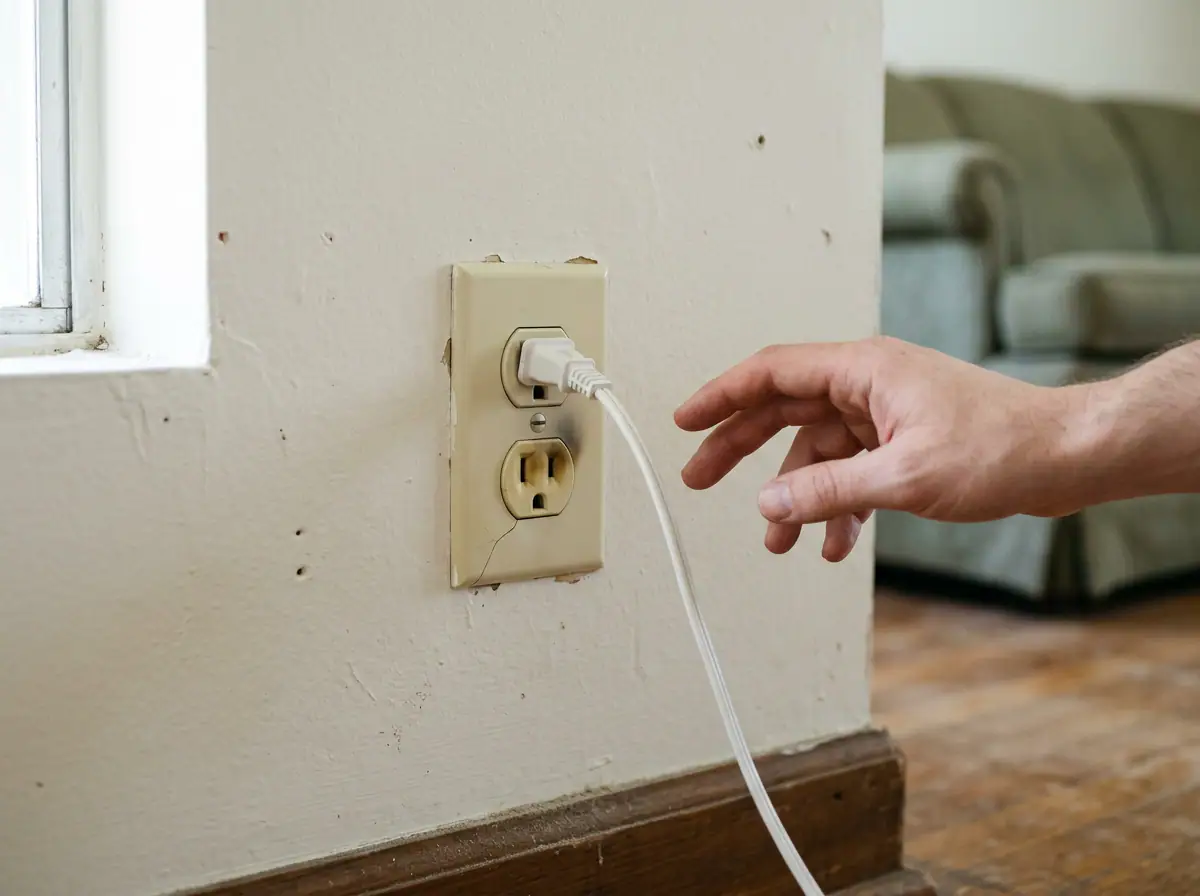
Yes, outlets wear out. If you have ever wondered "do electrical outlets go bad?", the answer is that a receptacle is a mechanical part with moving metal contacts, and those contacts loosen, overheat and fail over time. The warning signs are usually plugs that will not stay put, warmth, discoloration, buzzing or cracks. Here is how to spot each one and what to do about it.
We are Revamped Electric, a licensed, veteran-owned electrical contractor in Granbury, TX. This guide is about outlets that still work but are wearing out or becoming unsafe. If your outlet is completely dead, start with our safe checks for an outlet that is not working instead.
Do Electrical Outlets Go Bad? What Actually Wears Out Inside a Receptacle
An outlet looks like a simple plastic face with slots, but there is real hardware behind it. Three parts tend to fail:
- Contact tension. Inside each slot are metal contacts that grip the prongs of a plug. Every time you plug something in or pull it out, those contacts flex. Over years they lose their spring, and the grip on the plug weakens.
- Wire terminals. The connection where the circuit wire attaches to the receptacle can loosen from heat cycles and vibration. A loose connection creates resistance, and resistance creates heat.
- The housing. The plastic body and faceplate can crack, warp or become brittle from heat, sun exposure or impact.
How long do electrical outlets last? There is no single number. In a lightly used spot, such as a guest bedroom, a quality receptacle can serve for decades. On a hard-working kitchen counter, behind a space heater or in a hot garage, it can wear out much sooner. Age matters, but how the outlet is used and how it was wired matter just as much.
7 Signs an Outlet Needs Replacing
1. Plugs Fall Out or Hang Loose
If a loose outlet plug falls out on its own, or a cord droops from the slot, the contacts have lost tension. This is the most common sign of a worn receptacle. A loose fit also means a poor electrical connection at the prongs, which can arc and heat up. Do not wedge the plug in with tape or a bent prong. Replace the outlet.
2. The Outlet or Plug Feels Warm
A faceplate or plug that is noticeably warm is a red flag. Briefly touch it with the back of your hand. A device pulling a heavy load may warm the cord slightly, but the outlet itself should not feel hot. Warmth usually points to a loose connection or an overloaded device. If it feels hot, unplug what you can and stop using that outlet.
3. Discoloration or Scorch Marks
Brown or yellow tinting, black marks around the slots, or a faint burnt smell mean heat has already damaged the outlet. A warm or discolored outlet should be treated as urgent. Stop using it, and if you can do so safely, turn off the breaker that feeds it. Then call a licensed electrician.
4. Buzzing, Crackling or Sizzling
Outlets should be silent. Any buzzing, crackling or sizzling, especially when something is plugged in, can indicate arcing. Arcing is a spark jumping across a gap in a connection, and it is a known source of electrical fires.
5. A Cracked Faceplate or Damaged Body
A hairline crack in a faceplate may only be cosmetic. A cracked or chipped outlet body is different, because it can expose live parts or let in moisture. Broken tabs and missing pieces also mean the device is no longer doing its job.
6. Intermittent Power or Flickering
If a lamp flickers when you nudge the cord, or a charger cuts in and out, the internal contact or a wire terminal is failing. Intermittent power is easy to dismiss, but it is often an early stage of a connection that is heating up.
7. Sparks, or a GFCI That Will Not Reset
A brief, small spark when a plug is inserted is not unusual. Repeated or large sparks, or a spark with a popping sound, are not normal. A GFCI that will not reset, or trips constantly with nothing plugged in, may also be at the end of its life. More on that below.
What Makes Outlets Wear Out Faster
Not every outlet ages at the same speed. These are the usual culprits we see in homes around Hood County:
- Heavy daily loads. Space heaters, window AC units, air fryers and other high-draw appliances run the receptacle near its limit for hours. Heat builds, and the contacts and terminals suffer.
- Loose connections. Wires that were never tightened well, or that have worked loose over time, are behind a large share of overheated outlets.
- Backstab wiring. Many builder-grade receptacles have small holes in the back where a wire is pushed in, called backstab connections. Screw-terminal wiring, where the wire wraps around a screw and is tightened down, makes a firmer and more reliable connection. Backstab connections are more prone to loosening, and they are one reason we do not reuse them during replacement.
- Age. Even a well-installed outlet gets tired after years of plugging and unplugging.
- Moisture and heat. Garages, patios, bathrooms and laundry areas expose outlets to humidity, dust and temperature swings. In North Texas summers, a hot garage is especially hard on devices.
If you are not sure whether something you plug in is too much for the circuit, our guide on preventing electrical fires in your Granbury home covers the common risk factors.
GFCI and AFCI Devices: How to Test Them and Know When They Are Done
A GFCI outlet is built to cut power quickly when it senses current leaking where it should not, which helps protect you from shock. Code calls for GFCI protection in places like bathrooms, kitchens, garages, laundry areas and outdoors. Our guide to GFCI outlets in Granbury explains where they are required and why.
To test a GFCI outlet yourself:
- Plug in a lamp or night light and make sure it is on.
- Press the TEST button. The power should cut off and the RESET button should pop out.
- Press RESET. Power should return.
If the lamp stays on after you press TEST, if RESET will not stay in, or if the outlet trips again and again, the device may be worn out. Electronic protection does not last forever. Sometimes the cause is a wiring or moisture problem on the circuit rather than the device, which is why an electrician should check it.
AFCI protection, which detects dangerous arcing, is typically provided by a breaker or a special receptacle, depending on the circuit and the code edition in use. If an AFCI keeps tripping, that deserves attention too. For a full explanation, see our overview of GFCI and AFCI protection.
Two-Prong and Ungrounded Outlets Are a Different Issue
A two-prong ungrounded outlet is not worn out. It was simply installed before grounding was standard, and it lacks a safe path for fault current. That is a different problem from a tired receptacle. Swapping in a three-prong outlet without a real ground behind it does not fix it and can create a false sense of safety.
If you live in an older Hood County home, read about electrical grounding and bonding and older home wiring to understand your options.
Worn Outlet or Wiring Problem? How to Tell the Difference
This is where homeowner observation ends and professional diagnosis begins. Here is a simple way to think about it:
- Likely a worn receptacle: plugs fit loosely, the outlet is old, and there is no heat, smell or discoloration.
- Possibly a wiring or circuit fault: multiple outlets on one circuit are affected, breakers trip, lights flicker elsewhere, or the same new outlet overheats again.
- Stop and call: the outlet is hot, scorched, buzzing or smells burnt.
A hot or scorched outlet means stop using it and call. The damage can be in the device, but it can also be in the wire behind it, and only a licensed electrician can tell which. Learn more about the warning signs of faulty wiring and when to get help.
Outlet Replacement in Granbury, TX: What a Professional Does
Replacing an outlet is more than swapping a part. When our team handles outlet replacement in Granbury, TX, we typically:
- Shut off and verify power at the circuit before touching anything.
- Inspect the wires and box for heat damage, loose strands or brittle insulation.
- Match the device to the circuit. A 15-amp outlet and a 20-amp outlet are not interchangeable on every circuit, and the receptacle must suit the breaker and wire size.
- Install tamper-resistant receptacles where the National Electrical Code (NEC) calls for them, which helps protect children.
- Add GFCI or AFCI protection where code requires it.
- Connect wires to the screw terminals instead of reusing backstab connections.
- Test the finished outlet for correct wiring and proper operation.
Cost depends on the number of outlets, the condition of the wiring and what code requires, so we price after seeing the job. You can learn about our outlet installation and replacement services on our site.
Why DIY Outlet Replacement Can Go Wrong
Swapping an outlet looks easy in a video, but there are real risks:
- Shock. A breaker that is off is not always the breaker you think. Shared neutrals and mislabeled panels catch people out.
- The wrong device. Putting the wrong amperage, or a standard receptacle where a GFCI or tamper-resistant one is required, can leave you out of code and less protected.
- Reusing backstab connections. This can bring back the same loose-connection problem within a short time.
- Missing the real cause. If the wiring behind the outlet is damaged, a new outlet will not fix it. It will just hide it.
A licensed electrician protects you from all four. Revamped Electric holds Texas Electrical Contractor License 40771, so you know who is working in your walls.
Outlet FAQs
How long do outlets last?
It varies. A lightly used outlet can last for decades, while one that runs space heaters, window units or other heavy loads, or sits in a hot or damp location, can wear out much sooner. Replace an outlet when it shows signs of wear, not just when it reaches a certain age.
Can a bad outlet cause a fire?
Yes. A loose or damaged outlet can overheat or arc, and that heat can ignite nearby materials. This is why warmth, discoloration, buzzing or a burning smell should never be ignored.
Is a loose outlet dangerous?
It can be. If plugs fit loosely, the connection at the prongs is poor, which creates resistance and heat. A loose outlet that moves in the wall can also strain the wires behind it. Both are worth fixing.
Should I replace all my outlets at once?
Not necessarily. Replace outlets that show signs of wear, and have an electrician check the rest. In an older home or one with many builder-grade backstab devices, replacing several at once can make sense, and it is often easier to do during one visit.
Do Not Wait on a Warm or Worn Outlet
Outlets are easy to ignore because most of the time they simply work. But a receptacle that will not hold a plug, feels warm, looks discolored or makes noise is telling you something. Austin Barrett, a U.S. Navy veteran, and co-owner Nick Torres lead a team that treats every outlet call with the same discipline and care, whether it is one tired receptacle or a whole house of them.
If an outlet is warm, scorched, buzzing or will not hold a plug, stop using it and call Revamped Electric at 817-677-0036, or request an outlet inspection and replacement through our contact page. We serve Granbury, Tolar, Cresson, Stephenville and Weatherford.