

If you own a home in Granbury, chances are someone other than a licensed electrician has touched the wiring at some point. A previous owner added an outlet in the garage. A handyman swapped a few fixtures. A room addition went up without anyone pulling paperwork. Most of the time the lights come on and nobody thinks twice. But bad electrical work does not always announce itself, and it can sit quietly in a wall for years before it causes a problem.
We are Austin Barrett, veteran owner of Revamped Electric, and Nick Torres, co-owner. This guide is not a lecture about why you should never touch a wire. It is what we look for on service calls around Hood County, and what you can safely check yourself without opening anything up.
What Bad Electrical Work Usually Means in Practice
When people hear "bad electrical work," they picture something dramatic. In reality, it usually falls into a few familiar categories:
- DIY electrical mistakes: well-meaning projects done with the wrong materials, wrong connections, or no understanding of the National Electrical Code (NEC).
- Unlicensed handyman jobs: work that looks tidy on the surface but skips protection, proper boxes, or correct wire sizing.
- Unpermitted electrical work: additions, converted garages, or new circuits that never had an electrical permit or inspection.
- Old repairs never brought to code: a fix that made sense decades ago, or a patch that was meant to be temporary and never got revisited.
Previous owner electrical work is one of the most common situations we run into, because you inherit it without ever seeing it happen. The goal is not to blame anyone. It is to find it, understand it, and decide what to do.
Signs of Bad Electrical Work You Can See Without Opening Anything
Here is a room-by-room approach that needs nothing more than your eyes, your hands on a cover plate, and a little patience. Do not remove outlet covers, fixtures, or panel covers to look inside. If something looks wrong, that is your cue to call, not to investigate further.
Living areas and bedrooms
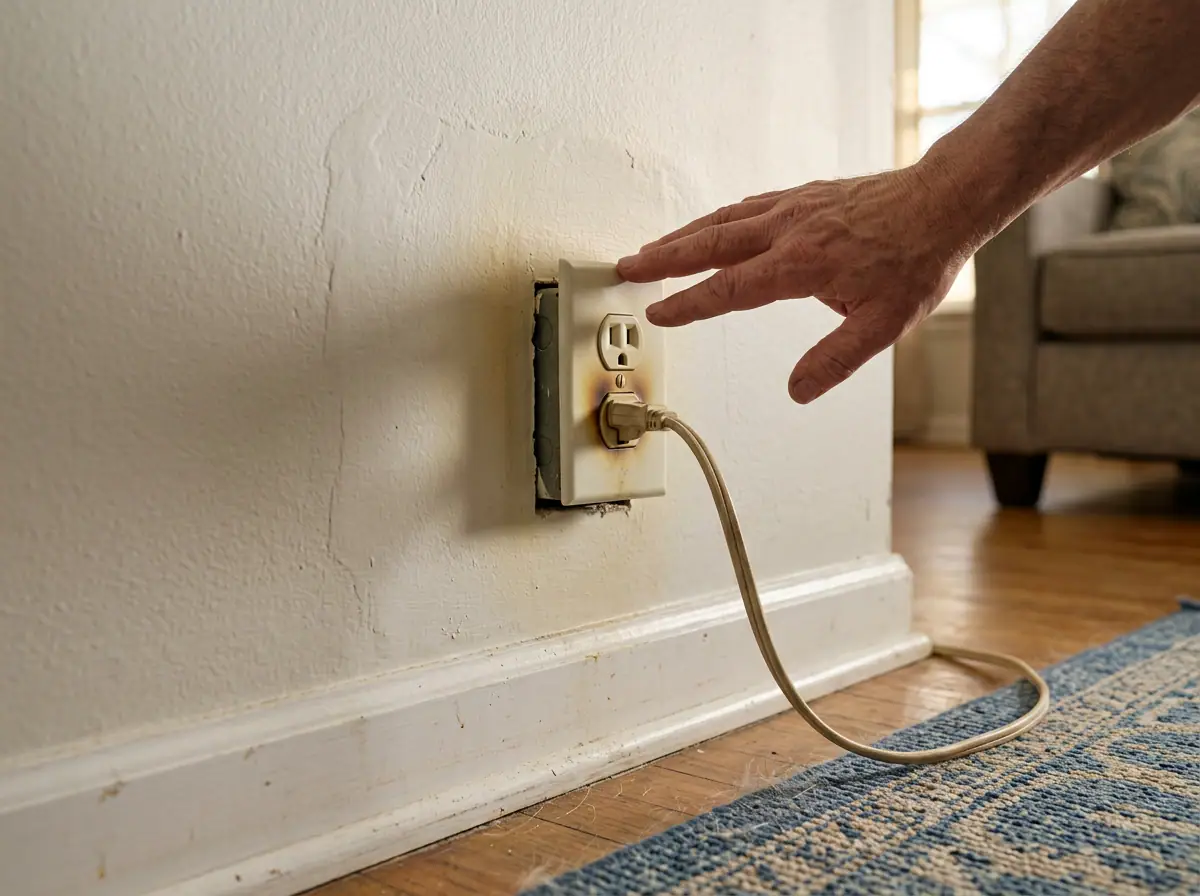
- Warm or discolored outlet and switch covers. Heat and brown or yellow staining often point to a loose connection. Loose connections create heat, and heat is how many electrical fires start.
- Loose outlets that wiggle in the wall. The device may not be secured to a box, or the box may not be secured to anything.
- Missing cover plates. This leaves live connections exposed to fingers, pets, and dust.
- Extension cords used as permanent wiring. A cord running along a baseboard or under a rug to power a room is a sign the house does not have enough outlets or circuits where you need them.
- Flickering or dimming tied to one circuit. If one room flickers while the rest of the house is steady, a loose or damaged connection on that circuit is a strong possibility.
Garage, workshop, and add-on spaces
Look for exposed splices hanging from a ceiling, loose cable stapled across open framing, or wire that disappears into a wall with no visible box. Garages and converted spaces are where we see unpermitted work show up most often, because that is where people add power without a plan. Our article on faulty wiring warning signs and what to do next goes deeper on what each symptom can mean.
Red Flags at the Electrical Panel
You can learn a lot from the panel with the door open. Never remove the inner cover, known as the dead front. That is where live bus bars are exposed, and it is a job for a licensed electrician. With only the door open, look for:
- Double-tapped breakers. Two wires under a single breaker screw that is not rated for it. This is a common shortcut when a panel runs out of space.
- Mismatched or oversized breakers. A breaker that is bigger than the wire it protects defeats the whole point of the breaker.
- Missing knockouts. Open holes in the panel where a blank cover should be.
- Handwritten, vague, or missing labels. If nobody can tell what a breaker controls, nobody can safely work on that circuit.
- A Federal Pacific panel. These have a long-standing reputation for concern, and we recommend having one evaluated by a licensed electrician.
If a breaker keeps tripping, that may be the system telling you something is overloaded or wired wrong. See our page on tripping breakers for what to check, and our guide to signs your breaker box is overdue for a change if the panel itself looks tired or crowded.
Wet-Area and Outdoor Mistakes: Missing GFCI Protection
Water and electricity do not mix, which is why code calls for GFCI protection in bathrooms, kitchens, garages, and outdoor locations. A GFCI outlet shuts power off in a fraction of a second if electricity starts going where it should not, such as through a person.
Check whether outlets in those areas have the test and reset buttons, or whether they are protected by a GFCI upstream. A standard two-button-free outlet near a sink or on the back patio is a red flag, especially if the home was added onto or remodeled without a licensed electrician. Outdoor outlets should have a weatherproof cover, not just a plate. Our guide to GFCI outlets in Granbury explains where they are needed. AFCI protection, which helps guard against arcing in wiring, is another layer that older or unpermitted work often lacks.
Wiring Shortcuts Hiding in Walls and Attics
Some of the worst problems are not visible without opening things up. You are not going to find these yourself, and you should not try. But knowing what they are helps you understand why an inspection matters:
- Splices outside a junction box. Every connection belongs inside an accessible junction box with a cover. Wire nuts floating in an attic or buried in insulation are a serious hazard.
- Backstabbed outlets. Pushing the wire into the small hole on the back of an outlet instead of wrapping it around the screw. It is fast, and it can loosen over time and run hot.
- Undersized wire on a high-demand circuit. A thin wire feeding a heavy load can overheat even when the breaker does not trip.
- Aluminum wiring joined to copper incorrectly. Aluminum wiring needs approved connection methods. Standard connectors can loosen and overheat. Our article on aluminum wiring in older homes covers the risks and remediation options.
Bought a House With Someone Else's Work?
A general home inspector looks at the whole house: roof, plumbing, foundation, and electrical. They may note visible issues, and that is valuable. But they are generally not opening panels beyond the cover, tracing circuits, or evaluating wiring methods in depth. A licensed electrical inspection is a focused look at the system, including what is safe, what is outdated, and what does not meet current code. Our guide to the home electrical inspection explains what it covers and when to get one.
What is safe to leave until an inspection
Missing cover plates (cover them with a proper plate or avoid the outlet), unlabeled breakers, a cord habit that needs more outlets, and an outlet that is loose but not warm can usually wait for a scheduled visit. Stop using any outlet that feels loose until it is checked.
What means call now
- A burning smell you cannot trace
- Smoke from an outlet, switch, fixture, or panel
- Sparking or visible arcing
- A panel or breaker that is hot to the touch
- Outlets or switches too hot to comfortably keep your hand on
If any of those are happening, shut off power at the main if it is safe to do so, keep everyone clear, and read our guide on what to do before the electrician arrives. If there is fire or smoke, call 911 first.
How to Check Who Did the Work
If you want to know how to tell if electrical work is done right, one of the first questions is who did it. In Texas, electricians are licensed through the Texas Department of Licensing and Regulation (TDLR). You can search for a name or license number on the TDLR website to confirm someone is licensed. If a previous owner or contractor can tell you who did the work, that is a good place to start. If you are hiring someone now, our list of questions to ask a Granbury electrician is a good checklist. Revamped Electric operates under Texas Electrical Contractor License 40771.
Permits matter too. An electrical permit means the work was documented and inspected, which can matter for insurance claims and for resale. Requirements differ by location, so we do not want to guess for your address. Confirm with the City of Granbury or your county for what applies to your property. That includes homes in Tolar, Cresson, and the rest of Hood County, as well as nearby areas like Weatherford and Stephenville.
What Fixing Bad Electrical Work Involves
We do not quote prices in an article, because every house is different. Here is what drives the cost and scope:
- Scope: one loose outlet is a very different job from rewiring a converted garage.
- Access: finished walls, tight attics, and insulation affect how much time the work takes.
- Whether the panel is involved: double-taps, oversized breakers, or a panel that cannot handle the load can change the plan.
- Permit needs: some corrections need a permit and inspection, which we handle as part of the job.
Many fixes are smaller than people fear. The inspection is how you find out which kind of house you have.
Bad Electrical Work FAQ
Is DIY electrical work legal in Texas?
Rules about homeowners doing their own electrical work vary by city and county, and permits or inspections may still apply. Confirm with your local building department or a licensed electrician before starting.
Will bad wiring fail a home inspection?
It can be flagged if the inspector sees it, but a general inspection may not catch everything. A licensed electrical inspection looks at the system in more depth.
Can I sell a house with unpermitted electrical work?
It is often possible, but it can complicate a sale, insurance, or a buyer's inspection. Talk with your real estate agent and a licensed electrician, and confirm requirements with the City of Granbury or your county.
How can I tell if an electrician was licensed?
Search for the person or company on the TDLR website. If you do not know who did the work, a licensed electrician can still evaluate it.
Should I fix bad electrical work myself?
We recommend against it. If the original work was wrong, more unlicensed work can add to the problem. A licensed electrician can correct it and document it.
Get a Clear Plan Instead of Guesswork
You do not have to figure out what is behind your walls on your own. We are a veteran-owned local team, and our job is to show you what is wrong, what is urgent, and what can wait, so you leave with a clear plan. If you suspect bad electrical work in your home, book a home electrical inspection with Revamped Electric. Call us at 817-677-0036 or use our contact page, and we will get you on the schedule.