

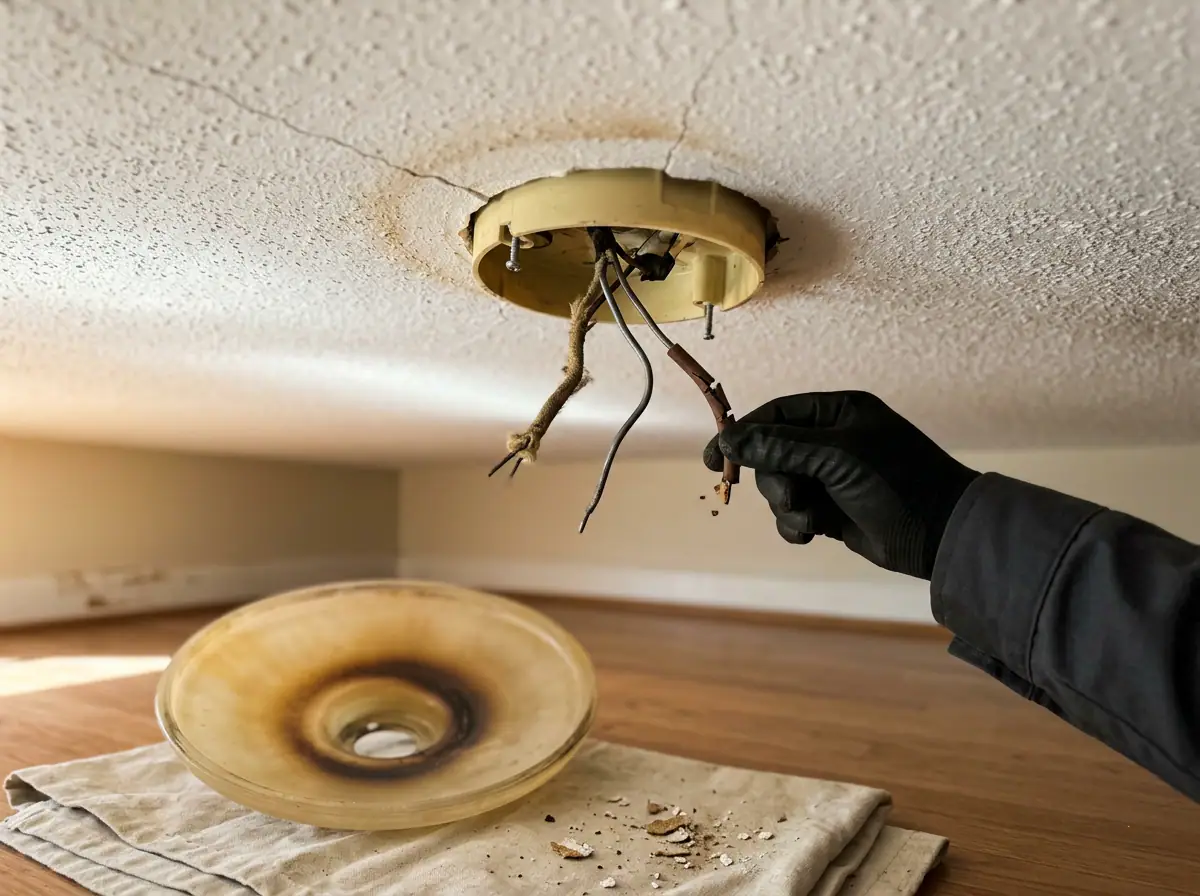
Light fixture installation in Granbury, TX looks like a ten-minute job from the floor. Two wires, a few screws, done. Then the old fixture comes down and the ceiling tells a different story. We see missing grounds, boxes that were never meant to carry a heavy fixture, cloth-covered wire, aluminum wire, and insulation baked brittle by years of hot incandescent bulbs. Every one of those matters, and every one is easier to deal with before the new light is hanging there.
This page explains what our team handles, what we check behind the old fixture, and what drives the cost of a job. For the broader picture of what we do with lights across Hood County, see our lighting installation page.
Light Fixture Installation Granbury TX: Which Jobs Do We Handle?
If it mounts to a ceiling or wall and connects to household wiring, we can install it. The most common requests from Granbury homeowners are:
- Flush mount and semi-flush mount fixtures: the standard bedroom, hallway and living room ceiling light. Semi-flush fixtures hang a few inches below the ceiling and are often a bit heavier.
- Pendant light installation: single pendants, multi-light pendants and rows of pendants over a kitchen island. Pendants need the right height and spacing, and the box has to handle a hanging load.
- Kitchen island and dining lights: usually several fixtures that need to line up, hang at the same height and sit on one switch or dimmer.
- Vanity light installation: bathroom fixtures where moisture and the right rating matter.
- Stairwell and high-ceiling fixtures: jobs that call for the right ladder and scaffolding setup and a plan for future bulb changes.
- Replacing a light with a fan: a standard light box is not a fan-rated box. We swap it for one that is. Our guide to ceiling fan and light fixture installation in Granbury covers what to know before you upgrade.
Whether you bought the fixture online, at a big box store, or want help choosing one, we are the licensed electrician to install the light fixture and make sure it is wired right.
What Do We Check Behind the Old Fixture?
This is the part most generic service pages skip, and it is where most of the real work happens. When we take down an old fixture in a Hood County home, here is what we look at before anything new goes up.
Is the ceiling junction box the right size and properly mounted?
The ceiling junction box carries the entire weight of the fixture. We look for boxes that are loose, mounted to nothing but drywall, or too shallow for the wires inside. A small plastic or pancake box that held a light dome for decades may not be suitable for a heavier pendant or semi-flush fixture. Every box has a weight rating, and the fixture has to fit within it. If the box is not up to the job, we replace it or add support in the ceiling, rather than hoping the screws hold.
Is there a ground?
Plenty of older fixtures were installed with no grounding at all. Grounding gives fault current a safe path, so a metal fixture that becomes energized trips a breaker instead of shocking whoever touches it. If the ground is missing, we find out why and fix it properly. Our article on electrical grounding and bonding explains why it matters so much.
What condition are the wires in?
Old incandescent fixtures ran hot, especially when someone put in a higher wattage bulb than the fixture was rated for. Over years that heat can bake the insulation until it turns brittle and cracks, sometimes crumbling when touched. Reconnecting a new fixture to damaged wire is asking for trouble. We cut back to good conductor, or replace the run if the damage goes further into the ceiling.
Is it aluminum or cloth-covered wiring?
Older Granbury and Lake Granbury homes can have aluminum branch wiring or cloth-insulated conductors. Aluminum needs connectors made for it, because the wrong splice can loosen and overheat over time. Consumer Product Safety Commission research has linked aluminum branch wiring to a much higher chance of connection problems than copper. Cloth insulation can be fragile and unforgiving once disturbed. If we find either, we stop and talk through the right fix before connecting anything. Read more in our guides on aluminum wiring in older homes and aging wiring in Granbury homes.
Can You Add a Light Where There Isn't One?
Yes. Ceiling light installation in a room that never had one is a common project, especially in additions, converted garages and older rooms lit only by lamps. It usually means one of two things:
- A new switch leg: we tap an existing nearby circuit, run cable to the new box location and add a switch. This is the most common route when the circuit has room for the extra load.
- A new circuit: if the nearby circuit is already busy, or the new lighting is part of a bigger remodel, a separate circuit is the better answer.
Before we tie into any circuit, we check what is already on it and whether the panel has the capacity. If the panel is full or showing its age, we will tell you that up front rather than after the drywall is cut. Larger projects like this can also tie into a broader lighting plan. Our home lighting design guide walks through layout planning.
Why Do New LED Fixtures Flicker or Buzz on Old Dimmers?
This is one of the most common calls after a fixture swap. Many older dimmers were built for incandescent bulbs, which draw a lot of power. LED fixtures draw very little, and an old dimmer may not work properly at that low load. The result is flicker, buzzing, a light that will not dim smoothly, or one that will not turn fully off.
LED dimmer compatibility comes down to matching the dimmer to the fixture or bulb. We usually fix it by installing a dimmer designed for LED loads and confirming the fixture itself is dimmable. If the flicker is not tied to a dimmer, it may point to a loose connection or something else in the circuit. Our article on electrical repair in Granbury covers flickering lights and what causes them.
Which Fixtures Can Go in Bathrooms, Kitchens, Porches and Covered Patios?
Location decides the fixture rating, and it is easy to get wrong when shopping online.
- Damp-rated fixtures suit places with moisture but no direct water, like bathrooms, covered porches and covered patios.
- Wet-rated fixtures are built for direct exposure to rain or spray, like uncovered exterior walls, open porches or a fixture over a shower.
Putting a dry-location fixture in a damp spot shortens its life and can create a safety problem. Bathrooms and other wet areas also have GFCI requirements under the National Electrical Code (NEC) for receptacles, and in some cases the lighting circuit as well. Our guide on bathroom electrical safety goes deeper on this. Kitchens add their own wrinkles with island pendants and circuit layout, which we cover in our kitchen electrical requirements guide.
What About Heavy or High Fixtures?
Large pendants, oversized lanterns and anything that feels like a chandelier need more than a standard box. They need blocking or a rated support bracing in the ceiling, and sometimes a different mounting method entirely. That work is covered on our chandelier installation page, which goes into heavy fixtures, high ceilings and safe box support.
What Affects the Cost of a Fixture Installation?
We do not quote prices without seeing the job, because the fixture is rarely the biggest variable. These are the things that move the price:
- Number of fixtures: several fixtures in one visit are more efficient than one at a time.
- Ceiling height: a ten-foot ceiling or a stairwell takes more setup than a standard eight-foot room.
- Existing box and wiring condition: a sound box and good wire is a quick swap. A damaged box, missing ground or brittle wire adds work.
- New wiring runs: adding a switch leg or circuit costs more than replacing a fixture in place.
- Who supplies the fixture: if you provide it, we install it. If we source it, that is part of the quote.
We offer free quotes and keep pricing transparent, so you know what to expect before we start.
Where Do We Offer Light Fixture Replacement in Granbury and Nearby?
Revamped Electric is based in Granbury, and we serve homeowners across Hood County, including Lake Granbury, as well as Tolar, Cresson, Weatherford and Stephenville. If you searched for ceiling light fixture installation near me and live in one of those areas, we can likely help.
Light Fixture Installation FAQ
Can I replace a light fixture myself?
In some cases, yes. If the power is off at the breaker, the wiring is in good shape and the box is sound, it is a manageable project for a careful homeowner. The risk is what you cannot see until the old fixture is down: no ground, a weak box, damaged insulation or aluminum wire. If any of that shows up, stop and call a licensed electrician.
How long does a fixture installation take?
A straightforward swap with a good box and wiring is often done in an hour or less per fixture. Time goes up with taller ceilings, multiple fixtures, a fan-rated box swap or new wiring. We can give you a better estimate once we know the room and the fixture.
Do I need a permit?
A like-for-like fixture replacement typically does not need one. Adding new circuits or running new wiring may, depending on the scope and the jurisdiction. We will tell you if your job needs one and handle it as part of the work.
Will my old box hold the new fixture?
It depends on the box type, how it is mounted and the weight of the new fixture. We check this every time. If it is not rated for the load, we replace it or add support so the fixture is safe.
Book Your Fixture Install with a Veteran-Owned Granbury Electrician
Revamped Electric is a veteran-owned company led by Austin Barrett, a U.S. Navy veteran, with Granbury native Nick Torres on the team. Our work runs under Texas Electrical Contractor License 40771, and you can read more about us and how we work.
Call 817-677-0036 or use the contact page to book a fixture install. Tell us how many fixtures, which room, and whether you have already bought them. We will confirm the box and wiring on arrival before anything goes up.