

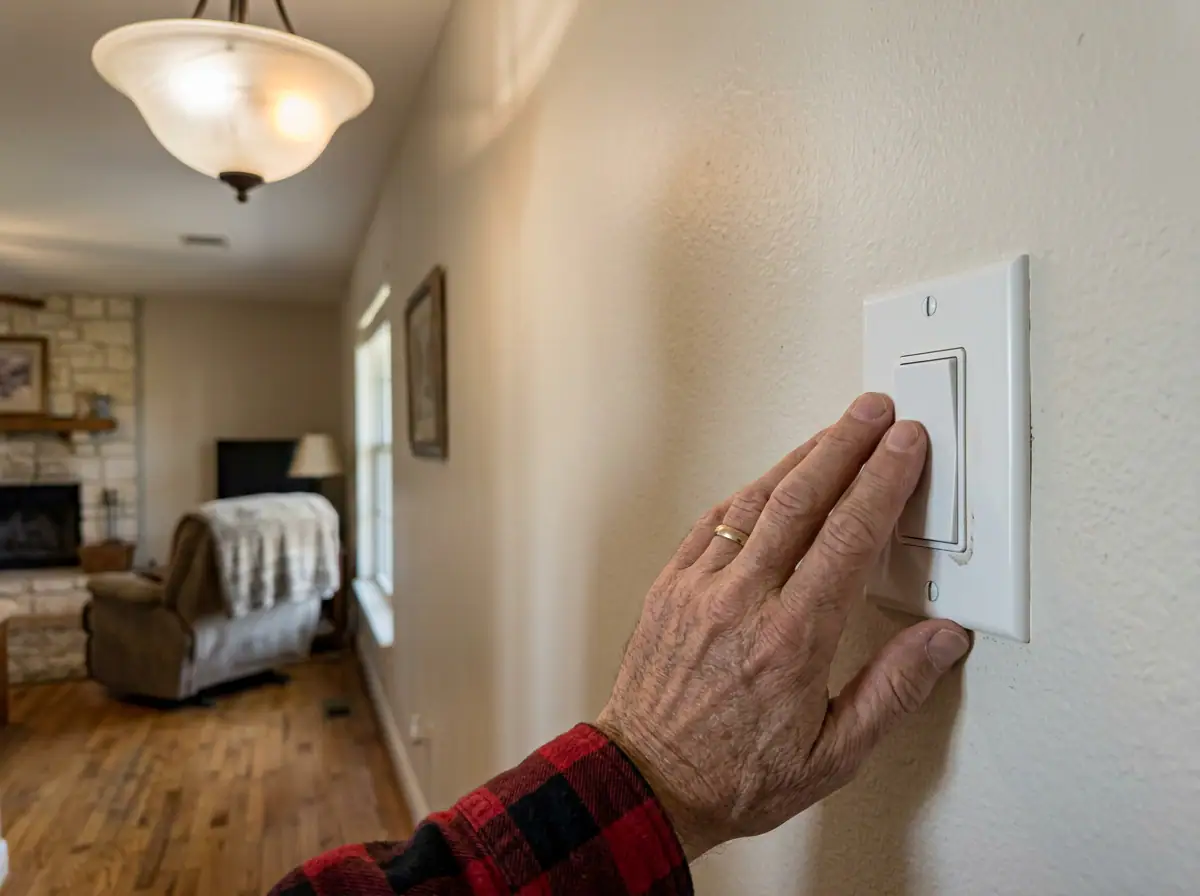
If you have lights flickering in house rooms and you are asking yourself "why are my lights flickering?", you are not alone. It is one of the most common calls a Granbury electrician gets. The tricky part is that a flicker can mean almost nothing or something serious, and the light itself does not tell you which.
The good news is that the pattern of the flicker tells you a lot. At Revamped Electric, we sort flickering lights into four patterns: one bulb, one room or circuit, the whole house, or only when the AC or a big appliance kicks on. Below, each pattern gets a plain-language likely cause, a safe check you can do yourself, and a clear line for when to stop and call.
Lights Flickering in House: Start With the Pattern
Before you change anything, spend a few minutes just watching. Write down these things, because they are exactly what an electrician will ask:
- Where: one fixture, one room, several rooms, or every light in the home?
- When: constant, random, or only when something else turns on (AC, dryer, microwave, well pump)?
- What else: any buzzing, warm switch plates, a faint burning smell, or breakers tripping?
That quick note helps separate a ten-dollar bulb problem from a connection problem inside a wall. It also keeps you safe, because the checks below never require opening a panel, removing a fixture, or touching wiring. Those jobs belong to a licensed electrician.
One Bulb Flickering: LED Bulbs and Dimmer Compatibility
When only one bulb or one fixture flickers, the most likely cause is also the most harmless: the bulb itself, or a mismatch between an LED bulb and a dimmer switch.
Older dimmers were built for incandescent bulbs that draw a lot of power. LED bulbs draw very little, and many older dimmers do not control them smoothly. The result is flickering, buzzing, or lights that will not dim evenly. This is a classic LED dimmer compatibility problem, and it is very common after a homeowner swaps old bulbs for LEDs.
Safe checks you can do
- Turn the switch off, let the bulb cool, and make sure it is screwed in snugly. A bulb that is slightly loose in its socket will flicker.
- Swap in a different bulb of the same type. If the flicker moves with the bulb, the bulb was the problem.
- If the fixture is on a dimmer, check the bulb packaging. It should say "dimmable." A non-dimmable LED on a dimmer will often flicker.
- Try the light with the dimmer turned fully up. If the flicker stops, you likely have a bulb and dimmer mismatch rather than a wiring issue.
Stop and call
If a new, correct bulb still flickers, or the switch feels warm or buzzes, stop using that switch and call. A dimmer that no longer matches your bulbs is a simple fix. A dimmer that is hot is not. Our guide to GFCI and AFCI protection also explains why some modern circuits react to certain loads.
One Room or One Circuit: Loose Connections at a Fixture, Switch or Outlet
If several lights in the same room flicker, or lights and outlets on the same part of the house act up together, the cause is usually on that circuit. The most common culprit is a loose connection at a fixture, switch, or outlet. Wire connections can loosen over time from heat cycles, vibration, or an original installation that was not tight enough.
A loose connection can cause intermittent contact. The current starts and stops, the light flickers, and heat builds at the loose spot. That heat is why intermittent flicker plus warmth or buzzing is a call-now sign, not a wait-and-see problem.
Safe checks you can do
- Note which lights and outlets are affected. Do they all share a wall, a floor, or an area of the house?
- Check whether tapping or bumping the wall or fixture changes it. Do not open or remove anything. Just observe.
- With your hand, lightly check whether a switch plate feels warm. Warm to the touch is a reason to stop and call.
- Check whether the flicker happens when one particular device on that circuit turns on.
Stop and call
Any flicker paired with a hot plate, a crackling or buzzing sound, a burning smell, or discoloration means you should turn that circuit off at the breaker if you can do so safely, and call us. Our article on faulty wiring warning signs covers what else to watch for.
Lights Flicker When the AC Turns On, or Dim When an Appliance Starts
This is the pattern we see most in North Texas, especially in summer. When you notice lights flicker when the AC turns on, or lights dim when an appliance turns on, you are seeing the effect of a large electrical load starting up.
Air conditioners, well pumps, dryers, and similar motor loads pull a surge of current for a moment when they start. That is called air conditioner startup load. A very brief, slight dip can happen in any home. But a noticeable dim, a dip that is getting worse, or flicker that lasts the whole time the appliance runs suggests something is stressed. Common reasons include:
- A shared circuit: the appliance and your lights are on the same circuit and competing for capacity.
- An overloaded circuit: too many devices are drawing from the same line.
- Voltage drop: undersized or long wire runs, or a weak connection, cause voltage to sag when demand rises.
- Limited electrical panel capacity: the panel and service may be working near their limits, especially after added appliances or an addition.
Safe checks you can do
- Note exactly which appliance triggers the dim and which lights react.
- See whether it happens only on the hottest afternoons.
- Avoid plugging high-draw devices into the same power strip or circuit while you watch for a pattern.
Stop and call
If the dimming is dramatic, if it comes with breaker trips, or if an appliance runs poorly, get it checked. Many large appliances belong on a dedicated circuit, and an older breaker box may be overdue for a change. For more on summer strain, read how Texas summer heat and AC load affect Granbury homes, and if breakers are tripping, see our page on breaker trips.
Whole House Lights Flickering: Check the Utility Side First
When whole house lights are flickering, the cause may not be inside your walls at all. Problems on the service, meter, or utility side can affect every light at once. Storms, wind, a failing transformer, or a damaged service line can all cause flicker across the whole home.
Safe checks you can do
- Ask a neighbor, or look down the street. If neighbors see flicker or have lost power, contact your electric provider or utility first.
- Check whether the flicker is tied to wind or weather.
- Do not touch the meter, the service mast, or any lines.
If the neighborhood is fine and the flicker is only at your house, the problem may be on your side of the meter. One specific concern is a loose neutral, where some lights get noticeably brighter while others dim, and appliances may behave strangely. That is not a do-it-yourself situation and can damage electronics. Turn off sensitive equipment if you can safely do so, and call right away. Our page on loss of power explains what to do when the lights go out or act strangely, and our piece on grounding and bonding explains why a solid connection to ground matters.
Older Hood County Homes: Aging Wiring and Worn Breakers
Many homes in Hood County, from lakeside houses around Granbury to acreage properties out toward Tolar, Cresson, Weatherford, and Stephenville, were built decades ago. Older homes are more likely to have flicker caused by:
- Aging wiring with worn insulation or tired connections.
- Aluminum wiring in some homes from certain eras. Aluminum branch wiring can loosen at connections over time. Consumer Product Safety Commission research has found homes with aluminum branch circuit wiring are far more likely to have fire hazard conditions at connections than copper-wired homes. See our guide to aluminum wiring in older homes.
- Worn circuit breakers that no longer hold a firm connection.
- Years of added loads on a system that was designed for far less.
If you live in an older home and the flicker comes and goes in more than one place, a professional look is a smart move, not an overreaction.
Danger Signs: Stop and Call Now
Flickering lights alone can be minor. These signs turn it into an urgent call:
- A burning smell or smell of hot plastic
- Scorch marks or discoloration on outlets, switches, or fixtures
- Buzzing, crackling, or sizzling sounds
- Hot switch plates or outlet covers
- Flicker combined with breaker trips
- Sparks, or any smoke
If you see smoke or flames, leave the home and call 911. For anything else on this list, turn off the affected circuit at the breaker if it is safe to do so, stay away from the area, and call us. Our guide on what to do before the electrician arrives walks through the steps.
What a Revamped Electric Diagnostic Visit Involves
We are a veteran-owned shop, and the way we work comes from that: be straight with people, do the job right, and help your neighbor. Owner Austin Barrett, a U.S. Navy veteran, and co-owner Nick Torres, a Granbury native, approach a flickering-lights call the same way every time.
- We listen first. We ask about the pattern you noticed: where, when, and what else.
- We narrow it down. We start with the simple causes, like bulbs and dimmer compatibility, before moving to the circuit.
- We test. We check the affected circuit and connections, look at how loads behave, and evaluate whether the issue is at the fixture, on the circuit, at the panel, or on the utility side.
- We explain what we find. You get a plain-language explanation and your options before any work is done.
- We plan the fix. That might be a dimmer swap, repairing a loose connection, adding a dedicated circuit, or a panel recommendation. We believe in upfront planning so there are no surprises.
Flickering Lights FAQ
Why are my lights flickering?
The most common reasons are a loose or incompatible LED bulb, a dimmer that does not match the bulb, a loose connection on a circuit, a large appliance starting up, or a utility-side issue. The pattern (one bulb, one room, whole house, or only when something turns on) points to the cause.
Is it normal for lights to flicker when the AC turns on?
A very brief, slight dip can happen when a large motor starts. A noticeable dim, a dip that is getting worse, or flicker that continues while the AC runs is worth having checked, since it can point to a shared or overloaded circuit, voltage drop, or panel capacity limits.
Can LED bulbs cause flickering?
Yes. LED bulbs on a dimmer that is not compatible are one of the most common harmless causes. Check that the bulb is labeled dimmable and seated snugly before assuming a wiring problem.
When should I call my electric provider instead of an electrician?
If the whole house flickers and neighbors see the same thing, or the flicker follows storms or wind, call your electric provider first. If only your home is affected, call an electrician.
Are flickering lights a fire hazard?
They can be. Flicker alone is often harmless, but flicker with heat, buzzing, a burning smell, scorch marks, or breaker trips can signal a loose or failing connection and needs prompt professional attention.
Do Not Ignore a Flicker That Will Not Go Away
A single flickering bulb is usually a quick fix. A flicker that spreads, keeps coming back, or shows up with warmth, noise, or a smell is your home telling you something. If the flicker is more than one bulb, or comes with buzzing, heat, or a burning smell, call Revamped Electric at 817-677-0036 or book through our contact page for a diagnostic visit anywhere in Granbury, Weatherford, Cresson, Tolar, or Stephenville. Whether you are searching for flickering lights electrician Granbury homeowners can trust or just want a second opinion, we will take a look, tell you what is going on, and help you fix it right.